EECP for Diabetic Heart Patients: A Comprehensive Guide



EECP for Diabetic Heart Patients: Enhanced External Counterpulsation (EECP) is a non-invasive therapy that has shown promising results in improving cardiovascular health, particularly for individuals with diabetes. Diabetic heart patients often face challenges such as poor circulation, insulin resistance, and increased risk of heart disease.
EECP offers a potential solution by enhancing blood flow, reducing inflammation, and improving overall heart function.
EECP therapy involves the use of inflatable cuffs placed around the legs, which inflate and deflate in sync with the patient’s heartbeat. This process increases venous return to the heart and decreases cardiac afterload, thereby improving coronary artery perfusion and enhancing oxygen delivery to the heart muscle. Typically, patients undergo 35 one-hour sessions over a period of 7 weeks.
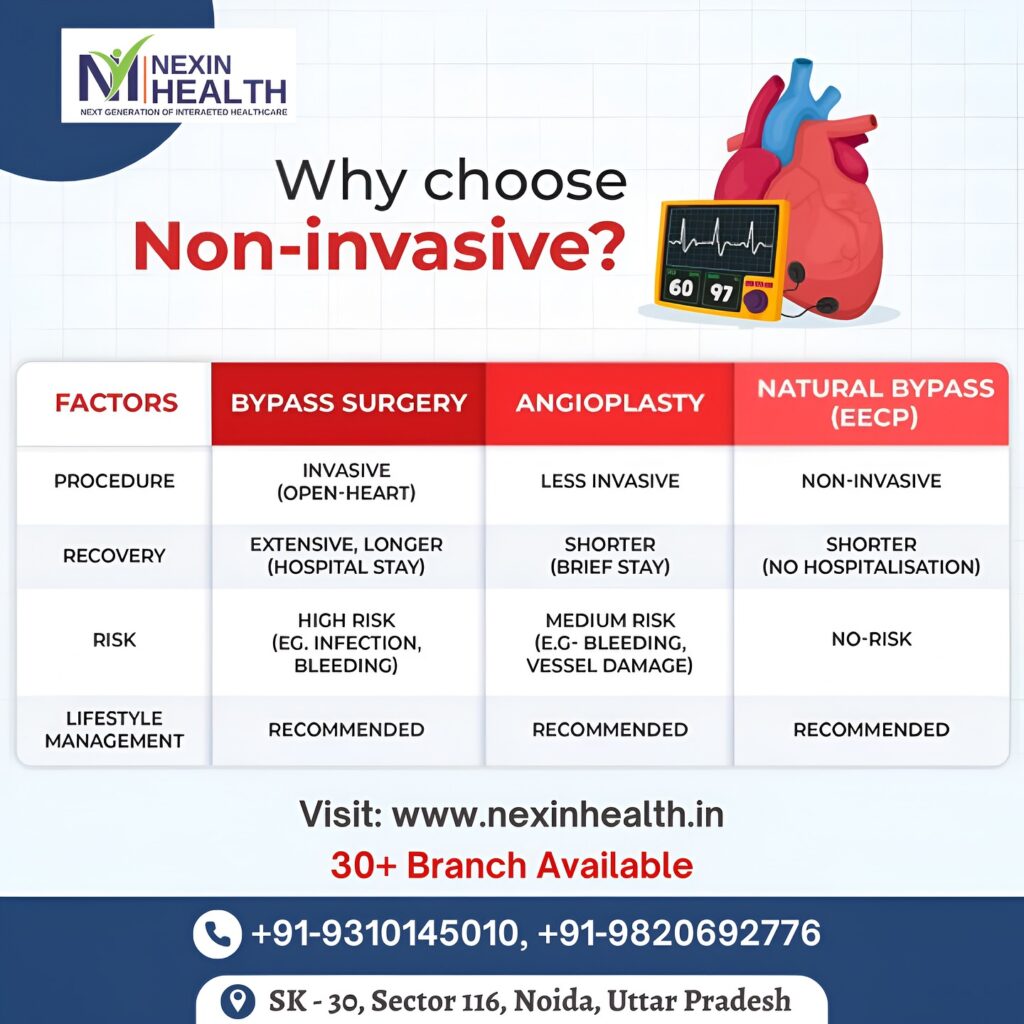
Diabetes often leads to poor circulation due to damaged blood vessels. EECP therapy enhances microvascular circulation, ensuring that vital organs, including the heart, receive adequate oxygen and nutrients. This improvement in blood flow can alleviate symptoms such as chest pain and fatigue.
EECP has been shown to decrease advanced glycation end products (AGEs) and proinflammatory cytokines, which are associated with insulin resistance. A study found that EECP significantly decreased AGEs and RAGEs (receptors for AGEs) at all follow-up measurement time points, indicating improved insulin sensitivity .
The therapy stimulates the release of nitric oxide, a molecule that causes blood vessels to relax and dilate. Increased nitric oxide levels improve endothelial function, reduce blood pressure, and enhance glucose uptake by tissues, thereby aiding in better blood sugar control.
Chronic inflammation is a key contributor to both heart disease and diabetes. EECP therapy has been shown to reduce levels of proinflammatory markers, leading to decreased systemic inflammation and improved cardiovascular health.
Patients undergoing EECP therapy often report improvements in symptoms such as fatigue, shortness of breath, and exercise tolerance. The non-invasive nature of the treatment allows for a quicker recovery and minimal disruption to daily activities.
A study involving 1,532 patients, 43% of whom had diabetes, found that 69% of diabetic patients experienced a reduction in angina symptoms immediately after EECP therapy. After one year, 72% maintained this improvement, and overall quality of life significantly improved .
Research indicates that EECP therapy can improve glycemic control in patients with type 2 diabetes. One study reported significant reductions in fasting plasma glucose, postprandial glucose, and HbA1c levels within two weeks of treatment, with improvements lasting up to three months .
A systematic review and meta-analysis of randomized controlled trials concluded that EECP therapy significantly lowers HbA1c levels in patients with type 2 diabetes and prediabetes. The therapy was well-tolerated, with no increased risk of adverse events .
India has emerged as a hub for EECP therapy, offering advanced treatment options at competitive prices. Cities like Mumbai, Delhi, Bangalore, and Chennai have reputable centers providing EECP therapy. The cost of treatment varies between ₹1,00,000 and ₹2,50,000, depending on factors such as location, clinic reputation, and the number of sessions required .
For patients seeking EECP treatment in India, NexIn Health offers comprehensive services, including consultation, therapy, and post-treatment care. Their experienced team ensures personalized treatment plans tailored to individual needs.
EECP therapy is suitable for diabetic heart patients who:
Experience chronic stable angina or heart failure
Have poor circulation or are at risk of cardiovascular events
Are not candidates for invasive procedures like angioplasty or bypass surgery
Seek a non-invasive treatment option with minimal recovery time.
However, EECP therapy may not be recommended for individuals with certain conditions, such as uncontrolled hypertension, severe aortic insufficiency, or recent deep vein thrombosis. Consultation with a healthcare provider is essential to determine eligibility.
EECP therapy offers a promising non-invasive treatment option for diabetic heart patients, addressing both cardiovascular and metabolic concerns. With its ability to improve blood flow, reduce inflammation, and enhance insulin sensitivity, EECP can significantly improve the quality of life for individuals managing diabetes and heart disease. For those considering this therapy, consulting with a reputable center like NexIn Health can provide personalized care and guidance.
Also Read:
Enhanced External Counterpulsation (EECP) is a non-invasive, outpatient treatment that uses pneumatic cuffs wrapped around the legs to improve blood flow to the heart. These cuffs inflate and deflate in sync with your heartbeat, promoting better oxygen delivery and circulation, especially beneficial for heart patients.
Yes, EECP therapy is considered safe for most diabetic patients, especially those with stable heart disease. It’s non-invasive, doesn’t require surgery, and can be customized based on the patient’s cardiovascular condition. However, a medical consultation is essential to ensure suitability.
EECP improves blood flow, enhances endothelial function, and reduces insulin resistance and inflammation—all of which are critical for managing cardiovascular complications in diabetic patients. Many patients also experience a decrease in chest pain and better exercise tolerance.
Emerging research shows that EECP therapy may help improve glycemic control by enhancing tissue perfusion and reducing markers of insulin resistance. Studies have noted significant improvements in fasting glucose, postprandial sugar levels, and HbA1c after a full EECP course.
A standard EECP treatment course typically involves 35 one-hour sessions spread over 7 weeks (5 sessions per week). Some patients may require additional or maintenance sessions based on their condition.
EECP is generally well-tolerated. Some patients may experience:
Mild leg discomfort or bruising from the pressure cuffs
Fatigue during the initial days
Minor skin irritation
These effects usually resolve quickly. Serious complications are rare but should be discussed with a medical provider.
Not entirely. EECP is often used when patients are not suitable candidates for invasive procedures, or when symptoms persist despite medication and prior surgery. It can also serve as a complementary therapy to improve heart function and reduce angina.
Multiple studies have shown that EECP therapy significantly reduces angina, enhances quality of life, and improves glucose metabolism in diabetic heart patients. Long-term benefits have been observed up to a year or more after treatment completion.
Yes, if symptoms return or new cardiovascular issues arise, patients may undergo a second or maintenance course of EECP, based on their doctor’s recommendation. Periodic evaluations help determine if further sessions are beneficial.
India has several advanced cardiac centers offering EECP. For a trusted and patient-centric experience, Nexin Health offers EECP Treatment in India with personalized plans, expert consultations, and holistic follow-up care.
The cost typically ranges from ₹1,00,000 to ₹2,50,000 depending on the city, hospital, and the number of sessions. Nexin Health provides transparent pricing and high-quality care for those seeking EECP treatment in India.
Some health insurance providers may cover EECP, particularly if it’s prescribed as an alternative to surgical intervention. Patients should consult their insurer and hospital billing departments for coverage specifics.
EECP is not suitable for individuals with:
Severe aortic insufficiency
Uncontrolled hypertension
Bleeding disorders
Deep vein thrombosis (DVT)
Pregnancy
Always consult a cardiologist before starting EECP.
Also Read:


Experience

Certified Therapists

Satisfied Patients
Contact us