


NexIn Health - Integrated Health Centre
At NexIn Health, we take pride in being a trusted name in Enhanced External Counterpulsation (EECP) treatment across India. Renowned for our commitment to excellence, NexIn Health is a leading organisation dedicated to providing innovative, non-invasive cardiac care solutions (EECP Therapy in India) and Chelation Therapy in India. Our team comprises highly skilled doctors and healthcare professionals who specialise in delivering cutting-edge heart care through Integrated Therapies EECP therapy, Chelation Therapy, DETOX Therapies, and Other Non – non-invasive treatments, ensuring personalised and effective treatment for every patient.
With a focus on pioneering advancements in non-invasive cardiology, NexIn Health (EECP Treatment and Chelation Therapy in India) is redefining heart care by combining expertise, technology, and compassion. Whether you’re seeking preventive care or advanced treatment, we are here to support your journey toward better heart health. Discover the future of integrated healthcare with NexIn Health – where innovation meets care.
EECP Advanced Non-Surgical Heart Care (Introduction)
Living with heart problems can be scary and limiting. Chest pain, breathlessness, and constant worry about heart health affect thousands of people in Satna every day. The good news is that there is now a proven, safe, and effective treatment option that does not require surgery or putting you to sleep. Enhanced External Counterpulsation, known as EECP therapy in Satna, is changing lives by helping hearts work better naturally.
EECP treatment has been approved by the US Food and Drug Administration since 1995 and has helped millions of patients worldwide. It is recognized globally as a safe alternative to bypass surgery in Satna for many heart patients. This treatment is especially helpful for people suffering from heart blockage, chest pain, heart failure, and those who have had heart attacks. The best EECP treatment in Satna offers hope to patients who thought surgery was their only option.
This treatment works by improving blood flow throughout your heart naturally. It helps create new small blood vessels around blocked arteries, reducing chest pain and improving your ability to do daily activities. Whether you suffer from angina, have coronary artery disease, or are recovering from a heart attack, EECP treatment for heart blockage in Satna can significantly improve your quality of life without the risks of major surgery.
EECP Treatment Centre in Satna: Your Path to Better Heart Health
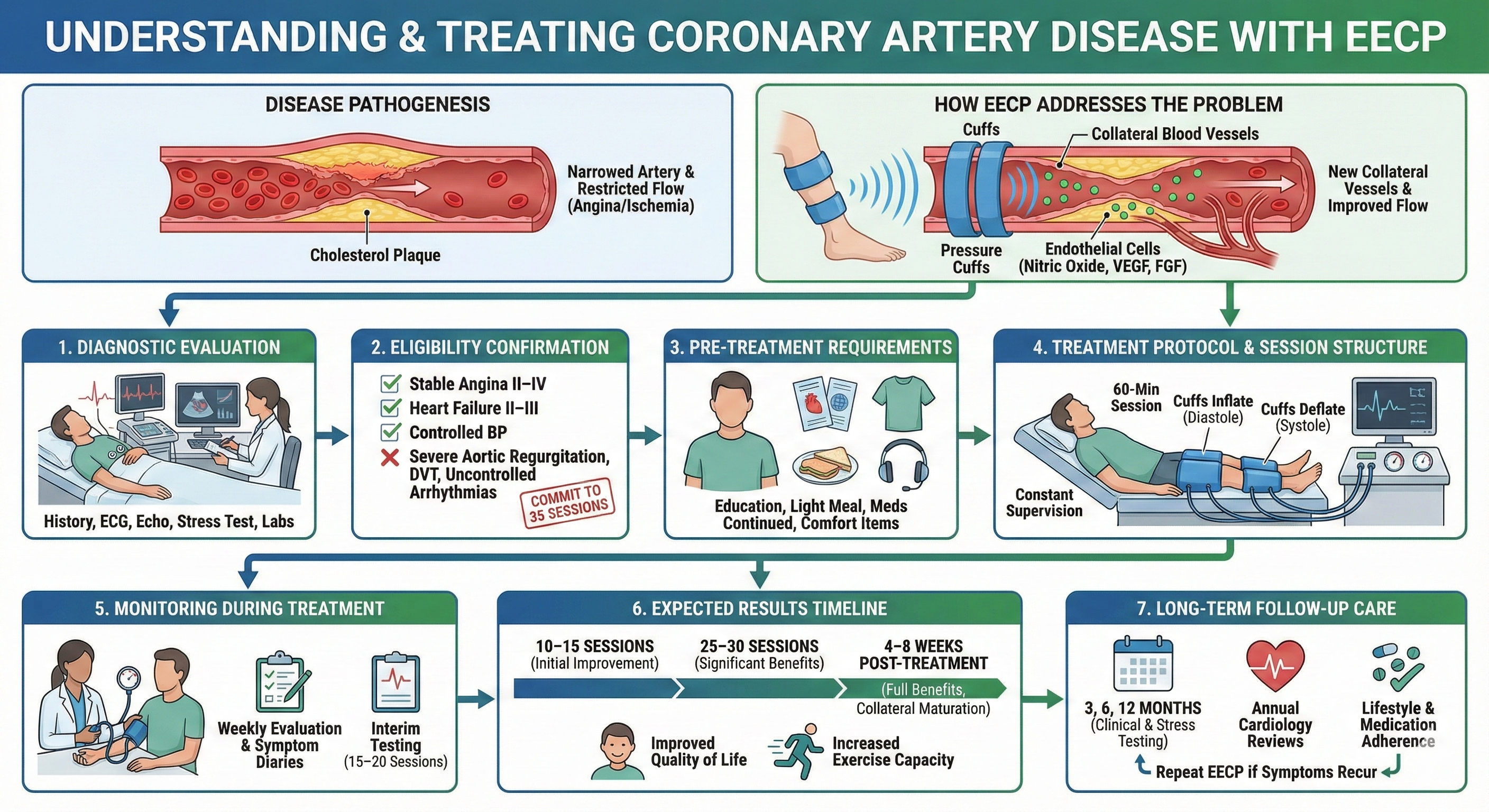
An EECP treatment centre in Satna provides specialized care for patients with chronic heart problems. These centers are equipped with FDA-approved EECP machines and staffed by trained medical professionals who understand heart disease management. The treatment is conducted in a comfortable, outpatient setting where patients can relax during their sessions. Each session lasts about one hour, and most patients need 35 sessions spread over seven weeks to get the full benefit.
What makes an EECP centre special is the personalized approach to each patient. Before starting treatment, doctors conduct thorough evaluations including medical history review, physical examination, and necessary heart tests. This ensures the treatment is safe and suitable for you. During treatment, your heart rate and blood pressure are constantly monitored. The medical team adjusts the treatment to match your comfort and medical needs. Many patients use this time to read, listen to music, or simply rest while the machine does its work.
The atmosphere at a dedicated EECP treatment centre in Satna is designed to make patients feel comfortable and supported. Staff members explain each step of the process, answer questions, and provide encouragement throughout the treatment course. They also educate patients about heart-healthy lifestyle changes that can maximize treatment benefits. Follow-up care is an important part of the program, with regular check-ins to monitor progress and adjust care plans as needed.
EECP Treatment for Heart Blockage in Satna: Opening New Pathways
Heart blockage happens when cholesterol, fat, and other substances build up inside your coronary arteries, reducing blood flow to your heart muscle. This condition, called coronary artery disease, causes chest pain, shortness of breath, and increases your risk of heart attack. Traditional treatments include medications, angioplasty with stents, or bypass surgery. However, not everyone is a good candidate for these invasive procedures, and some patients prefer to avoid surgery if possible.
EECP treatment for heart blockage in Satna works through a natural process called angiogenesis, which means creating new blood vessels. During treatment, inflatable cuffs wrapped around your legs squeeze and release in time with your heartbeat. This pumping action pushes more blood back to your heart, creating pressure that encourages your body to grow new tiny blood vessels around the blocked areas. These new vessels act as natural bypasses, allowing blood to flow around the blockages and reach heart muscle that was not getting enough oxygen.
Clinical studies show that EECP can reduce angina episodes by 70 to 80 percent in many patients. The treatment also improves exercise capacity, meaning you can walk farther and do more activities without chest pain or breathlessness. The effects of EECP treatment for heart blockage in Satna can last for several years, giving patients a better quality of life. Many patients who were previously limited by chest pain find they can return to activities they enjoy, spend more time with family, and feel more confident about their heart health.
EECP Treatment for Heart Failure in Satna: Strengthening Your Heart
Heart failure does not mean your heart has stopped working. It means your heart muscle has become weak and cannot pump blood efficiently enough to meet your body’s needs. This causes fluid buildup in your lungs and legs, making you feel tired, breathless, and swollen. Heart failure affects millions of people worldwide and requires ongoing medical management. While medications help control symptoms, many patients continue to struggle with limited physical abilities and reduced quality of life.
EECP treatment for heart failure in Satna helps improve how well your heart pumps blood. The treatment increases something called stroke volume, which is the amount of blood your heart pushes out with each beat. It also reduces the workload on your heart by improving blood vessel function throughout your body. When blood vessels work better, your heart does not have to work as hard to push blood through them. This combination of effects helps your heart become more efficient at its job.
Research shows that patients with heart failure who receive EECP treatment experience significant improvements. They can walk longer distances, have fewer hospitalizations, and report better overall well-being. The treatment is particularly valuable for heart failure patients who have already tried multiple medications and still have limiting symptoms. EECP treatment for heart failure in Satna provides an additional tool in the treatment toolkit, helping patients achieve better control of their condition without adding more pills or requiring surgery. Many patients notice they can sleep better lying flat, have less leg swelling, and feel more energetic in their daily lives.
EECP Treatment for Heart Attack in Satna: Recovery and Protection
A heart attack happens when a coronary artery becomes completely blocked, cutting off blood supply to part of your heart muscle. The affected heart tissue becomes damaged or dies without oxygen. After a heart attack, your main goals are to prevent another one and help your damaged heart heal and work as well as possible. Standard treatments include medications to prevent blood clots, control blood pressure and cholesterol, and sometimes procedures to open blocked arteries.
EECP treatment for heart attack in Satna plays an important role in recovery and prevention. If you have had a heart attack, EECP therapy helps in several ways. First, it improves blood flow to areas of your heart that may still have reduced circulation. Second, it encourages the development of collateral circulation, those natural bypass vessels that can protect you if another blockage develops. Third, it helps improve the overall function of your heart muscle, making your heart stronger and more efficient.
Starting EECP treatment after a heart attack can reduce your risk of having another one. The treatment also helps reduce chest pain if it continues after your heart attack. Many heart attack survivors in Satna have found that EECP treatment for heart attack helps them regain confidence in their physical abilities. They feel safer exercising and returning to normal activities knowing their heart is getting better circulation. The treatment works alongside your regular medications and lifestyle changes to give you the best possible outcome after a heart attack. Doctors typically recommend waiting at least six weeks after a heart attack before starting EECP to allow initial healing to occur.
EECP Treatment for Chest Pain in Satna: Relief Without Surgery
Chest pain related to heart disease, called angina, is one of the most common and distressing symptoms people experience. It typically feels like pressure, squeezing, heaviness, or tightness in your chest. Some people describe it as feeling like an elephant sitting on their chest. The pain may also spread to your shoulders, arms, neck, jaw, or back. Angina happens when your heart muscle is not getting enough oxygen-rich blood, usually because of narrowed or blocked coronary arteries.
Many people in Satna suffer from chest pain that limits what they can do. Simple activities like climbing stairs, walking to the market, or doing household chores can trigger uncomfortable episodes. Some patients experience chest pain multiple times a day, severely affecting their quality of life and making them dependent on frequent nitroglycerin use. Fear of chest pain can make people avoid activities they enjoy, leading to isolation and depression.
EECP treatment for chest pain in Satna provides remarkable relief for many patients. Studies show that up to 80 percent of patients experience significant reduction in angina episodes after completing a full course of treatment. The chest pain treatment in Satna through EECP works by addressing the root cause, which is inadequate blood flow to the heart. By improving circulation and creating new blood vessel pathways, EECP reduces the frequency and severity of angina attacks. Most patients can reduce their need for angina medications and return to activities they had given up. The relief often begins during the treatment course, with many patients reporting improvement after just 10 to 15 sessions.
Important Statistics About Heart Disease and EECP Treatment
What is EECP Treatment? Complete Understanding
Understanding Coronary Artery Disease
Before explaining EECP, it helps to understand the problem it addresses. Your heart is a muscle that pumps blood throughout your body. Like any muscle, it needs its own blood supply to work properly. The coronary arteries are special blood vessels that supply oxygen-rich blood to your heart muscle. When these arteries become narrow or blocked with fatty deposits called plaque, your heart muscle does not get enough oxygen, especially during physical activity or stress when it needs more.
Clear Definition of EECP
Enhanced External Counterpulsation is a mechanical treatment that improves blood circulation to your heart and throughout your body. The word “external” means it works from outside your body without any cutting or invasive procedures. “Counterpulsation” refers to how the treatment times its pumping action to work in coordination with your natural heartbeat, but in the opposite phase. When your heart relaxes between beats, the EECP equipment squeezes your legs, pushing extra blood back to your heart.
The Science Behind EECP
The treatment is based on solid scientific principles that have been studied for over 50 years. The main mechanism involves creating increased pressure in your blood vessels during the relaxation phase of your heartbeat. This increased pressure serves two important purposes. First, it pushes more blood into your coronary arteries, delivering more oxygen to your heart muscle immediately. Second, and more importantly for long-term benefits, this increased pressure triggers biological signals that make your body grow new small blood vessels.
Your body has an amazing ability to adapt to challenges. When EECP creates patterns of increased blood flow and vessel pressure, your body responds by releasing growth factors. These are natural chemicals that tell your blood vessel cells to multiply and form new vessels. This process is called angiogenesis. The new blood vessels grow slowly over several weeks, creating alternative pathways for blood to reach parts of your heart that were not getting enough circulation due to blockages. These natural bypasses can continue to function for years after your treatment ends.
How the Mechanism Works Step by Step
Step 1: You lie comfortably on a treatment bed, similar to a padded examination table. The staff wraps inflatable cuffs around your calves, lower thighs, and upper thighs. These cuffs are connected to the EECP machine by tubes. Heart monitoring electrodes are placed on your chest to track your heartbeat precisely.
Step 2: The EECP machine uses your ECG signal to time its actions perfectly with your heart rhythm. The moment your heart beats, the cuffs are deflated and soft. When your heart relaxes between beats, the cuffs rapidly inflate with air, squeezing your legs in a wave-like motion starting from your calves and moving up to your thighs.
Step 3: This squeezing action pushes the blood in your leg veins back toward your heart with significant force. This creates increased blood flow to your coronary arteries during the exact moment they naturally receive the most blood. The extra blood delivers more oxygen to your heart muscle immediately during each treatment session.
Step 4: The increased blood flow and pressure stimulate the lining of your blood vessels to release growth factors like vascular endothelial growth factor (VEGF). These chemicals signal your body to start growing new blood vessels. This process begins within days of starting treatment and continues for weeks afterward.
Step 5: Just before your heart beats again, the cuffs quickly deflate, reducing resistance in your blood vessels. This makes it easier for your heart to pump blood out, reducing the work your heart has to do. This combination of better blood flow in and less resistance out improves your heart’s efficiency.
Symptoms That Indicate You Might Need EECP
- Chest discomfort or pressure during physical activity or emotional stress that goes away with rest
- Shortness of breath during activities you used to do easily
- Unusual tiredness or lack of energy that limits your daily activities
- Discomfort in your arms, neck, jaw, shoulder, or back that comes and goes
- Needing to use nitroglycerin frequently to control chest pain
- Reduced ability to exercise or do physical activities you previously enjoyed
- Swelling in your legs or ankles that worsens as the day goes on
- Difficulty lying flat because of breathlessness
Causes That Lead to Needing EECP Treatment
- Atherosclerosis: Build-up of cholesterol and fatty deposits inside coronary arteries over many years
- Previous heart attack: Damage to heart muscle from blocked blood flow during a heart attack
- Failed angioplasty or bypass: Continued symptoms even after invasive procedures
- Small vessel disease: Blockages in tiny arteries that cannot be treated with stents
- Diffuse coronary disease: Multiple areas of narrowing throughout coronary arteries
- Heart failure: Weakened heart muscle that pumps inefficiently
Who is Suitable for EECP Treatment
EECP works best for patients with stable coronary artery disease who continue to have chest pain despite taking medications. It is particularly valuable for people who cannot undergo or choose not to have bypass surgery or angioplasty. Good candidates include those with chronic stable angina, small vessel disease, failed previous procedures, or heart failure with reduced pumping function.
The treatment is also suitable for patients who have exhausted other options. If you have had multiple bypass surgeries or angioplasties and still have symptoms, EECP provides another avenue for relief. Older patients who may have more risks with surgery often do very well with EECP because it is so safe. Patients with diabetes, kidney disease, or lung problems who have higher surgical risks are good candidates for this non-invasive approach.
When EECP Treatment is Needed
Your doctor might recommend EECP when medications alone are not controlling your angina adequately. If you find yourself using nitroglycerin more than two or three times per week, this suggests your current treatment is not working well enough. EECP becomes an option when invasive procedures are not possible due to medical reasons, or when previous procedures have not provided lasting relief.
The treatment is also considered when you have been diagnosed with coronary artery disease but want to avoid surgery if possible. Many patients prefer to try EECP first before considering invasive options. It is important to understand that EECP is not an emergency treatment. If you are having a heart attack or unstable chest pain that is getting worse, you need immediate emergency care, not EECP. This treatment is for stable chronic conditions that affect quality of life but are not immediately life-threatening.
Expected Outcomes and Results
Most patients who complete a full 35-session course of EECP experience significant improvements. The majority report reduced chest pain, with many able to decrease or eliminate their angina episodes entirely. Exercise capacity typically improves by 30 to 40 percent, meaning you can walk farther, climb more stairs, and do more activities without symptoms. These improvements usually begin to appear after 10 to 15 sessions and continue to increase throughout the treatment course.
The benefits of EECP are not just immediate but long-lasting. Research shows that 70 to 80 percent of patients maintain their improvement for at least one year, and many continue to benefit for three to five years. Some patients may eventually need a repeat course of treatment if symptoms return, but this can be done safely. Beyond reducing angina, patients often report improvements in overall quality of life. They feel more confident, less limited by their heart condition, and able to engage more fully in activities they enjoy. Many patients also report better sleep, improved mood, and reduced anxiety about their heart health.
Safety Profile of EECP
EECP has an excellent safety record established over decades of use and multiple clinical trials. Because nothing is inserted into your body and you remain fully awake and alert during treatment, the risks are minimal. The most common side effects are mild and temporary. These include skin irritation where the cuffs contact your legs, minor muscle soreness similar to after mild exercise, and occasional temporary increased fatigue. These effects typically improve as your body adjusts to the treatment.
Serious complications are extremely rare with EECP. Unlike surgery, there is no risk of infection, bleeding, or anesthesia complications. There are no long-term side effects because the treatment uses natural mechanisms to improve circulation. Your heart is constantly monitored during every session, so if any concerning changes occur, treatment can be stopped immediately. The non-invasive nature means you can safely stop treatment at any time if needed without any lasting consequences.
Key Advantages in Simple Terms
The biggest advantage of EECP is that it improves your heart health without surgery. You do not need to be put to sleep, there is no cutting involved, and you can go home immediately after each session. This means no hospital stay, no surgical wounds to heal, and no time away from your family and work. You can continue most of your normal activities throughout the treatment course.
Another major advantage is that EECP addresses the root problem by improving blood flow naturally. Unlike medications that just control symptoms, EECP actually creates new blood vessels that continue to function long after treatment ends. The benefits accumulate over time and often last for years. The treatment also has benefits beyond the heart, improving circulation throughout your body, which can help with other conditions related to poor blood flow. Finally, EECP can be repeated if needed without any increased risk, giving you a treatment option you can return to in the future if necessary.
EECP Treatment vs Conventional Treatment Options
| Feature | EECP Treatment | Bypass Surgery | Angioplasty with Stents | Medications Alone |
|---|---|---|---|---|
| Invasiveness | Non-invasive, external only | Major open-heart surgery | Minimally invasive procedure | Non-invasive |
| Anesthesia Required | None, fully awake | General anesthesia needed | Local with sedation | None |
| Hospital Stay | Outpatient, same day discharge | 5–7 days | 1–2 days | None |
| Recovery Time | None, normal activity immediately | 6–12 weeks | Several days to 1 week | None |
| Treatment Duration | 35 sessions over 7 weeks | One-time procedure | One-time procedure | Lifelong daily medication |
| Success Rate | ~80% significant improvement | 85–90% initial success | 90–95% technical success | 40–60% adequate control |
| Risk of Complications | Very low, mostly minor | 2–3% serious complications | 1–2% complications | Medication side effects common |
| Cost Range | Moderate, partially insured | Very high (₹5–8 lakh) | High (₹2–4 lakh) | Low to moderate ongoing cost |
| Duration of Benefits | 3–5 years | 10–15 years | 3–5 years (restenosis risk) | Only while medications continue |
| Creates Natural Bypasses | Yes (angiogenesis) | Yes (surgical grafts) | No | No |
| Can Be Repeated | Yes, safely repeatable | Limited (2–3 times) | Yes, but higher risk | Yes |
| Suitable for High-Risk Patients | Yes | No | Moderate risk | Yes |
| Improves Overall Circulation | Yes, whole-body benefit | Only bypassed areas | Only opened vessels | No direct improvement |
Detailed Comparison Analysis
Effectiveness Comparison: While bypass surgery and angioplasty show high initial technical success rates, EECP provides comparable symptom relief for many patients without surgical risks. Studies show that among patients suitable for EECP, the reduction in angina episodes matches or exceeds that achieved with invasive procedures, especially in patients with small vessel disease or diffuse coronary disease where surgery is less effective.
Cost-Benefit Analysis: Though the upfront cost of surgery might lead to quicker results, EECP treatment cost in Satna is significantly lower than bypass surgery or angioplasty. When you factor in hospital charges, surgeon fees, anesthesia costs, recovery expenses, and time away from work, EECP becomes much more economical. The treatment allows patients to continue working and earning during the treatment period, which is not possible with surgery. Additionally, insurance coverage for EECP is improving as more companies recognize its value.
Long-Term Outcomes: One advantage of surgery is potentially longer duration of benefits, with bypass grafts lasting 10 to 15 years in many cases. However, EECP’s benefits lasting 3 to 5 years are substantial, and the treatment can be safely repeated when needed. Unlike surgery where repeat operations carry increasing risks, repeat EECP courses are just as safe as the first course. Many patients successfully maintain their improvement with periodic EECP refresher courses.
Safety Differences: The safety profile of EECP is its strongest advantage. Bypass surgery carries a 1 to 3 percent risk of death, 5 to 10 percent risk of heart attack during surgery, and significant risks of stroke, infection, and bleeding. Angioplasty is safer than bypass but still carries risks of vessel rupture, bleeding, kidney damage from dye, and restenosis. EECP has virtually no serious complications, making it ideal for patients who cannot tolerate surgical risks due to age, other medical conditions, or personal preference.
Key Benefits of Best EECP Treatment in Satna
1. Complete Non-Surgical Approach
EECP gives you the benefits of improved heart circulation without any cutting, stitches, or surgical wounds. You remain fully conscious and comfortable during every session, without the anxiety and risks that come with surgery. This makes treatment accessible to patients who are too old, too sick, or too fearful to undergo invasive procedures. The absence of surgical trauma means no infection risk and no healing complications.
2. Natural New Blood Vessel Growth
The treatment works with your body’s natural healing mechanisms to create new small blood vessels around blocked arteries. These natural bypasses are your own living tissue that grows and functions as permanent pathways for blood flow. Unlike artificial grafts or stents that are foreign objects in your body, these natural vessels integrate perfectly with your circulatory system and continue to improve over time even after treatment ends.
3. Significant Reduction in Chest Pain
Up to 80 percent of patients experience major reduction or complete elimination of angina episodes after completing EECP. This means fewer frightening moments of chest discomfort, less need for nitroglycerin, and greater confidence in your ability to be active. Many patients who were taking angina medication multiple times daily find they rarely need it after EECP treatment. This dramatic improvement in the most distressing symptom transforms quality of life.
4. Improved Physical Capacity and Energy
EECP typically increases exercise capacity by 30 to 40 percent, meaning you can walk farther, do more activities, and feel less limited by your heart condition. Tasks like climbing stairs, shopping, playing with grandchildren, and walking for pleasure become possible again. This increased physical ability also brings psychological benefits, as patients feel more independent, capable, and engaged with life. The improved stamina often surprises patients who had resigned themselves to a sedentary lifestyle.
5. No Recovery Time or Downtime
Unlike surgery that requires weeks or months of recovery, EECP lets you maintain your normal routine. You can drive yourself to and from treatment sessions, continue working, take care of family responsibilities, and participate in social activities throughout the treatment course. Each session lasts about one hour, similar to getting a medical test done. Immediately after the session, you are free to go about your day with no restrictions.
6. Long-Lasting Benefits
The improvements from EECP typically last three to five years for most patients, with some experiencing benefits even longer. This durability comes from the fact that the treatment creates actual structural changes in your circulation system through new blood vessel growth. These new vessels do not disappear when treatment stops but continue functioning as permanent additions to your coronary circulation. The long-lasting nature means you get years of improved quality of life from one treatment course.
7. Suitable for Patients Who Cannot Have Surgery
EECP provides hope for patients who have been told they are not candidates for bypass surgery or angioplasty due to medical reasons. If you have severe diabetes, kidney disease, lung problems, advanced age, or other conditions that make surgery too risky, EECP offers an alternative path to symptom relief. The treatment is also valuable for patients with anatomy that makes surgery difficult, such as small coronary arteries or diffuse disease throughout multiple vessels.
8. Improves Heart Efficiency and Function
Beyond just creating new blood vessels, EECP improves how well your heart muscle pumps blood. The treatment reduces the resistance your heart faces when pushing blood through your blood vessels, making each heartbeat more effective. Your heart does not have to work as hard to deliver the same amount of blood to your body. This improved efficiency is especially beneficial for patients with heart failure, helping their weakened heart function better without additional strain.
9. Whole Body Circulation Benefits
While EECP targets your heart, the improved circulation extends throughout your entire body. Patients often notice improvements in conditions related to poor blood flow in other areas. This includes better kidney function, improved blood pressure control, enhanced mental clarity and memory, and even benefits for erectile dysfunction in men. The treatment improves the health of blood vessel linings everywhere, not just in the heart, leading to multiple health improvements.
10. Reduced Hospitalization and Emergency Visits
EECP patients experience significantly fewer hospital admissions for chest pain or heart problems. Studies show a 30 percent reduction in hospitalization rates after EECP treatment. This means fewer emergency room visits, fewer scary moments, and less disruption to your life. The reduced need for emergency care also translates to cost savings and peace of mind for both patients and their families.
11. Can Be Combined with Other Treatments
EECP works well alongside your existing medications and does not interfere with other treatments you may be receiving. You continue taking your heart medications as prescribed while undergoing EECP. The treatment actually makes your medications more effective by improving the circulation of blood carrying those medications to your heart. EECP can also be used before or after angioplasty or bypass surgery to maximize results.
12. Extremely Safe with Minimal Side Effects
The safety record of EECP over decades of use is remarkable. The most common side effects are minor skin irritation and mild muscle soreness that resolve quickly. There are no reports of serious permanent complications from EECP in millions of treatment sessions performed worldwide. This safety profile means even very elderly patients in their 80s and 90s can safely receive treatment without worry about serious complications.
13. Improved Quality of Life and Mental Health
Beyond physical improvements, EECP has profound effects on emotional well-being. Patients report reduced anxiety about their heart condition, improved mood, better sleep quality, and greater enjoyment of daily activities. The ability to return to hobbies, travel, and social engagements that were previously impossible due to chest pain brings tremendous psychological benefits. Many patients describe feeling like they have their life back after completing EECP treatment.
14. Repeatable Treatment Option
If symptoms return after several years, EECP can be safely repeated with the same benefits as the initial course. There is no limit to how many times you can receive EECP treatment throughout your lifetime. This gives you a reliable treatment option you can return to whenever needed, unlike surgery where repeat operations become increasingly risky and difficult.
15. Comfortable and Relaxing Treatment Experience
Many patients actually enjoy their EECP sessions and find them relaxing. You lie comfortably on a padded bed in a temperature-controlled room. During the one-hour session, you can read, listen to music, watch television, or simply rest. Some patients use the time for meditation or catching up on phone calls. The rhythmic squeezing sensation from the cuffs becomes familiar and even pleasant for many people. This comfortable experience is vastly different from the stress and discomfort of surgical procedures.
Limitations and Considerations of EECP Treatment
Who Should Undergo EECP Treatment
EECP is best suited for patients with stable coronary artery disease who have chronic chest pain despite taking medications. Ideal candidates include those with Class II to III angina, meaning chest pain that limits physical activities but is predictable and controlled with rest or medication. Patients with heart failure and reduced pumping function (ejection fraction between 25 to 50 percent) often benefit significantly from EECP.
The treatment works well for people who have had previous bypass surgery or angioplasty but continue to have symptoms. It is particularly valuable for patients with small vessel disease, where the blocked arteries are too tiny for stents, or diffuse coronary disease with narrowing throughout multiple vessels. Patients who prefer to avoid surgery, or whose surgeons have advised against invasive procedures due to high risks, should consider EECP as a primary treatment option.
Who Should Avoid EECP Treatment
EECP is not suitable for everyone. Patients with severe uncontrolled high blood pressure above 180/110 should have their blood pressure controlled first before starting treatment. If you have severe valve problems in your heart, particularly severe aortic regurgitation where blood leaks backward through the aortic valve, EECP could worsen this condition and should not be used.
People with active blood clots in their legs (deep vein thrombosis) cannot receive EECP until the clots are treated and resolved. Severe peripheral vascular disease with poor leg circulation may make EECP uncomfortable or less effective. Pregnant women should not undergo EECP as the effects on pregnancy have not been studied. Patients with certain irregular heart rhythms, particularly atrial fibrillation with very rapid rates, may not be good candidates because the machine needs a regular rhythm to time its compressions properly.
EECP is not an emergency treatment and cannot be used during a heart attack, unstable angina, or any acute cardiac crisis. If you have open wounds, infections, or severe skin conditions on your legs, treatment should wait until these issues heal. Patients with bleeding disorders or those taking blood thinners at very high doses need careful evaluation before starting EECP.
Possible Side Effects
The most common side effect is skin irritation where the cuffs contact your legs. This appears as redness, chafing, or abrasions similar to friction burns. Wearing long, smooth pants during treatment and ensuring proper cuff padding minimizes this issue. The irritation is usually mild and heals quickly between sessions. Some patients develop mild bruising on their legs, which resolves on its own.
Muscle soreness in the legs and buttocks occurs in about 20 to 30 percent of patients, especially during the first few sessions. This feels similar to soreness after exercising muscles you do not usually use. The discomfort decreases as your muscles adapt to the treatment. Temporary fatigue after sessions affects some patients initially but typically improves as treatment continues.
A small number of patients experience increased urination after sessions because the treatment mobilizes fluid that has pooled in the legs. This is actually a beneficial effect for patients with fluid retention but can be inconvenient. Rare side effects include headaches, leg pain during treatment, or temporary worsening of existing conditions. All side effects are monitored carefully by medical staff, and treatment parameters can be adjusted to minimize discomfort.
Important Practical Considerations
EECP requires a significant time commitment of 35 one-hour sessions over seven weeks. This means attending treatment five days per week for almost two months. Patients need reliable transportation to and from the treatment center and must be able to schedule regular appointments. Missing too many sessions may reduce treatment effectiveness.
The treatment may not work for everyone. About 15 to 20 percent of patients do not experience significant benefit from EECP. Factors that predict poor response include very severe coronary disease with no remaining normal heart muscle, very low ejection fraction below 20 percent, or certain patterns of disease distribution. Your doctor can help assess whether you are likely to benefit based on your specific condition.
Insurance coverage for EECP varies. While Medicare and many insurance companies cover the treatment when specific criteria are met, some plans may not provide coverage or may require high out-of-pocket costs. It is important to verify coverage with your insurance before starting treatment to avoid unexpected bills. The EECP treatment cost in Satna typically ranges from 1.5 to 2.5 lakh rupees for the full course if paying out of pocket.
Clinical Pathway of EECP Treatment for Heart Disease
Clinical Research and Studies on EECP Treatment
| Study | Year | Patients | Primary Outcome | Success Rate | Follow-up |
|---|---|---|---|---|---|
| MUST-EECP | 2003 | 139 | Angina reduction | 49% ≥1 CCS class improvement | 1 year |
| IEPR-II | 2006 | 5,000+ | Real-world outcomes | 73% angina improvement | 2 years |
| PEECH | 2006 | 187 | Heart failure symptoms | 65% symptomatic improvement | 6 months |
| Arora et al. | 2005 | 42 | Endothelial function | 50% improved vasodilation | 3 months |
| Michaels et al. | 2004 | 2,289 | Quality of life | 81% reduced angina | Immediate post-treatment |
| EECPPOL | 2010 | 156 | Myocardial perfusion | 68% improved blood flow | 12 months |
| Bonetti Meta-analysis | 2003 | 1,400+ | Combined outcomes | 70–80% overall benefit | Varies |
| Campbell (Repeat EECP) | 2008 | 89 | Repeat treatment safety | 75% improvement | 6 months |
Frequently Asked Questions About Best EECP Treatment in Satna
| Question | Answer |
|---|---|
| What exactly is EECP treatment and how does it help my heart? | EECP is a non-surgical treatment that improves blood flow to the heart by squeezing the legs in rhythm with the heartbeat. This increases blood supply and stimulates growth of new small blood vessels around blocked arteries, reducing chest pain and improving activity tolerance. |
| Is EECP treatment painful or uncomfortable? | EECP is not painful. Patients feel firm squeezing on the legs similar to a blood pressure cuff. Most people find it comfortable after a few sessions, and adjustments can be made if needed. |
| How many EECP sessions will I need? | A standard EECP course includes 35 one-hour sessions, usually given five days per week for seven weeks. This schedule has shown the best results in clinical studies. |
| What is the cost of EECP treatment and is it covered by insurance? | The cost typically ranges from ₹1.5 to ₹2.5 lakh for the full course. Many insurance plans cover EECP when medical criteria are met. Coverage varies by provider. |
| Can EECP replace bypass surgery? | For many patients, EECP can be an alternative to bypass surgery, especially for those who are not suitable for surgery. However, some patients with severe disease may still require surgery. |
| How soon will I see results from EECP? | Some patients notice improvement after 10–15 sessions. Most experience significant benefits by the end of the 35-session course, with continued improvement afterward. |
| Are there any serious side effects? | EECP is very safe. Minor side effects such as mild leg soreness, skin irritation, or bruising may occur but usually resolve quickly. Serious complications are extremely rare. |
| Can I continue working during EECP treatment? | Yes. There is no recovery time after EECP sessions, and most patients continue their normal work and daily activities during treatment. |
| How long do EECP benefits last? | Benefits usually last three to five years or longer. If symptoms return after several years, EECP can be safely repeated. |
| Is EECP suitable for elderly patients? | Yes. EECP is especially suitable for elderly patients because it is non-invasive and avoids surgical risks. Many older patients experience significant symptom improvement. |
| Will I still need heart medications? | Yes. Medications should be continued unless your doctor advises otherwise. Some medications may be reduced later under medical supervision. |
| Can EECP help after bypass surgery or angioplasty? | Yes. EECP is very helpful for patients who continue to have chest pain after bypass surgery or angioplasty by creating additional natural bypass pathways. |
| How do I know if I am a good candidate for EECP? | Patients with stable angina despite medications and documented coronary artery disease are often good candidates. A cardiologist will evaluate your condition to confirm suitability. |
| What happens during the first EECP session? | Staff will explain the procedure, attach ECG electrodes, and wrap cuffs around your legs. Pressure starts low and increases gradually. The session lasts about one hour. |
| Can EECP help conditions other than heart disease? | Yes. EECP improves overall circulation and may benefit erectile dysfunction, kidney function, blood pressure control, and general circulation, while primarily improving heart health. |
Take the First Step Toward Better Heart Health
Living with chest pain and heart limitations does not have to be your reality. The best EECP treatment in Satna offers a proven, safe, and effective path to improved heart health without surgery. Whether you have been told you need bypass surgery, have already had procedures that did not provide lasting relief, or simply want to explore non-surgical options first, EECP deserves your consideration.
Thousands of patients worldwide have found relief through EECP therapy. The treatment has been refined over decades and approved by major medical authorities globally. With minimal risks, no downtime, and benefits that last for years, EECP represents a valuable tool in modern cardiology for patients with chronic heart conditions.
If you are struggling with chest pain, breathlessness, or limitations caused by heart disease, consult with a qualified cardiologist at an EECP treatment centre in Satna to learn if this treatment is right for you. Your heart health is worth exploring all available options to find the approach that gives you the best quality of life.
Summary: Your Path to Heart Health Through EECP
The best EECP treatment in Satna provides hope and real solutions for people suffering from heart problems. This FDA-approved, clinically proven therapy offers significant benefits without the risks and recovery time of surgery. By naturally stimulating your body to create new blood vessel pathways, EECP addresses the root cause of poor circulation to your heart.
Whether you need treatment for heart blockage, chest pain, heart failure, or recovery after a heart attack, EECP therapy in Satna gives you access to international-standard care close to home. The treatment is suitable for a wide range of patients, particularly those who cannot have surgery or prefer non-invasive approaches. With 80 percent of patients experiencing significant symptom relief and benefits lasting three to five years, EECP has earned its place as an important option in modern heart care.
Your journey to better heart health starts with understanding your options. The non surgical heart treatment in Satna through EECP may be exactly what you need to return to the active, fulfilling life you deserve. Speak with your doctor about whether this proven treatment is right for your specific situation and take control of your heart health today.
Disclaimer
This information is for educational purposes only and does not replace professional medical advice. Always consult with a qualified cardiologist before starting any new treatment. Individual results may vary based on specific medical conditions and overall health status.
Book An Appointment With Us
Experience top-quality healthcare at NexIn Health Clinic. Schedule your appointment with our expert team today for personalized and compassionate medical care. Book now to prioritize your health and well-being!
Get Appointment With Nexin health
Choose Nexin healthy For Heart
Treatments!
- TAVI/TAVR
- Heart Surgery
- ASD/VSD/PDA Device
- Device Closure
- Angina Treatment
- Heart Failure
- Heart Attack
- Chest Pain
- Hypertension
- Heart Diseases
- Heart Holes Surgery

13 Years of Experience
Our clinic has a rich history of delivering quality care, backed by over a decade of expertise in the field.
25,000 Patients Treated
We have a proven track record of successfully treating a diverse range of patients, demonstrating our commitment to effective and personalised care.
Non-Invasive Treatments
We specialise in advanced, non-invasive treatment options that focus on your well-being without the need for surgical procedures.
Our Main Treatments
EECP
Heart Blockage
Heart Failure
Angina
Chest Pain

13+
Experience

25+
Certified Therapists

25000+
Satisfied Patients
Book An Appointment
Contact us