Heart Attack vs Gas Pain: A Life-Saving Comparison
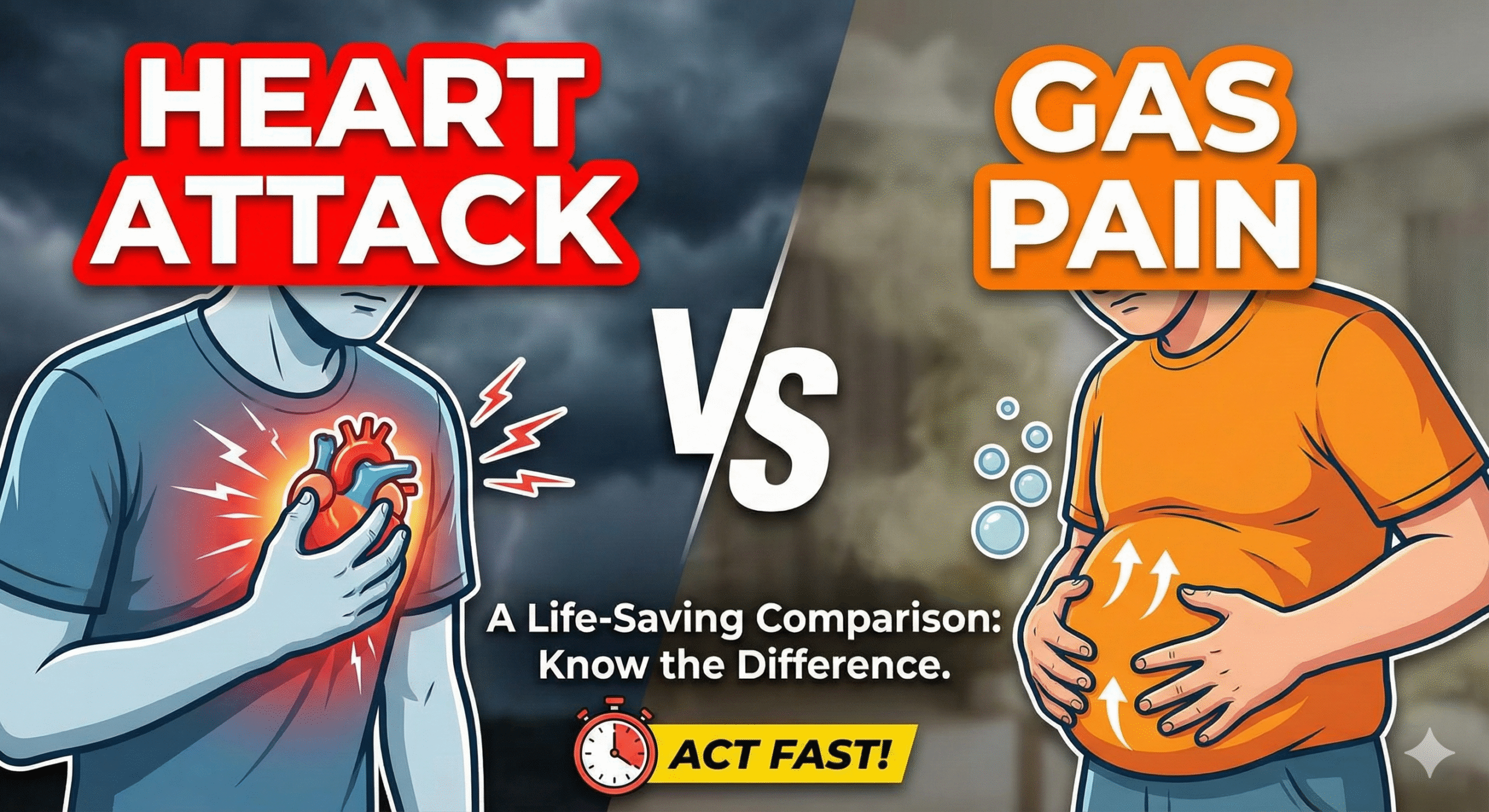



Heart Attack vs Gas Pain: A Life-Saving Comparison
Heart Attack vs Gas Pain is a confusion that sends thousands of people to emergency rooms every year—and saves lives when recognized early. Chest pain can come from the heart or the stomach. Knowing the difference between heart attack and gas pain can help you act fast and avoid deadly delays, especially if you live with heart disease, diabetes, or metabolic disorders.
Chest pain due to gas or heart problems may feel similar at first. But the cause, danger level, and treatment are very different. This guide explains everything in simple English, using medical facts, clear signs, and easy steps to help you decide when to seek emergency medical attention.
These facts can save a life—remember them:
Chest pain sits close to both the heart and stomach. Gas trapped in the stomach can press upward, causing sternum pressure.6 Heart pain can also feel like indigestion. This overlap makes knowing how to distinguish gastric pain from cardiac pain very important.
For people with diabetes or metabolic disorders, nerve sensitivity may be reduced. That’s why warning signs of heart attack vs indigestion must be understood clearly.
A heart attack happens when blood flow to the heart muscle suddenly drops.This is often due to a blocked artery.9 The medical term for chest pain from reduced blood flow is angina pectoris.
Gas pain comes from air trapped in the stomach or intestines. It often follows heavy meals, spicy food, or acid problems like acid reflux/GERD.
Knowing this basic cause already helps explain the difference between heart attack and gas pain.
This comparison helps answer: Can gas cause chest pain like a heart attack? Yes, but relief patterns are different.
| Feature | Heart Attack | Gas Pain |
| Pain Type | Pressure, squeezing | Sharp, burning |
| Radiation | Arm, jaw, neck | Usually none |
| Relief | No relief with burping | Relief after gas |
| Sweating | Common | Rare |
| Breathing | Shortness of breath | Normal |
| Risk | Life-threatening | Usually harmless |
This table clearly shows heart attack vs gas pain differences.
Many patients feel pain below the chest, near the stomach. This makes upper abdomen pain heart attack vs gas tricky.
Heart-related clues:
Gas-related clues:
When unsure, always treat it as heart-related first.
Heartburn is common in acid reflux/GERD.17 But heartburn vs heart attack symptoms can overlap.
Heartburn:
Heart Attack:
Never assume burning pain is safe.
Doctors don’t guess. They test.
These tests quickly separate chest pain due to gas or heart causes.
| Treatment | Used For | Purpose |
| Antacids | Gas pain | Reduce acidity |
| Proton Pump Inhibitors | GERD | Control acid |
| Blood thinners | Heart attack | Prevent clots |
| EECP Therapy | Heart disease | Improve blood flow |
| Lifestyle changes | Both | Reduce risk |
Natural care can support—but never replace emergency care.
Always talk to your doctor, especially if you have heart disease.
Enhanced External Counterpulsation (EECP) is a non-surgical therapy for chronic heart pain. It improves blood flow using external pressure cuffs.
Benefits:
EECP is helpful when medicines alone are not enough.
Go to the hospital immediately if you have:
Never wait to see if it’s gas.
If you have diabetes, heart signals may be silent. Learn early signs. Keep sugar, BP, and cholesterol controlled. Regular check-ups reduce confusion between heart attack vs gas pain.
NexIn Health is a trusted center for heart and spine care using non-invasive, integrated techniques. With 14+ years of experience and 30,000+ patients consulted, NexIn Health specializes in advanced therapies like EECP, lifestyle care, and metabolic health management.
📞 Call/WhatsApp: +91 9310145010
🌐 Website: www.nexinhealth.in
📧 Email: care@nxinhealth.in
Que: Can gas pain feel exactly like a heart attack?
Ans: It can feel similar, but gas pain usually improves with burping or movement.29
Que: How long does heart attack pain last?
Ans: It often lasts more than 10–15 minutes and does not go away with rest.
Que: Is chest pain after eating always gas?
Ans: No. Heart pain can also appear after meals, especially in heart patients.
Que: Can diabetes hide heart attack pain?
Ans: Yes. Diabetics may feel breathlessness instead of strong pain.
Que: Does left arm pain always mean heart attack?
Ans: It strongly suggests heart involvement, especially with chest pressure.
Que: Can antacids help heart pain?
Ans: No. If pain improves with antacids, it is more likely gas or reflux.
Que: What is the fastest test for heart attack?
Ans: An ECG/EKG test done in minutes.
Que: Is EECP safe for elderly patients?
Ans: Yes, when prescribed by a heart specialist.
Que: Should I ignore mild chest pain?
Ans: No. Mild pain can still signal serious heart problems.
Que: When in doubt, what should I do?
Ans: Always seek emergency medical attention.


Experience

Certified Therapists

Satisfied Patients
Contact us