Heart Attack Symptoms in Men vs Women: What Is the Difference?
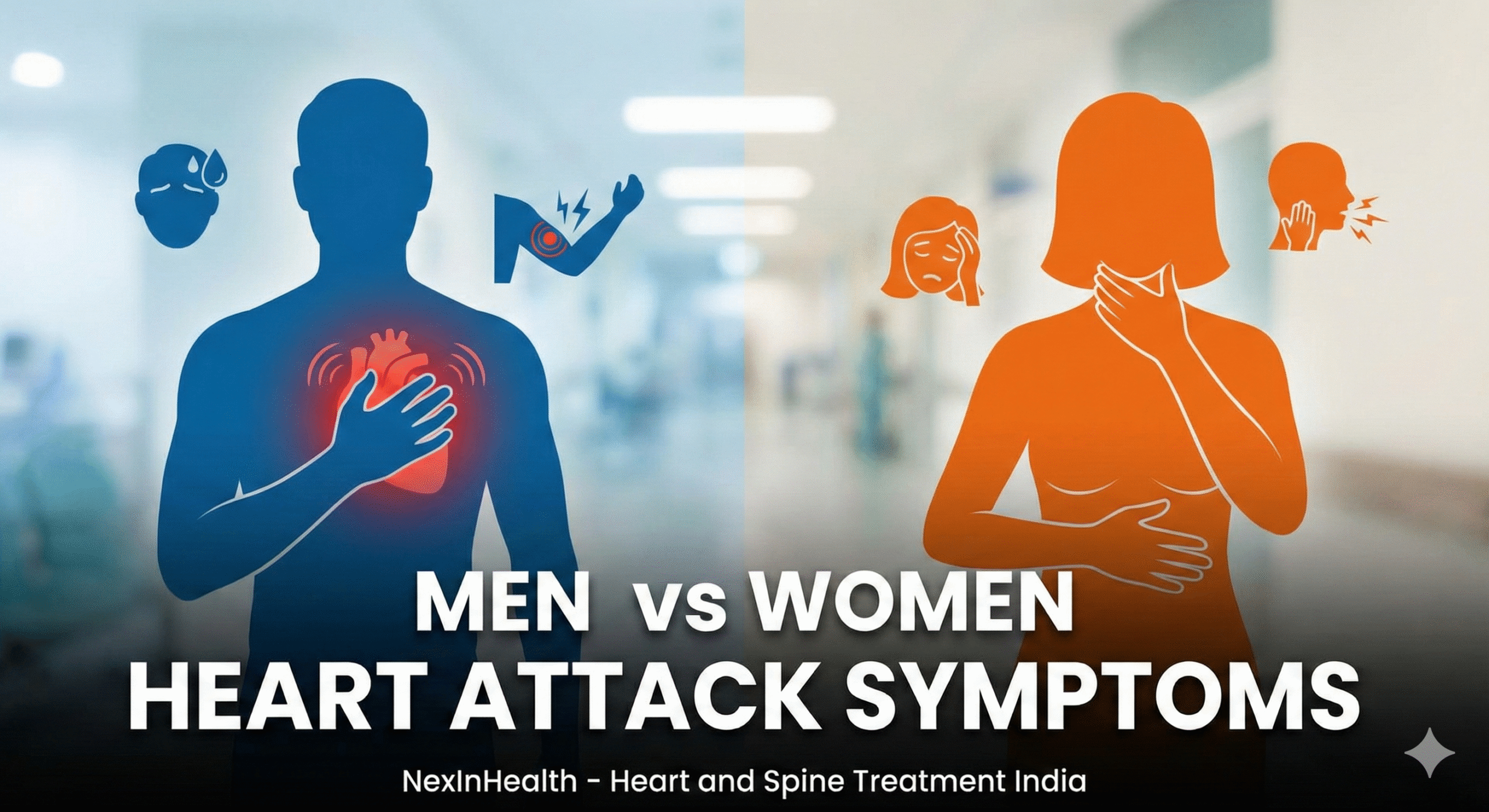


When we think of a heart attack, the first image that comes to mind is often a man clutching his chest in sudden, crushing pain. This “Hollywood heart attack” is what we are taught to expect. However, real life is very different, especially for women. Understanding the Heart Attack Symptoms in Men vs Women is not just about medical knowledge; it is about survival.
Heart disease does not discriminate by gender, but the way it shows up does. For patients with diabetes or metabolic disorders, the signs can be even more confusing. This guide will explore the critical Gender Difference Symptoms of Heart Attack so you can recognize the warning signs before it is too late. Whether you are a husband, a wife, or a caregiver, learning the Difference in Symptoms of heart attack Between Mens and Womens is the most important step you can take for your family’s safety.
Before we dive into the details, here are some eye-opening facts about heart attack symptoms in men vs women that might surprise you:
The Heart Attack Symptoms in Men vs Women differ because of biology. While the heart is the same organ, the way blood vessels behave can change based on sex hormones and artery size. Men usually have blockages in the main coronary arteries. Women, however, often have plaque that spreads evenly along the artery walls or issues in the smaller blood vessels.
This biological difference leads to the difference between heart attack symptoms in men and women. While men typically experience the classic “elephant on the chest” feeling, women often report symptoms that are subtler, leading to delays in treatment. Recognizing these gender differences heart attack signs is vital for early intervention.
For men, the symptoms often follow a more predictable pattern. This doesn’t mean every man will have the same experience, but there are classic signs to watch for.
The most reported symptom in men is intense pressure chest men feel. It is often described as a squeezing sensation, tightness, or a heavy weight sitting in the center of the chest. This pain may come and go or stay constant for several minutes.
In men, pain often travels. Left arm pain men heart symptoms are very common. The pain can shoot down the left arm, up into the neck, or even into the jaw. This happens because the nerves from the heart and the arm send signals to the same part of the brain.
While men chest pain heart signals are the hallmark, men also experience:
Understanding these signs helps in identifying the Gender Difference Symptoms of Heart Attack clearly.
Women’s symptoms are often labeled as “atypical,” but for women, they are actually quite typical. The danger lies in ignoring them because they don’t feel like a “heart attack.”
One of the most common early signs is profound tiredness. Women heart attack fatigue is not just being sleepy; it is an exhaustion so severe that making a bed or lifting a grocery bag feels impossible. This can happen weeks before the actual attack.
Many women mistake heart attacks for the stomach flu. Nausea heart women experience can be severe, sometimes accompanied by vomiting or indigestion that won’t go away with antacids. If you have sudden nausea with shortness of breath, pay attention.
Instead of chest pain, women often feel pain elsewhere. Back pain heart women suffer from usually occurs between the shoulder blades. It can feel like a pulled muscle or deep pressure. Jaw pain is also more frequent in women than in men.
You might wonder why women have different heart attack symptoms. The answer lies in the anatomy of the blood vessels.
Men usually suffer from obstructive coronary artery disease—a big blockage in a big tube. Women are more prone to Coronary Microvascular Disease (MVD). This affects the heart’s tiniest arteries. Because these small vessels don’t cause the same pressure changes as big ones, women might not feel the crushing chest pain. This leads to atypical symptoms women experience.
Some research suggests women may have different pain thresholds or describe pain differently, using words like “discomfort” rather than “pain.” This contributes to the confusion regarding the Difference in Symptoms of heart attack Between Mens and Womens.
Because the symptoms are subtle (like fatigue or back ache), misdiagnosed heart attack women cases are common. Doctors might treat them for stress or acidity, losing precious time. This is why knowing the Heart Attack Symptoms in Men vs Women is crucial for advocating for your own health.
Hormones play a massive role in heart health. This is a key factor in the difference between heart attack symptoms in men and women.
Before menopause, the female hormone estrogen helps keep arteries flexible and maintains healthy cholesterol levels. This estrogen and heart protection is why women typically develop heart disease about 10 years later than men.
After menopause, estrogen levels drop drasticially. This loss removes the protective shield, causing blood pressure and “bad” cholesterol to rise. Menopause heart risk increases significantly, making the gender differences in heart attack signs less distinct as women age.
For men, testosterone plays a role, but the hormonal effect on heart health is more pronounced in women’s life stages (pregnancy, menopause). Conditions like gestational diabetes or preeclampsia during pregnancy can also increase a woman’s heart risk later in life.
If you have diabetes, the Heart Attack Symptoms in Men vs Women become even harder to spot. High blood sugar damages nerves over time (neuropathy). This means you might not feel any pain at all.
For diabetic patients, regular screening is more important than waiting for symptoms.
Regardless of the Gender Difference Symptoms of Heart Attack, speed saves lives.
For Men: If you feel crushing chest pain, left arm pain men heart signs, or break out in a cold sweat, call an ambulance immediately.
For Women: If you have sudden extreme fatigue, back pain heart women symptoms, or nausea heart women signs that feel “wrong,” do not wait. Trust your gut.
Action Plan:
Recognizing Heart Attack Symptoms in Men vs Women early can prevent permanent heart damage.
Knowing the Difference in Symptoms of heart attack Between Mens and Womens is good, but prevention is better.
If you have survived a heart attack or have been diagnosed with heart disease, you might be looking for treatments beyond surgery. This is where EECP (Enhanced External Counterpulsation) comes in.
EECP Therapy is a non-invasive treatment often called a “Natural Bypass.” It uses cuffs on the legs to pump blood back to the heart in rhythm with your heartbeat. This encourages the growth of new, small blood vessels (collaterals) around blockages. It is especially beneficial for women with small vessel disease who might not be good candidates for stents.
Many patients are confused about their options. Here is a comparison to help you understand why EECP is a great non-invasive alternative.
| Parameter | EECP Therapy (Natural Bypass) | Angioplasty (Stent Surgery) |
| Invasiveness | Non-Invasive (No cuts, no needles) | Invasive (Catheter inserted in artery) |
| Recovery | Immediate (Walk out after session) | Days to weeks of rest |
| Risks | Zero to minimal risk | Risk of bleeding, clots, infection |
| Mechanism | Improves blood flow naturally globally | Mechanically opens one blockage |
| Suitability | Good for Microvascular Disease (Women) | Best for large artery blockages (Men) |
| Hospital Stay | Outpatient (No admission) | Requires hospitalization |
| Cost | Cost-effective | Expensive procedure |
Because of the atypical symptoms women experience, they are sometimes dismissed in emergency rooms.
If you are a woman and you feel early heart attack symptoms, tell the doctor: “I suspect I am having a heart attack. Please check my heart.” Don’t let them dismiss it as anxiety. Understanding gender differences in heart attack signs empowers you to fight for your life.
If you are concerned about Heart Attack Symptoms in Men vs Women or managing heart disease, NexIn Health is your expert partner.
NexIn Health is a premier center for Heart and Spine Treatment, specializing in Non-Invasive Integrated Techniques. We focus on healing the heart naturally without surgery. With over 14+ Years of Experience, we have successfully Consulted Over 30,000 patients, helping them reverse lifestyle diseases. We combine advanced therapies like EECP with holistic care to treat both men and women effectively.
Contact us today to protect your heart!
Que: What are the main Heart Attack Symptoms in Men vs Women?
Ans: Men typically have crushing chest pain and left arm pain, while women often experience extreme fatigue, nausea, back pain, and shortness of breath without chest pain.
Que: Why are misdiagnosed heart attack women cases so common?
Ans: Because women often have “atypical” symptoms like indigestion or anxiety, doctors may mistake the heart attack for a stomach issue or panic attack.
Que: Does menopause heart risk really increase that much?
Ans: Yes. After menopause, the loss of estrogen protection causes a rapid rise in risk factors like blood pressure and cholesterol, equaling the risk men face.
Que: What does women heart attack fatigue feel like?
Ans: It feels like sudden, overwhelming exhaustion. You might feel too tired to lift a spoon or walk to the bathroom, even if you haven’t done heavy work.
Que: Are men chest pain heart signs always severe?
Ans: Not always. Sometimes it can feel like mild pressure or squeezing, similar to a tight hug, rather than sharp pain.
Que: Can nausea heart women symptoms happen without vomiting?
Ans: Yes, many women report feeling sick to their stomach or having a burning sensation (indigestion) that doesn’t go away, without actually vomiting.
Que: What is the Difference in Symptoms of heart attack Between Mens and Womens regarding arm pain?
Ans: Men are more likely to have pain radiating down the left arm. Women can have pain in both arms, or no arm pain at all, but rather pain in the jaw or back.
Que: How does estrogen and heart protection work?
Ans: Estrogen helps keep blood vessels flexible and wide, allowing better blood flow and keeping bad cholesterol levels lower in younger women.
Que: Is back pain heart women symptom sharp or dull?
Ans: It is usually a dull, deep ache or pressure located between the shoulder blades, often described as a “pulled muscle” feeling.
Que: What are Gender Difference Symptoms of Heart Attack in diabetics?
Ans: Diabetic men and women often have “silent” attacks with no pain at all. Their main symptoms might just be breathlessness, sweating, or sudden dizziness.


Experience

Certified Therapists

Satisfied Patients
Contact us