Main Causes of Heart Attack: Why It Happens and How to Reduce Your Risk
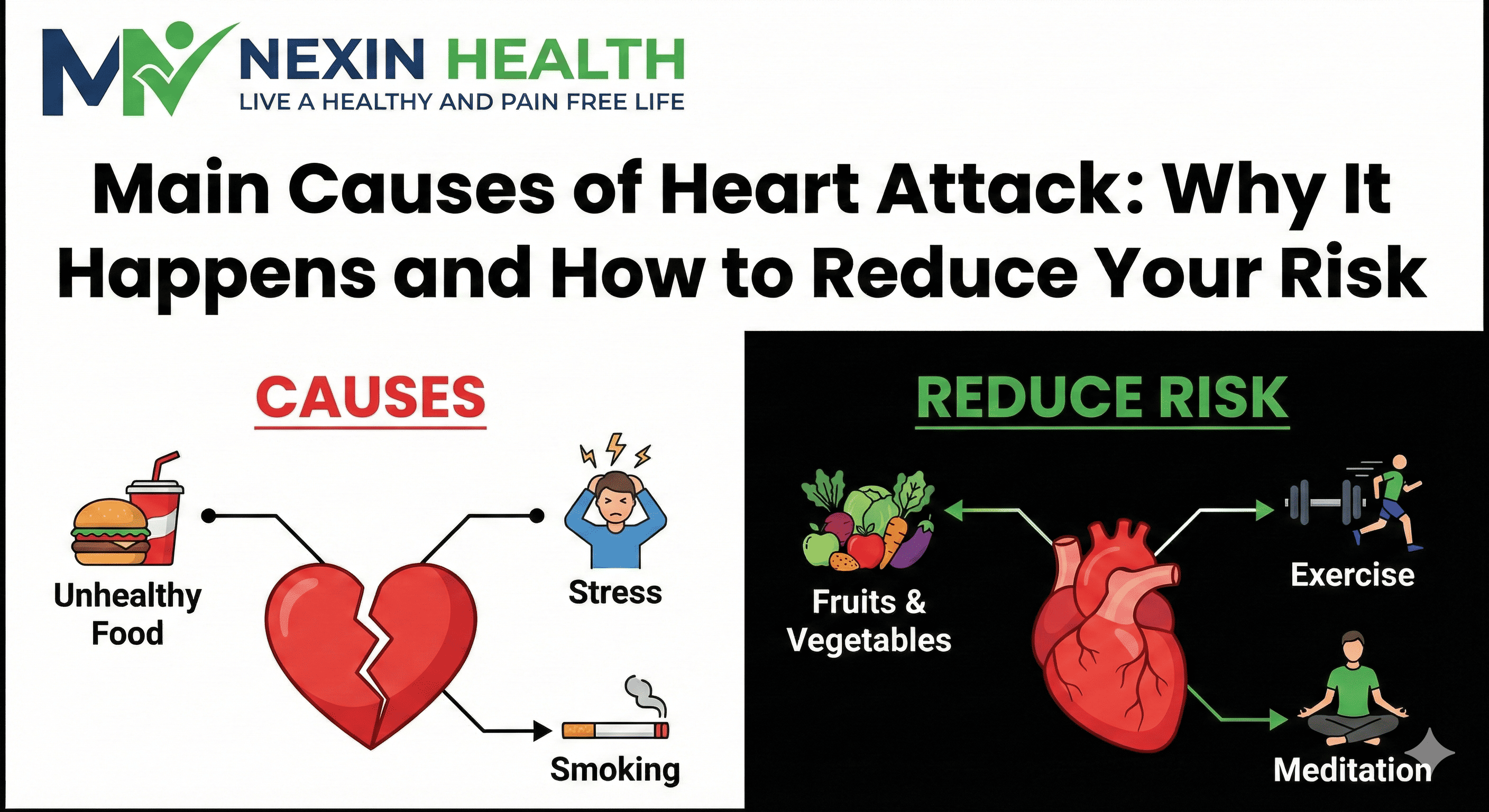


Understanding the Main Causes of Heart Attack is the first step toward saving a life—perhaps your own. We often hear about heart attacks happening suddenly, but the truth is, the problem usually starts building up years in advance. For patients with diabetes, high blood pressure, or metabolic disorders, the risk is even higher. But why does the heart suddenly stop getting blood?
In this guide, we will break down the complex medical reasons into simple language. We will explore why heart attack happens, the role of lifestyle, and how to reduce your risk naturally. By knowing the reasons for heart attack, you can take control of your health today.
Here are some shocking facts about heart attacks that might surprise you:
Monday Blues: Research shows that heart attacks are most likely to happen on Monday mornings. This is due to a sudden rise in stress hormones like cortisol as the work week begins.
The Sugar Link: For many people, especially diabetics, high blood sugar is a bigger cause of artery damage than dietary fat. Insulin resistance heart risks are often silent killers.
Not Just Old Age: Heart attacks are rising in young people (under 40) due to poor lifestyle choices and high stress.
Gum Disease Connection: Believe it or not, bacteria from gum disease can enter your bloodstream and cause chronic inflammation arteries, leading to heart disease.
Sitting Danger: Sitting for more than 6 hours a day can double your risk of heart failure, even if you exercise occasionally.
To understand the Main Causes of Heart Attack, we must first look at how the heart works. Your heart is a muscle that needs a constant supply of oxygen-rich blood. This blood flows through tubes called coronary arteries.
A heart attack happens when this flow is blocked. But what causes the blockage? It isn’t just one thing. It is usually a combination of metabolic factors, lifestyle choices, and genetics. When we ask what leads to heart attack, the answer often points to a long-term process called atherosclerosis. This is when the arteries get hard and narrow.
Think of your arteries like water pipes in a house. Over time, rust and dirt (plaque) build up inside. If a chunk of that dirt breaks off, it clogs the pipe completely. This is exactly why heart attack happens in the human body.
The most direct answer to the Main Causes of Heart Attack lies inside your blood vessels.
It starts with plaque. Plaque is a sticky substance made of fat, cholesterol, calcium, and other substances found in the blood. Over time, plaque hardens and narrows your arteries. A plaque rupture artery event occurs when this hard shell cracks. This is a medical emergency.
When plaque ruptures, your body tries to fix the “injury” by forming a clot. This blood clot heart mechanism is meant to heal, but in a narrow artery, it acts like a cork. It completely stops blood flow to the heart muscle. Without blood, the heart muscle begins to die.
We often blame cholesterol, but it is specifically the “bad” LDL cholesterol that causes trouble. Cholesterol blockage happens when there is too much LDL and not enough HDL (good cholesterol) to clean it up. This imbalance is one of the most common heart attack causes.
Over years, high blood pressure and plaque lead to narrowed coronary arteries. This limits the amount of blood that can reach your heart, especially during exercise or stress. This condition is often called Coronary Artery Disease (CAD).
While biology plays a role, your daily habits are often the real drivers behind the Main Causes of Heart Attack.
Smoking is arguably the single most preventable cause. Smoking heart disease risks are huge because chemicals in tobacco damage the lining of your arteries and make your blood thick and sticky. This makes clots much more likely to form.
Carrying extra weight puts a massive strain on your heart. Obesity and heart health are enemies. Excess fat, especially around the belly, releases inflammatory chemicals that damage blood vessels. It also leads to other heart attack reasons like high blood pressure and diabetes.
Lack of movement is a major issue. Your heart is a muscle; if you don’t use it, it gets weak. A sedentary lifestyle leads to poor circulation and weight gain, accelerating the reasons for heart attack.
Diets high in processed foods, trans fats, and sugar fuel the fire. They increase triglycerides heart risk—a type of fat in your blood that hardens arteries.
Sometimes, other diseases act as the Main Causes of Heart Attack. For patients with metabolic disorders, these risks are interconnected.
If you have diabetes, your risk of heart disease is double that of a non-diabetic. Diabetes heart risk comes from high blood sugar levels. Sugar acts like slow-moving glass shards in your blood vessels, scratching and damaging the lining. This damage invites plaque to form.
Blood pressure is the force of blood pushing against artery walls. High BP heart attack risk is high because this constant pressure creates tears in the artery walls. These tears become traps for cholesterol and plaque.
Even before you get full-blown diabetes, you might have insulin resistance. Insulin resistance heart problems occur when your body can’t use sugar effectively. This leads to high insulin levels, which thickens blood vessel walls and raises blood pressure.
Scientists now believe inflammation is key. Chronic inflammation arteries makes plaque unstable and more likely to burst. Conditions like arthritis or even stress can raise inflammation levels.
We cannot talk about the Main Causes of Heart Attack without mentioning stress.
When you are stressed, your body releases adrenaline and cortisol. These hormones make your heart beat faster and narrow your blood vessels. If your arteries are already narrowed by plaque, a sudden spike in stress can be the final straw that causes a blood clot heart event. This explains why heart attack happens during angry arguments or shocking news.
Metabolic syndrome is a cluster of conditions that occur together, increasing your risk of heart disease, stroke, and type 2 diabetes. It includes increased blood pressure, high blood sugar, excess body fat around the waist, and abnormal cholesterol levels.
This syndrome is a factory for the Main Causes of Heart Attack. It creates a perfect storm of narrowed coronary arteries, high inflammation, and thick blood. Addressing metabolic health is crucial for prevention.
Now that we know the Main Causes of Heart Attack, the good news is that you can fight back. You don’t always need heavy medication to lower your risk.
Eat an Anti-Inflammatory Diet: Focus on whole foods. Vegetables, fruits, nuts, and fatty fish reduce chronic inflammation arteries.
Move More: A simple 30-minute walk every day helps control obesity and heart stress.
Manage Stress: Yoga and meditation lower cortisol levels, protecting your heart from sudden spasms.
Quit Smoking: Your risk drops significantly within just one year of quitting.
Control Sugar: Managing diabetes heart risk through diet is one of the most powerful steps you can take.
If you already have heart disease or angina, knowing the Main Causes of Heart Attack isn’t enough; you need treatment.
EECP (Enhanced External Counterpulsation) is a non-invasive treatment often called a “Natural Bypass.” It addresses the root cause: poor blood flow. By using pressure cuffs on the legs to pump blood back to the heart, EECP encourages the growth of new, small blood vessels (collaterals). These new vessels bypass the cholesterol blockage naturally.
Many patients wonder if they should go for surgery or try natural methods. Here is a comparison to help you understand your options.
| Parameter | EECP Therapy (Natural Bypass) | Angioplasty (Stent Surgery) |
| Invasiveness | Non-Invasive (No cuts, no needles) | Invasive (Catheter inserted in body) |
| Recovery | Immediate (Walk out after session) | Weeks of recovery needed |
| Risk | Zero to minimal risk | Risk of bleeding, clots, infection |
| Mechanism | Improves blood flow globally | Mechanically opens one blockage |
| Focus | Treats the whole heart circulation | Treats only a specific blockage |
| Cost | Cost-effective | Expensive procedure |
| Hospital Stay | No admission needed | Requires hospitalization |
Don’t wait for a heart attack to see a doctor. If you have risk factors like high BP heart attack potential or high triglycerides, get checked regularly. Early detection of plaque rupture artery risks can save your life.
Routine tests like a Lipid Profile, HbA1c (for diabetes), and CRP (for inflammation) can give you a clear picture of your causes of heart attack risk.
If you are worried about the Main Causes of Heart Attack and want to protect your future, NexIn Health is here to guide you.
NexIn Health is a leading expert in Heart and Spine Treatment with Non-Invasive Integrated Techniques. We specialize in reversing heart disease risks without surgery. With over 14+ Years of Experience and having Consulted Over 30,000 patients, we combine modern science with holistic care.
Phone & WhatsApp: +91 9310145010
Website: www.nexinhealth.in
Email: care@nxinhealth.in
Contact us today to start your journey to a stronger heart.
Que:
What are the top three Main Causes of Heart Attack?
Ans:
The top three causes are plaque buildup (atherosclerosis), high blood pressure, and uncontrolled diabetes. These factors damage arteries and block blood flow.
Que:
How does cholesterol blockage actually happen?
Ans:
Excess LDL (bad) cholesterol sticks to the walls of damaged arteries. Over time, it hardens into plaque, narrowing the path for blood to flow.
Que:
Why is diabetes heart risk so high?
Ans:
High blood sugar damages blood vessels and nerves that control the heart. It also increases inflammation, making clots more likely to form.
Que:
Can obesity and heart problems be reversed?
Ans:
Yes. Losing even 5-10% of your body weight can significantly lower your blood pressure, cholesterol, and strain on your heart.
Que:
What is a plaque rupture artery?
Ans:
It is when a hard deposit of plaque inside an artery cracks open. This triggers a blood clot to form instantly, which causes the heart attack.
Que:
How does smoking heart disease affect arteries?
Ans:
Chemicals in smoke thicken the blood and damage the inner lining of arteries, promoting rapid plaque buildup and clot formation.
Que:
What are the signs of chronic inflammation arteries?
Ans:
You cannot feel inflammation, but a blood test called hs-CRP can measure it. High levels indicate a higher risk of heart attack.
Que:
Is insulin resistance heart damage permanent?
Ans:
Not always. With diet changes, exercise, and weight loss, you can improve insulin sensitivity and heal your blood vessels.
Que:
Can high BP heart attack risks be lowered without medicine?
Ans:
Lifestyle changes like reducing salt, walking daily, and managing stress can lower BP, but you should never stop medication without a doctor’s advice.
Que:
What are triglycerides heart risk factors?
Ans:
Triglycerides are blood fats. High levels, caused by eating too much sugar and refined carbs, harden arteries and increase stroke and heart attack risk.


Experience

Certified Therapists

Satisfied Patients
Contact us