Summer Diet Plan for Diabetes Patients: Best Foods, Meal Chart & Hydration Tips
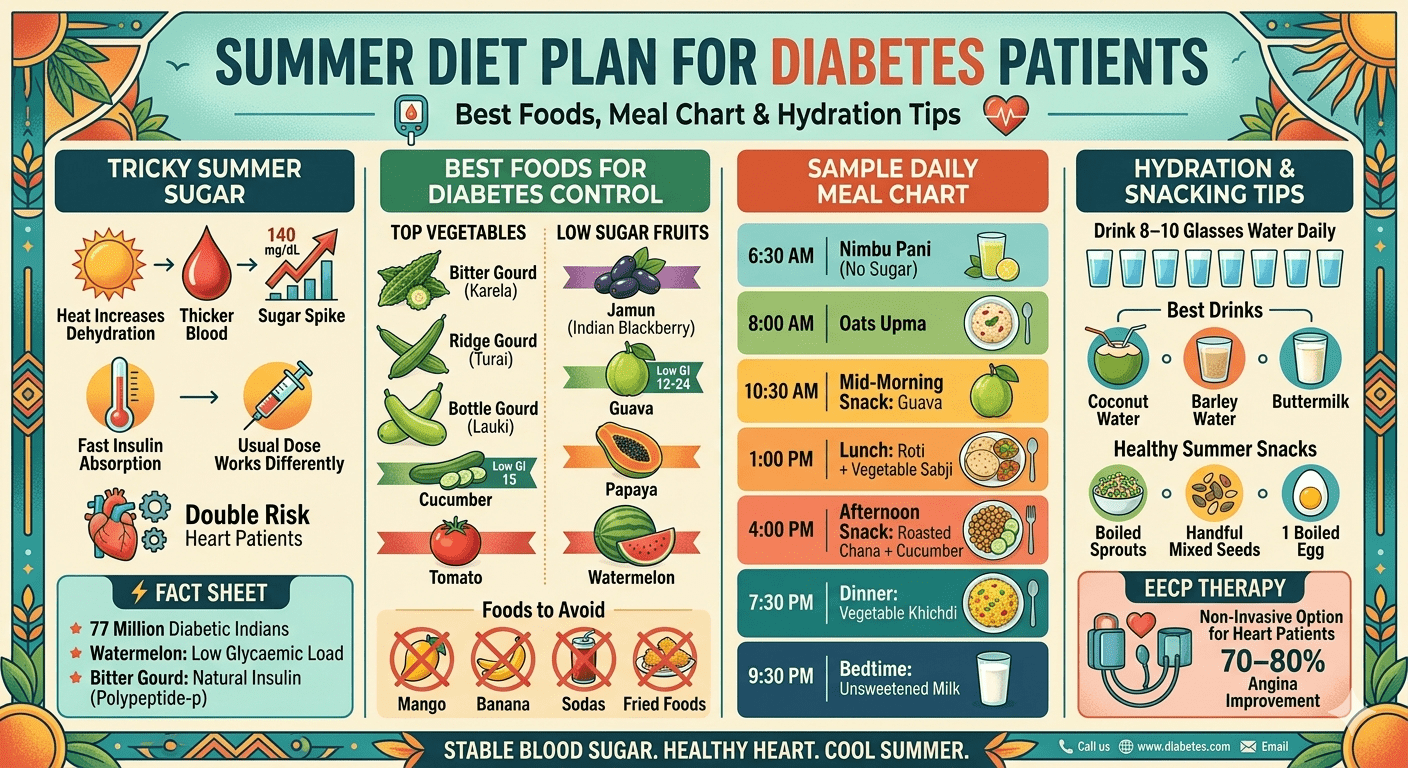



Summer diet plan for diabetes patients is one of the most searched health topics every year as temperatures rise and blood sugar levels become harder to manage. Hot weather changes how your body handles food, fluids, and energy. For people living with diabetes — especially those who also have heart disease or metabolic disorders — summer brings extra challenges. The right food choices in summer can help keep blood sugar stable, reduce strain on the heart, and keep you feeling cool and energetic all day.
⚡ FACT SHEET: Surprising Facts About Diabetes & Summer
|
Managing blood sugar control in summer is harder than people think. Heat makes your body lose fluids quickly, which thickens your blood. Thicker blood means glucose stays more concentrated — and your blood sugar goes up. Also, the heat affects how quickly your body absorbs insulin from injections or devices. This is why your usual dose may not work the same way in June or July as it does in December.
Doctors often call this the ‘summer sugar spike.’ It is a real and well-documented problem. Patients with both diabetes and heart disease are at double the risk, because their hearts are already working harder to pump blood in the heat.
Choosing the right foods is the foundation of a healthy summer. The goal is to eat foods that cool the body, keep blood sugar steady, and give energy without causing sudden spikes.
Fruits are often feared by diabetic patients, but many are safe in the right portions. Focus on low-sugar fruits for diabetics in summer:
Below is a practical summer food chart for diabetic patients. This meal plan is designed to keep blood sugar levels stable throughout the day while also supporting heart health.
| Time | Meal | Sample Food Options |
| 6:30 AM | Early Morning | 1 glass methi-soaked water or nimbu pani (no sugar) |
| 8:00 AM | Breakfast | Oats upma / vegetable daliya / moong dal chilla with chutney |
| 10:30 AM | Mid-Morning Snack | 1 small guava or 10 almonds soaked overnight |
| 1:00 PM | Lunch | 1–2 small rotis + mixed vegetable sabji + small bowl dal + salad |
| 4:00 PM | Afternoon Snack | Cucumber slices / roasted chana / 1 cup butter milk (no sugar) |
| 7:30 PM | Dinner | Vegetable khichdi / grilled fish / 1 roti + lauki sabji + salad |
| 9:30 PM | Bedtime (if needed) | 1 cup warm milk (unsweetened) or a few walnuts |
Dehydration is a silent enemy for diabetic patients. Hydration tips for diabetes patients go beyond just drinking water. Here is what works best:
Best drinks for diabetic patients in summer include barley water (jau ka paani), coriander seed water, and fenugreek water. These are time-tested home remedies that help control sugar and beat the heat.
Snacking wisely is a key part of any diabetic meal plan for hot weather. Hunger pangs are common in summer due to faster metabolism. The right snacks can prevent overeating at main meals.
Avoid maida-based snacks, fried foods, and packaged biscuits — these cause rapid blood sugar spikes and are bad for heart health too.
Understanding glycaemic index foods for diabetics is one of the smartest steps you can take. The Glycaemic Index (GI) measures how quickly a food raises your blood sugar. Lower GI means slower sugar release — which is exactly what diabetics need.
| Food Item | Glycaemic Index | Diabetic-Friendly? |
| Brown rice | 50–55 | Yes (small portion) |
| White rice | 72–89 | Limit |
| Oats | 42–55 | Excellent |
| Watermelon | 72 (low glycaemic LOAD) | Yes (small serving) |
| Jamun (Blackberry) | 25 | Excellent |
| White bread | 70–80 | Avoid |
| Multigrain roti | 40–50 | Yes |
| Mango | 51–56 | Occasional, small amount |
| Cucumber | 15 | Excellent |
| Boiled potato | 78 | Avoid or minimise |
When the temperature rises above 35°C, your food choices need to change. Here is a quick guide on what diabetics should eat in hot weather:
| Diet Type | Blood Sugar Control | Heart Health Benefit | Suitable for Summer | Ease of Following |
| Traditional Indian Diet (Low GI) | Excellent | Moderate to Good | Yes | Easy |
| Mediterranean Diet | Very Good | Excellent | Moderate | Moderate |
| Low-Carb Diet (Keto) | Good | Moderate | Challenging in heat | Difficult |
| DASH Diet | Very Good | Excellent | Yes | Moderate |
| Vegan Diet | Good | Good | Yes | Moderate |
| High-Protein Diet | Moderate | Moderate | Can dehydrate | Moderate |
For most Indian diabetic patients, a Low-GI traditional diet combined with elements of the DASH diet gives the best results in summer — especially for those with heart disease or metabolic disorders.
Many patients prefer to include natural therapies alongside their medicines. These Ayurvedic, homeopathic, and herbal solutions have long been part of Indian health traditions and are supported by growing scientific evidence.
Some homeopathic remedies like Uranium Nitricum, Syzygium Jambolanum, and Phosphoric Acid are used by practitioners to support blood sugar management. These should always be taken under the guidance of a qualified homeopathic doctor.
EECP (Enhanced External Counterpulsation) Therapy is an advanced, non-invasive treatment that is particularly useful for patients who have both diabetes and heart disease. It works by improving blood circulation throughout the body using specially designed cuffs that squeeze blood from the legs upward to the heart in a timed, computer-controlled manner.
According to recent clinical trials, EECP therapy shows a 70–80% improvement rate in angina symptoms among patients with diabetes and coronary artery disease. NexIn Health is one of the leading centres in India offering EECP therapy as part of their Integrated Non-Invasive Treatment programme.
Que:
Is it safe for a diabetic heart patient to eat fruits in summer?
Ans:
Yes, but choose low-GI fruits like guava, jamun, papaya, and small servings of watermelon. Avoid high-sugar fruits like mango and banana in large amounts. Always eat fruit as a snack — not with a main meal — to avoid a sugar spike.
Que:
How much water should a diabetic patient drink in summer?
Ans:
At least 8–10 glasses (2–2.5 litres) of water per day. Increase this if you are outdoors or sweating heavily. For heart patients, consult your doctor if you have any fluid restrictions.
Que:
Can I drink coconut water if I have diabetes?
Ans:
Yes, one small cup (150–200 ml) of fresh coconut water per day is generally safe. It has natural electrolytes and a moderate glycaemic load. Avoid packaged or sweetened versions.
Que:
What is the best breakfast for a diabetic patient in summer?
Ans:
A good summer breakfast includes oat upma, moong dal chilla, vegetable daliya, or a small bowl of sprouts with a boiled egg. These are light, filling, and help maintain blood sugar stability for hours.
Que:
Why does blood sugar go up in summer even if I eat the same food?
Ans:
Heat causes dehydration, which concentrates glucose in the blood. It can also affect how insulin is absorbed. Your medication may need a seasonal adjustment — always consult your doctor before changing doses.
Que:
Is bitter gourd (karela) really helpful for diabetes?
Ans:
Yes. Bitter gourd contains a compound called Polypeptide-p which acts like plant-based insulin. According to a study published in the Journal of Ethnopharmacology, regular consumption of karela juice can lower fasting blood sugar significantly.
Que:
Can a diabetic patient with heart disease do exercise in summer?
Ans:
Yes, but choose the right time — early morning before 8 AM or after sunset when it is cooler. Opt for gentle walking, yoga, or stretching. Avoid intense outdoor exercise during peak heat (11 AM – 4 PM). Always carry water.
Que:
What snacks should a diabetic heart patient avoid in summer?
Ans:
Avoid deep-fried snacks (samosas, pakodas), sugary cold drinks, packaged namkeen, biscuits made with maida, ice cream, and canned juices. These cause rapid blood sugar spikes and add stress on the heart.
Que:
Is EECP Therapy suitable for me if I have both diabetes and heart disease?
Ans:
EECP therapy is a safe, non-surgical option for many patients with diabetes and heart disease — especially for those who have angina, reduced blood flow, or are not fit for surgery. It improves circulation, reduces symptoms, and is done without any cuts or medications. Consult NexIn Health to check if you are a suitable candidate.
Que:
How can Ayurvedic remedies help with blood sugar control in summer?
Ans:
Ayurvedic herbs like Gymnema Sylvestre (gudmar), bitter gourd, fenugreek, and neem have been used for centuries to control blood sugar. They work best when used alongside a healthy diet and lifestyle — not as a replacement for prescribed medicines. Always inform your doctor before starting any herbal remedy.
| 📞 CONSULT NEXIN HEALTH TODAY
NexIn Health is a trusted name in Heart and Spine Treatment using Non-Invasive Integrated Techniques. With over 14 years of experience and more than 30,000 patients consulted, NexIn Health offers expert, personalised care for diabetes, heart disease, and metabolic disorders. 📱 Phone & WhatsApp: +91 9310145010 🌐 Website: www.nexinhealth.in 📧 Email: care@nexinhealth.in |


Experience

Certified Therapists

Satisfied Patients
Contact us