Can Excess Sweating Cause Mineral Loss in Heart Patients? What You Need to Know
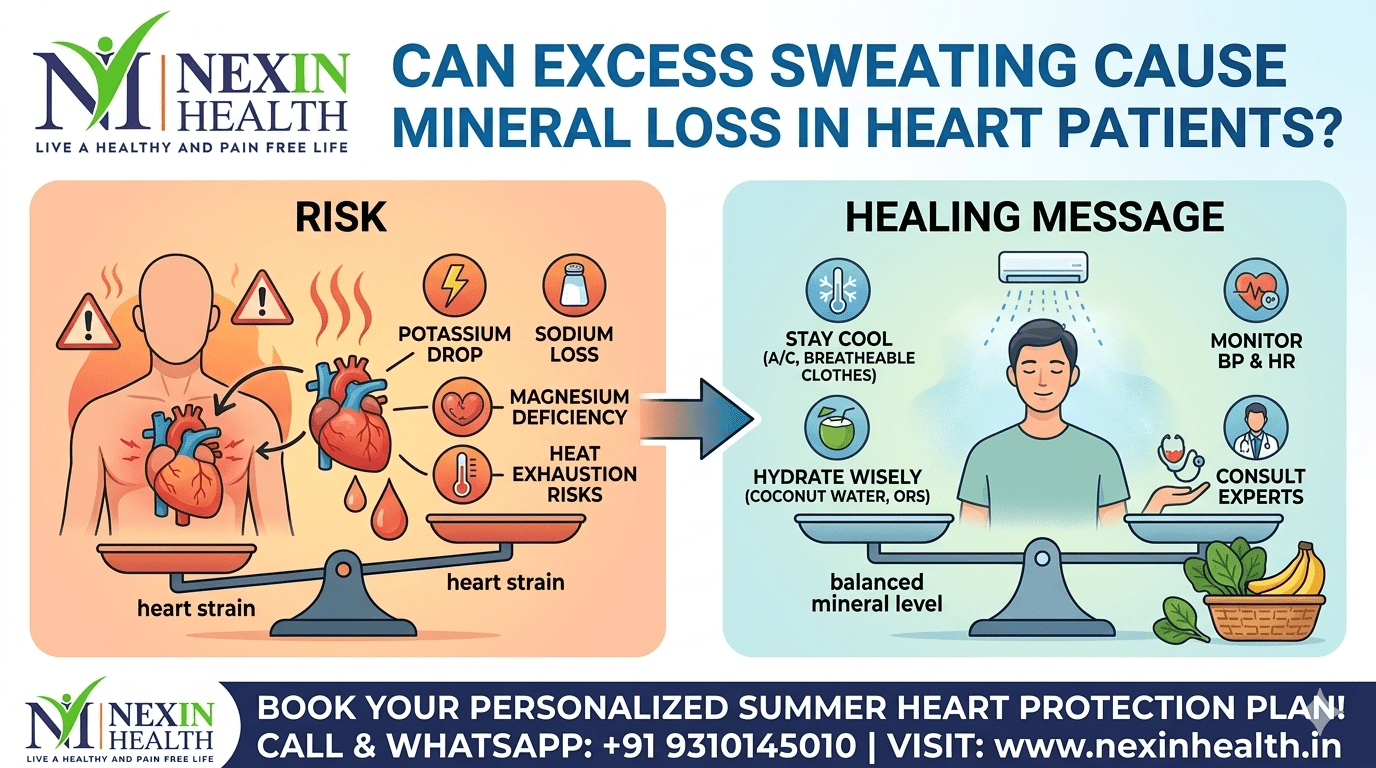



Can excess sweating cause mineral loss in heart patients? Yes — and it is one of the most overlooked cardiac risks of every summer. Most people think of sweating as just a minor inconvenience on a hot day. But for someone living with heart disease, diabetes, or a metabolic disorder, every drop of sweat carries away precious minerals that the heart needs to function properly.
When these minerals — especially sodium, potassium, magnesium, and calcium — fall below safe levels, the consequences range from sudden dizziness and muscle cramps to dangerous irregular heartbeats and even cardiac arrest. What makes this risk even more serious is that heart patients are already on the edge of mineral balance due to their conditions and medications.
This blog will walk you through exactly how excess sweating mineral loss in heart patients occurs, which minerals matter most, what the warning signs look like, and what you can do to protect yourself — especially during India’s long, hot, and humid summer months.
Before we explore the science, here are some eye-opening facts that most cardiac patients never hear from their doctors:
| Surprising Fact | Why It Matters for Heart Patients |
| 1 Litre of Sweat = 900mg Sodium Lost | In extreme heat, you can lose nearly a gram of sodium per litre of sweat — and heart patients lose it even faster due to overactive sympathetic nerves. |
| Potassium Drop = Irregular Heartbeat | Even a small drop in potassium levels (below 3.5 mEq/L) can trigger life-threatening arrhythmias in heart patients within hours. |
| Diuretics + Summer Heat = Double Danger | Many heart patients take diuretics that already flush out minerals. Add summer sweating and the loss becomes dangerously rapid. |
| Sweating Begins at Just 37°C Body Temp | The body starts sweating to cool itself at core temperatures as low as 37°C. In humid weather, this cooling fails — but sweating continues, draining minerals non-stop. |
| 60% of Heart Failure Patients Have Low Magnesium | Research shows nearly 60% of hospitalized heart failure patients are magnesium deficient — a mineral critical for normal heart rhythm. |
| India’s Coastal States at Highest Risk | Kerala, West Bengal, Odisha, and Maharashtra have the highest summer humidity in India — making electrolyte loss a critical cardiac risk during May–July. |
| Night Sweats Are Often Ignored | Most heart patients dismiss night sweats as a minor discomfort — but nocturnal mineral loss is a documented early warning sign of worsening heart failure. |
To understand why can excess sweating cause mineral loss in heart patients is such a critical question, we need to understand what happens inside the body when the heart is already under stress and the body starts sweating heavily.
Sweat is not just water. It is a carefully balanced fluid containing several key minerals called electrolytes. These electrolytes carry electrical charges that control nerve signals, muscle contractions, and — most importantly — the rhythm of the heart itself.
In healthy individuals, the body replaces these minerals naturally through food and drink. But heart patients face three major problems that make this process much harder:
According to research published in the journal Climate Dynamics and clinical data from the US CDC, the combination of high humidity and cardiac conditions creates conditions where electrolyte loss can destabilize blood pressure and heart rhythm within just a few hours of heat exposure.
Understanding excessive sweating and electrolyte imbalance requires knowing which specific minerals are at risk and what role each plays in heart function. Here is a complete breakdown:
| Mineral | Normal Level | Lost Through Sweat? | Heart Risk if Low | Best Food Sources |
| Sodium (Na) | 135–145 mEq/L | Yes — heavily | Low BP, fainting, confusion | Coconut water, ORS, salted nuts |
| Potassium (K) | 3.5–5.0 mEq/L | Yes — moderately | Arrhythmia, palpitations, muscle cramps | Banana, sweet potato, spinach |
| Magnesium (Mg) | 1.7–2.2 mg/dL | Yes — significantly | Irregular heartbeat, chest tightness | Pumpkin seeds, dark leafy greens |
| Calcium (Ca) | 8.5–10.2 mg/dL | Yes — mildly | Heart muscle weakness, spasms | Ragi, sesame seeds, dairy |
| Chloride (Cl) | 98–106 mEq/L | Yes — with sodium | Fluid imbalance, acid-base disruption | Table salt (in moderation), seaweed |
Each of these minerals has a precise normal range in the blood. When sweating pushes levels below that range, the heart’s electrical system — which depends on these minerals like a battery depends on its chemicals — begins to malfunction.
Can sweating lower potassium levels? Yes — and this is one of the most dangerous consequences of excess sweating in heart patients. Potassium is the mineral most directly responsible for maintaining the heart’s electrical rhythm.
When potassium drops below 3.5 mEq/L — a condition called hypokalemia — the following changes occur in the heart:
Recent clinical data suggests that potassium levels can fall by 0.5–1.0 mEq/L within just 2–3 hours of heavy sweating in humid conditions. For heart patients already close to the lower boundary, this is enough to trigger heart palpitations due to electrolyte loss, muscle weakness, and cardiac events.
Potassium-rich foods for heart patients to include daily: bananas, sweet potatoes, spinach, lentils (dal), coconut water, and oranges. However, patients with kidney disease must consult their doctor before increasing potassium intake, as excess potassium is also dangerous.
Sodium loss from sweating symptoms are frequently dismissed as simple fatigue or dehydration — but in heart patients, low sodium (hyponatremia) is a medical emergency that requires immediate attention.
Sodium is the primary mineral that maintains fluid balance between the blood and body tissues. When sodium drops due to excessive sweating:
Warning signs of low sodium in summer to watch for: persistent headache that does not improve with rest, sudden nausea, muscle weakness, extreme fatigue, and confusion or disorientation — especially after being outdoors or after night sweats.
Magnesium deficiency and heart rhythm have a direct and well-established connection. Magnesium acts as a natural calcium channel blocker inside the heart’s muscle cells — it controls the speed and regularity of electrical impulses that make the heart beat.
According to published research, nearly 60% of heart failure patients admitted to hospitals are found to be magnesium deficient. Yet magnesium is rarely checked during routine summer consultations — making it one of the most dangerous signs of mineral deficiency in heart patients that goes undetected.
Low magnesium from sweating produces a recognizable cluster of symptoms:
The most magnesium-rich foods are pumpkin seeds, dark leafy greens (palak), almonds, and whole grains. However, can sweating worsen arrhythmia symptoms? Absolutely — and magnesium loss is one of the primary mechanisms through which this happens.
Dehydration and heart strain connection is profound and often underappreciated. When the body loses fluid through sweating, blood becomes thicker and harder to pump. The heart must generate more pressure to push this thickened blood through the vessels — dramatically increasing heat stress and cardiac workload.
Clinical research from Harvard Medical School shows that even mild dehydration — as little as 2% of body weight in fluid loss — measurably increases heart rate, reduces stroke volume, and reduces the efficiency of oxygen delivery to muscles and organs.
For heart patients, this chain of events is especially serious:
Hot humid weather heart patient precautions must become a daily routine during Indian summers, especially in May, June, and July when humidity peaks in coastal states. Follow this checklist every day:
How humidity affects heart patients goes beyond simple discomfort. When relative humidity rises above 60%, sweat cannot evaporate from the skin properly. The body keeps producing more sweat to cool itself — but the cooling never happens effectively. This means continuous mineral loss without the cooling benefit.
This is precisely why humidity and heart health risks are considered more dangerous than dry heat by cardiologists. In dry heat, at least the sweating cools the body and eventually stops. In humid heat, the body sweats continuously — draining minerals hour after hour without relief.
In India’s coastal regions during monsoon transition periods, wet-bulb temperatures can remain dangerously high even at night — meaning heart patients experience electrolyte loss in heart patients during summer continuously, including during sleep, further depleting their mineral reserves by morning.
Signs of mineral deficiency in heart patients can appear gradually or suddenly. Knowing the difference between early warnings and emergency signals could save your life:
| Mineral Lost | Early Warning Signs | Emergency Signs |
| Sodium (Low) | Headache, mild nausea, muscle weakness, fatigue | Confusion, seizures, fainting, coma |
| Potassium (Low) | Muscle cramps, fatigue, palpitations | Severe arrhythmia, cardiac arrest |
| Magnesium (Low) | Tremors, insomnia, irritability, palpitations | Dangerous heart rhythm, sudden cardiac death |
| Calcium (Low) | Tingling in hands/feet, muscle spasms | Laryngospasm, heart failure worsening |
Seek emergency medical attention immediately if you experience sudden chest pain, loss of consciousness, severe confusion, inability to speak clearly, or an extremely irregular heartbeat — especially after heavy sweating or heat exposure.
Summer hydration tips for heart patients go beyond just drinking water. Here is what cardiac patients should know about staying optimally hydrated without overloading the heart:
Important note for heart failure patients: Your doctor may have set a daily fluid limit to prevent fluid overload. Always follow your prescribed fluid intake target — do not drink extra water thinking it will help without checking first.
Electrolytes and cardiovascular health are inseparable. Think of electrolytes as the electrical wiring of the heart — without them at the right levels, nothing works properly. Here is a simple but effective summer mineral maintenance plan for heart patients:
Heat exhaustion risks for cardiac patients escalate much faster than for healthy individuals. What begins as mild sweating and fatigue can progress to a cardiac emergency within 1–2 hours in extreme heat and humidity. Recognizing the stages is critical:
Mineral loss due to heat exposure is the primary trigger of heat exhaustion in cardiac patients. Do not wait for Stage 2 — if you feel dizzy or your heart rate is unusually high in the heat, treat it as Stage 1 immediately.
Use this table to understand which approach best fits your situation. Always consult your cardiologist before starting any new supplement or changing your fluid intake.
| Management Approach | Method | Key Minerals Restored | Best For | Effectiveness |
| ORS / Electrolyte Drinks | Oral Rehydration Salts in water | Sodium, Potassium, Chloride | Mild-moderate dehydration | ⭐⭐⭐⭐⭐ High |
| Coconut Water | 1–2 glasses daily in summer | Potassium, Magnesium, Sodium | All cardiac patients (low BP risk: consult MD) | ⭐⭐⭐⭐ Good |
| Potassium-Rich Diet | Bananas, sweet potato, spinach daily | Potassium | Arrhythmia, palpitation patients | ⭐⭐⭐⭐ High |
| Magnesium Supplementation | Doctor-prescribed Mg tablets | Magnesium | Heart failure, arrhythmia patients | ⭐⭐⭐⭐⭐ Very High |
| IV Electrolyte Therapy | Hospital-administered IV fluids | All major electrolytes | Severe dehydration / emergency | ⭐⭐⭐⭐⭐ Immediate |
| Medication Review | Adjust diuretics in summer heat | Prevents further loss | All medicated heart patients | ⭐⭐⭐⭐⭐ Essential |
| Anti-Sweating Strategies | Cool environment, breathable clothing, AC | Prevents loss from occurring | All cardiac & diabetes patients | ⭐⭐⭐⭐ Preventive |
| Non-Invasive Cardiac Care | Integrated therapy (e.g., NexIn Health) | Holistic mineral + cardiac balance | Chronic heart, diabetes, metabolic patients | ⭐⭐⭐⭐⭐ Very High |
| About NexIn Health
NexIn Health is India’s trusted center for heart and spine treatment using advanced, non-invasive integrated techniques. With over 30,000 patients consulted and 14+ years of clinical experience, NexIn Health delivers personalized care for heart disease, diabetes, metabolic disorders, and spine conditions — helping patients live better without unnecessary surgery or hospitalization. This summer, do not let silent mineral loss put your heart at risk. Book a personalized consultation with NexIn Health’s cardiac experts and get a complete summer Heart Protection Plan — including medication review, electrolyte guidance, and monitoring support. 📞 Phone & WhatsApp: +91 9310145010 🌐 Website: www.nexinhealth.in 📧 Email: care@nexinhealth.in Read More: Advanced EECP Therapy in Noida |
Que: Can excess sweating cause mineral loss in heart patients?
Yes, absolutely. Sweat contains sodium, potassium, magnesium, calcium, and chloride. Heart patients lose these minerals faster than healthy individuals because their sympathetic nervous system is overactive, triggering more sweating. Even mild mineral loss can destabilize heart rhythm and blood pressure in cardiac patients.
Que: What minerals are lost most in sweat?
Sodium is lost in the highest quantity — up to 900 mg per litre of sweat. Potassium, magnesium, and chloride are also lost significantly. Magnesium is especially critical for heart patients because even a small deficiency can cause arrhythmias.
Que: Can sweating lower potassium levels dangerously?
Yes. Excessive sweating, especially in hot and humid weather, can reduce blood potassium below the safe threshold of 3.5 mEq/L. Low potassium (hypokalemia) in heart patients can trigger palpitations, muscle cramps, weakness, and life-threatening heart rhythm disturbances
Que: What is electrolyte loss in heart patients during summer?
During summer, heart patients sweat more due to heat and humidity. This leads to rapid loss of electrolytes — sodium, potassium, magnesium, and calcium — which are essential for maintaining heart rhythm, blood pressure, and muscle function. This is one of the most underrecognized cardiac risks of Indian summers.
Que: How does magnesium deficiency affect heart rhythm?
Magnesium acts as a natural stabilizer for the heart’s electrical system. When magnesium drops, the heart’s cells become electrically unstable, causing irregular beats (arrhythmias), palpitations, and in severe cases, ventricular fibrillation — which is a cardiac emergency
Que: What are warning signs of low sodium in summer?
Watch for persistent headache, nausea, extreme fatigue, confusion, and dizziness. In severe cases, low sodium (hyponatremia) causes disorientation, seizures, and loss of consciousness. For heart patients, even mild sodium imbalance can drop blood pressure to dangerous levels.
Que: Can sweating worsen arrhythmia symptoms?
Yes. Heavy sweating depletes potassium and magnesium — two minerals essential for the heart’s electrical stability. Without adequate levels of these electrolytes, the risk of arrhythmias (irregular heartbeat), palpitations, and even sudden cardiac events increases significantly during hot months.
Que: How does humidity affect heart patients specifically?
High humidity prevents sweat from evaporating, so the body keeps producing more sweat to cool itself. This continuous sweating leads to greater mineral loss over time. Combined with increased cardiac workload in heat, humidity creates a double threat — mineral depletion and heart strain happening simultaneously.
Que: What are the best drinks to replace electrolytes naturally?
Coconut water is one of the best natural electrolyte drinks — it provides potassium, magnesium, and sodium. ORS (Oral Rehydration Solution) is medically proven for rapid replacement. Diluted buttermilk with a pinch of rock salt and cumin is excellent for Indian patients. Plain water alone is not enough when sweating heavily.
Que: Are potassium-rich foods enough for heart patients in summer?
Potassium-rich foods like bananas, sweet potatoes, spinach, and lentils are helpful for maintaining baseline levels. However, during heavy sweating or extreme heat, dietary sources alone may not be sufficient. Heart patients should consult their cardiologist about whether electrolyte supplements are needed seasonally.
Que: What hot humid weather precautions should heart patients take?
Stay indoors between 11 AM and 4 PM, drink water every 20–30 minutes, monitor blood pressure and heart rate daily, wear loose breathable clothing, avoid alcohol and caffeinated beverages, and ask your doctor about seasonal medication adjustments — especially if you take diuretics or beta blockers.
Que: Can dehydration cause increased heart strain?
Yes. Dehydration thickens the blood, forcing the heart to pump harder to circulate it. This increases the risk of blood clots, raises heart rate, and can trigger angina or heart attacks in patients with coronary artery disease. Even mild dehydration — as little as 2% fluid loss — measurably increases cardiac workload.
Que: Do diuretics worsen mineral loss from sweating?
Yes — this is one of the most serious summer risks for heart patients. Diuretics (water pills) prescribed for heart failure or hypertension already flush out sodium, potassium, and magnesium through urine. When combined with sweat-induced mineral loss in summer, the depletion can become dangerously rapid. Always consult your cardiologist about dosage adjustment in hot months.
Que: How does sweating affect blood pressure in heart patients?
Sweating can cause blood pressure to drop (hypotension) due to fluid and sodium loss, or it can temporarily rise due to stress hormone release. Both outcomes are dangerous for heart patients. Patients on antihypertensive medications face a higher risk of sudden blood pressure drops, dizziness, and fainting during summer sweating episodes.
Que: How can NexIn Health help heart patients manage summer mineral loss?
NexIn Health’s expert team offers personalized cardiac care using non-invasive integrated techniques. They can review your medications for summer-specific risks, design a mineral replenishment plan tailored to your condition, and monitor your heart through seasonal changes. Contact: +91 9310145010 | www.nexinhealth.in | care@nexinhealth.in
NexIn Health offers expert, non-invasive cardiac care to help you navigate summer safely — call +91 9310145010


Experience

Certified Therapists

Satisfied Patients
Contact us