Can Heart Blockage Be Reversed Without Surgery? Science, Treatment Options and What Really Works
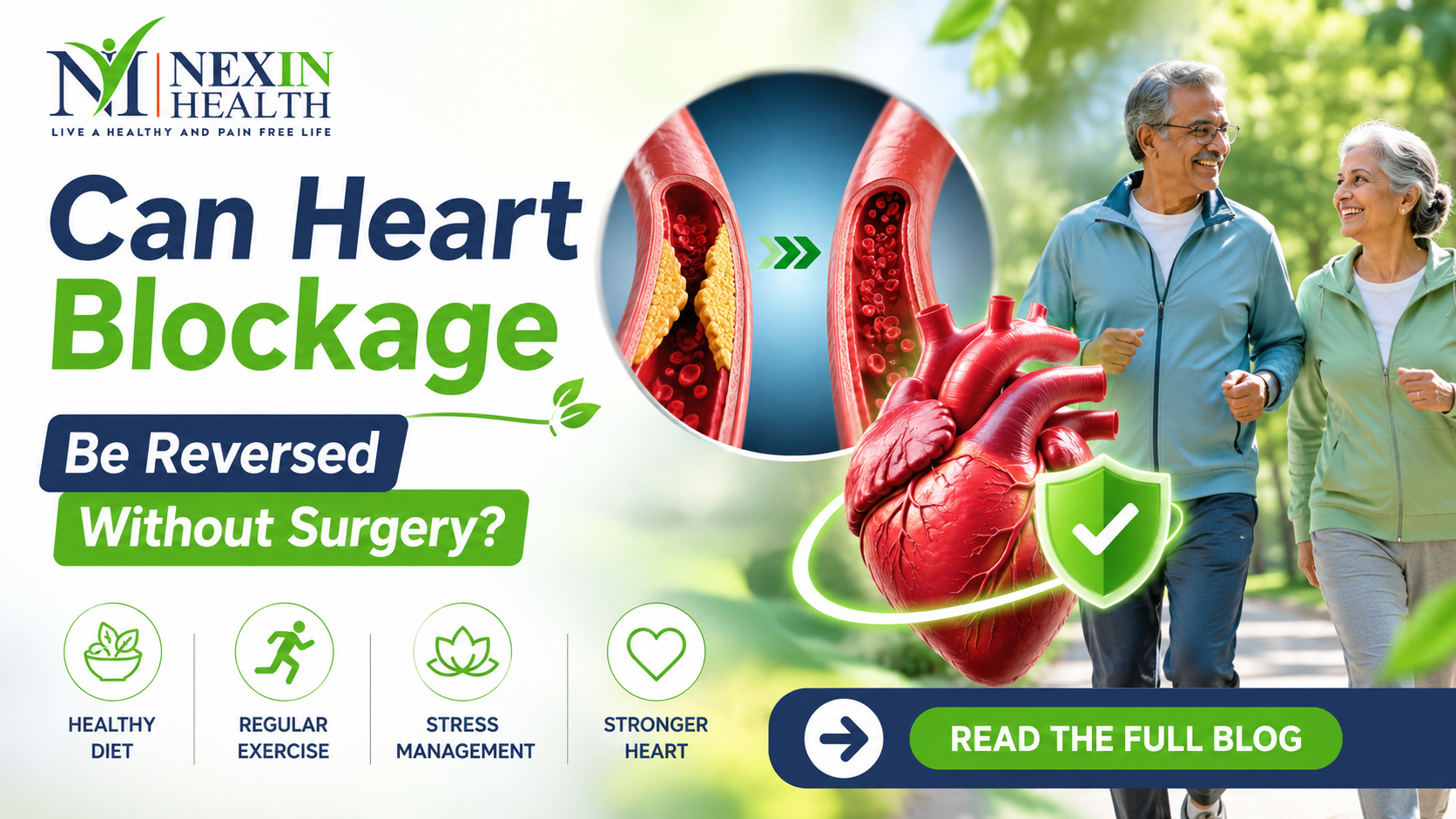


Can Heart Blockage Be Reversed Without Surgery? This is one of the most searched heart-health questions today, especially among people who have been told they have coronary artery disease, arterial plaque buildup, angina, diabetes-related heart problems, or early heart failure.
For many patients, hearing the words “heart blockage” immediately creates fear. They assume that bypass surgery, angioplasty, or stent placement is inevitable. Some begin searching for miracle cures online. Others wonder whether diet, exercise, medicines, or newer non-invasive therapies can actually improve the condition.
The truth lies somewhere between these extremes.
Modern medical research shows that while severe plaque buildup cannot usually be erased completely, the disease process behind heart blockage can often be slowed, stabilized, and in some cases partially reversed. In fact, several clinical studies have demonstrated measurable improvements in arterial health when patients aggressively control cholesterol, blood pressure, diabetes, inflammation, and lifestyle risk factors.
This means the real question is not simply Can Heart Blockage Be Reversed Without Surgery, but rather: how much improvement is possible, which patients benefit most, and what treatments are supported by science?
In this article, we will explore the latest evidence, explain what really happens inside blocked arteries, and examine the treatment options that may help patients improve their heart health without undergoing surgery.
| Quick Fact | What Research Suggests |
|---|---|
| Plaque Is Not Always Permanent | Intensive cholesterol lowering has shown partial plaque regression in selected patients. |
| Heart Attacks Often Come From Smaller Plaques | Many heart attacks occur when unstable plaques rupture rather than from the largest blockage. |
| Exercise Changes Blood Vessel Function | Regular exercise improves endothelial health and nitric oxide production. |
| Lifestyle Can Influence Artery Health | Research-backed lifestyle programs have demonstrated measurable cardiovascular improvements. |
| Diabetes Accelerates Blockage Formation | High blood sugar damages blood vessels and promotes plaque buildup. |
| Some Patients Improve Without Procedures | Stable coronary artery disease can often be managed through comprehensive medical care. |
| Blood Flow Can Improve Even Without Removing Plaque | Better vessel function and collateral circulation may improve symptoms. |
To understand whether Can Heart Blockage Be Reversed Without Surgery, we first need to understand what heart blockage actually is.
Heart blockage usually refers to narrowing of the coronary arteries, the blood vessels that supply oxygen-rich blood to the heart muscle. This narrowing develops gradually through a process called atherosclerosis.
Atherosclerosis begins when the inner lining of an artery becomes damaged. Several factors contribute to this damage, including high cholesterol, diabetes, smoking, obesity, chronic inflammation, high blood pressure, and physical inactivity.
Once the artery wall becomes irritated, the body starts a repair process. Cholesterol particles, inflammatory cells, calcium deposits, and other substances accumulate inside the artery wall. Over many years, these deposits form plaque.
At first, plaque may not cause any symptoms at all. In fact, many people have developing coronary artery disease for a decade or longer before they notice anything unusual.
As plaque grows larger, the artery becomes narrower. Blood flow to the heart becomes restricted, particularly during physical activity when the heart needs more oxygen. Eventually, patients may begin experiencing chest discomfort, breathlessness, fatigue, reduced exercise capacity, or angina.
The danger increases further when plaque becomes unstable. If the surface of the plaque ruptures, a blood clot can suddenly form, potentially triggering a heart attack.
This is why treating the disease process itself is often more important than simply measuring the percentage of blockage.
The answer to Can Heart Blockage Be Reversed Without Surgery is more encouraging than many patients realize, but it also requires realistic expectations.
Many people imagine reversal as completely cleaning out clogged arteries and restoring them to their original condition. Current medical science does not support this outcome for most patients.
However, research does support something equally important.
Studies suggest that under the right conditions, plaque progression can slow dramatically. Existing plaque can become more stable. Inflammation inside the arteries can decrease. Blood vessel function can improve. In some patients, small reductions in plaque volume have even been documented.
Several cholesterol-lowering studies have shown that patients who achieved extremely low LDL cholesterol levels experienced measurable plaque regression. Researchers observed that when LDL levels were aggressively reduced, plaques sometimes shrank and became less dangerous.
This finding is important because stable plaque is far less likely to rupture and trigger a heart attack.
When discussing Can Heart Blockage Be Reversed Without Surgery, the goal should therefore be viewed as improving arterial health, lowering cardiovascular risk, and restoring better blood flow rather than expecting arteries to become completely plaque-free.
For many patients, that improvement can still have a life-changing impact on symptoms, exercise capacity, and long-term survival.
One reason patients continue asking whether Can Heart Blockage Be Reversed Without Surgery is because several major studies have produced encouraging findings.
Some of the earliest observations came from historical research. Investigators studying populations exposed to prolonged food shortages noticed dramatically lower levels of atherosclerosis compared with populations consuming modern high-fat diets.
Later clinical research explored whether similar improvements could be achieved through intensive lifestyle modification.
Several studies involving plant-focused diets, structured exercise, stress reduction, smoking cessation, and cholesterol management reported measurable improvements in cardiovascular markers.
Researchers observed:
More recently, advanced cholesterol-lowering therapies have demonstrated that aggressive LDL reduction may contribute to modest plaque regression.
The most important lesson from this research is not that plaque magically disappears. Rather, the disease process behind coronary artery disease can often be modified in meaningful ways.
This is why modern cardiology increasingly focuses on prevention, stabilization, and long-term vascular health rather than simply reacting after severe blockages develop.
One of the most common searches online today is Can You Reverse Artery Blockage Naturally.
The popularity of this question reflects a growing desire among patients to find alternatives to invasive procedures.
The scientific answer is both hopeful and realistic.
When people ask Can You Reverse Artery Blockage Naturally, they are usually referring to approaches such as healthy eating, exercise, weight reduction, smoking cessation, stress management, and natural lifestyle therapies.
Research strongly supports these interventions.
Healthy dietary patterns rich in vegetables, fruits, legumes, whole grains, nuts, seeds, and healthy fats have consistently been associated with improved cardiovascular outcomes.
Similarly, weight reduction improves insulin sensitivity, lowers inflammation, improves blood pressure, and reduces strain on the cardiovascular system.
Smoking cessation remains one of the most powerful interventions available. Within months of quitting smoking, blood vessel function begins improving and cardiovascular risk starts declining.
However, patients should understand that Can You Reverse Artery Blockage Naturally does not mean plaque melts away overnight.
Natural approaches work because they reduce the conditions that promote plaque growth. Over time, these improvements create a healthier internal environment that supports better artery function and lowers future risk.
One of the most important questions patients ask after being diagnosed with coronary artery disease is: Can Atherosclerosis Be Reversed With Exercise?
The answer is not as simple as yes or no.
Exercise does not act like a medicine that dissolves plaque from the artery wall. If someone has spent twenty years developing cholesterol deposits, calcium buildup, and inflammation inside their arteries, a few weeks of walking cannot magically remove that damage.
However, research shows that exercise influences almost every major risk factor responsible for atherosclerosis.
This is why cardiologists around the world continue to prescribe exercise as one of the most powerful tools in cardiovascular medicine.
When a person exercises regularly, blood moves through the arteries faster. This increased blood flow creates a healthy force called shear stress against the artery walls. That stress stimulates the production of nitric oxide, a natural chemical that helps blood vessels relax and function properly.
Nitric oxide is extremely important because people with coronary artery disease often have damaged blood vessel linings that produce less of it.
Clinical studies have shown that exercise can:
This is why experts often explain that while exercise may not completely erase plaque, it can dramatically improve the environment inside the arteries.
For many patients asking Can Atherosclerosis Be Reversed With Exercise, the more accurate goal is not complete plaque removal but creating healthier arteries that are less likely to trigger future heart attacks.
Research has consistently shown that patients who participate in structured exercise programmes experience better quality of life, improved exercise tolerance, fewer symptoms, and lower rates of cardiovascular events.
This makes exercise one of the most effective long-term strategies for improving heart health without surgery.
For decades, many patients believed that once coronary arteries became blocked, surgery was the only meaningful solution.
Today, that understanding has changed significantly.
Modern research shows that Heart Blockage Treatment Without Surgery can be highly effective for many patients, especially those with stable coronary artery disease.
The goal of Heart Blockage Treatment Without Surgery is not simply to manage symptoms. The broader objective is to reduce plaque progression, improve circulation, stabilize vulnerable plaques, lower inflammation, and decrease future cardiovascular risk.
Doctors now recognize that many patients benefit from a comprehensive treatment strategy combining lifestyle improvement, medication optimization, risk-factor control, cardiac rehabilitation, and in selected cases, advanced non-invasive therapies.
This approach is particularly valuable because heart disease is not merely a plumbing problem.
Coronary artery disease is a chronic inflammatory process affecting the entire cardiovascular system.
Opening one blockage does not automatically stop new plaques from developing elsewhere.
That is why effective treatment focuses on improving overall vascular health.
For patients with mild-to-moderate disease, Heart Blockage Treatment Without Surgery often becomes the foundation of long-term management.
When discussing non-surgical treatment for heart blockage, it is important to understand that no single therapy works for everyone.
Instead, modern cardiology uses a combination of evidence-based strategies.
The first pillar is lifestyle modification.
Research consistently shows that healthy eating patterns reduce cardiovascular risk. Diets rich in vegetables, fruits, legumes, nuts, seeds, whole grains, and healthy fats support better vascular health while reducing inflammation.
The second pillar is structured physical activity.
Exercise improves endothelial function, circulation, insulin sensitivity, and overall cardiovascular fitness.
The third pillar is risk-factor management.
Conditions such as diabetes, hypertension, obesity, metabolic syndrome, and smoking dramatically accelerate plaque formation. Controlling these conditions slows disease progression.
The fourth pillar involves medication.
Cholesterol-lowering drugs, blood pressure medicines, anti-diabetic therapies, and antiplatelet medications all play important roles in reducing future cardiovascular events.
The fifth pillar includes advanced therapies for selected patients.
Cardiac rehabilitation programmes, supervised exercise programmes, and non-invasive circulation-enhancing treatments may provide additional benefits.
When properly combined, these approaches form the foundation of modern non-surgical treatment for heart blockage.
Another common question patients ask is: Can heart blockage be reversed by medicine?
The answer requires careful explanation.
Medicines do not function like chemical cleaners that wash plaque out of the arteries.
However, medications can significantly influence the biological processes responsible for plaque growth.
Among the most important drugs are statins.
Statins lower LDL cholesterol and reduce inflammation inside the artery wall. Clinical trials have shown that aggressive cholesterol lowering may contribute to modest plaque regression in selected patients.
More importantly, statins help stabilize plaque.
This stabilization reduces the likelihood of plaque rupture, which is one of the leading causes of heart attacks.
Newer cholesterol-lowering therapies have pushed LDL levels even lower than previously possible. Some studies have reported measurable reductions in plaque burden among patients achieving extremely low cholesterol levels.
Blood pressure medications also play a critical role.
High blood pressure damages artery walls and accelerates plaque formation. By controlling blood pressure, these medications reduce ongoing vascular injury.
Modern diabetes medications have similarly transformed cardiovascular care. Several newer therapies not only improve blood sugar control but also reduce cardiovascular risk.
Therefore, when asking Can heart blockage be reversed by medicine, the most accurate answer is that medicines can slow progression, stabilize disease, reduce inflammation, and sometimes contribute to modest plaque regression.
They remain one of the most important components of long-term treatment.
Many patients searching for alternatives to surgery want to know how to improve blood flow without surgery.
Interestingly, the human body possesses remarkable adaptive abilities.
When arteries become narrowed, the body sometimes develops collateral circulation.
Collateral vessels are small blood vessels that act as natural bypass routes around blocked arteries.
Although these vessels may initially be tiny, they can expand over time when stimulated appropriately.
Regular exercise is one of the most effective ways to encourage this adaptation.
Repeated increases in blood flow signal the body to improve circulation and strengthen vascular networks.
Blood pressure control also helps.
When arteries function properly, blood can move more efficiently throughout the cardiovascular system.
Cholesterol management contributes as well by reducing ongoing plaque progression.
Some non-invasive therapies are designed specifically to help improve blood flow without surgery by enhancing circulation and supporting collateral vessel development.
The overall goal is not simply increasing blood volume but improving the efficiency with which oxygen-rich blood reaches the heart muscle.
For patients with stable disease, better circulation often translates into reduced angina, improved exercise tolerance, and better quality of life.
When experts discuss coronary artery disease reversal methods, they usually refer to interventions that target the root causes of plaque formation rather than focusing solely on symptoms.
Several strategies consistently appear in successful treatment programmes.
The first is intensive cholesterol reduction.
Research suggests that lowering LDL cholesterol significantly may contribute to plaque stabilization and occasional plaque regression.
The second is dietary improvement.
Plant-focused eating patterns have repeatedly been associated with better cardiovascular outcomes.
The third is exercise training.
Regular physical activity improves endothelial function, nitric oxide production, insulin sensitivity, and circulation.
The fourth is smoking cessation.
Smoking damages blood vessels, increases clotting risk, and accelerates plaque development.
The fifth is stress reduction.
Chronic stress increases inflammatory activity, raises blood pressure, and promotes unhealthy behaviours.
Together, these approaches form the foundation of modern coronary artery disease reversal methods.
While complete reversal remains uncommon, meaningful improvements in cardiovascular health are absolutely achievable.
| Treatment Option | Main Goal | Invasive | Recovery Time | Best For |
|---|---|---|---|---|
| Lifestyle Modification | Slow disease progression | No | Ongoing | All patients |
| Medication Therapy | Stabilize plaque and reduce risk | No | Immediate | Most patients |
| Cardiac Rehabilitation | Improve exercise capacity | No | Weeks to months | Stable patients |
| EECP Therapy | Improve circulation and collateral blood flow | No | Outpatient | Selected angina patients |
| Angioplasty & Stent | Open narrowed artery | Minimally invasive | Days | Significant blockage |
| Bypass Surgery | Create alternate blood flow route | Yes | Several weeks | Severe multi-vessel disease |
The best treatment depends on symptoms, artery involvement, heart function, diabetes status, and overall cardiovascular risk.
This is why individualized medical evaluation remains essential before making treatment decisions.
The phrase reverse coronary artery disease naturally has become increasingly popular over the last decade. Patients frequently encounter articles, videos, and advertisements claiming that heart disease can be completely reversed through special diets, supplements, or natural remedies.
The scientific reality is more nuanced.
Current evidence suggests that certain lifestyle interventions can significantly improve artery health and may contribute to modest plaque regression in selected patients. However, no natural treatment has been proven to completely eliminate advanced plaque buildup from coronary arteries.
What natural approaches can do is address the underlying conditions that allow plaque to grow in the first place.
For example, healthy dietary patterns can lower LDL cholesterol and reduce inflammation. Regular exercise improves endothelial function and circulation. Weight loss improves insulin sensitivity and lowers blood pressure. Smoking cessation removes one of the strongest triggers of vascular damage.
Several lifestyle-based studies have demonstrated improvements in cardiovascular markers when participants adopted intensive programmes involving nutrition, exercise, stress management, and smoking cessation.
Patients often misunderstand these findings.
The goal of trying to reverse coronary artery disease naturally should not be viewed as magically clearing arteries. Instead, the focus should be on creating a healthier cardiovascular system that is less likely to develop future complications.
When these changes are implemented early, the benefits can be substantial and long-lasting.
One of the most difficult aspects of coronary artery disease is calcification.
When patients undergo CT calcium scoring, they are often surprised to learn that calcium has accumulated inside their arteries over many years.
This raises an important question: Are there effective coronary artery calcification reversal strategies?
At present, medical science has not established a reliable way to completely remove coronary artery calcium deposits once they become established.
This is because calcification represents a late stage of plaque development. The body essentially transforms portions of plaque into hardened calcium deposits.
While this process may sound alarming, calcified plaque is not always the most dangerous form of plaque.
In many cases, soft unstable plaques carry a higher risk of rupture and heart attack.
Current coronary artery calcification reversal strategies therefore focus on stabilization rather than removal.
These strategies include:
The goal is to prevent additional calcium accumulation while protecting overall cardiovascular health.
Patients should understand that a high calcium score does not automatically mean a heart attack is imminent. It simply indicates that coronary artery disease has been present for a significant period and requires careful management.
Modern heart care increasingly recognizes the importance of stress management.
This has led many patients to explore yoga for heart blockage management as part of their treatment plan.
Although yoga cannot physically remove plaque from arteries, it may influence several cardiovascular risk factors.
Stress triggers the release of hormones such as cortisol and adrenaline. When these hormones remain elevated for prolonged periods, they can contribute to high blood pressure, inflammation, insulin resistance, poor sleep, and unhealthy eating habits.
Yoga helps counter these effects.
Research has shown that regular yoga practice may:
The benefits of yoga for heart blockage management become particularly important when combined with other evidence-based treatments.
Many cardiac rehabilitation programmes now incorporate breathing exercises, relaxation techniques, and mindfulness practices because of their positive effects on cardiovascular health.
For patients living with coronary artery disease, yoga should be viewed as a supportive therapy rather than a replacement for medical treatment.
Although this article focuses on Can Heart Blockage Be Reversed Without Surgery, it is important to understand that some situations require invasive treatment.
Modern cardiology does not view surgery and non-surgical treatment as competing approaches.
Instead, both options have important roles.
Patients with stable coronary artery disease often benefit from comprehensive medical management.
However, surgery or angioplasty may become necessary when:
In these situations, delaying necessary intervention can increase risk.
This is why treatment decisions should always be individualized rather than based solely on fear of surgery.
The best outcome comes from selecting the most appropriate treatment for the patient’s specific condition.
| Myth | Fact |
|---|---|
| Heart blockage can always be removed naturally. | Lifestyle changes may improve artery health, but complete plaque removal is uncommon. |
| If symptoms improve, the disease is cured. | Symptoms may improve even while plaque remains present. |
| Surgery is always required. | Many patients successfully manage stable disease without surgery. |
| Exercise removes plaque. | Exercise improves artery function and circulation but does not instantly dissolve plaque. |
| Medicines only control symptoms. | Many medications reduce cardiovascular risk and stabilize plaque. |
| A calcium score guarantees a heart attack. | Calcium indicates disease presence, not necessarily an imminent event. |
One of the most important lessons from decades of cardiovascular research is that timing matters.
Patients who begin treatment early generally achieve better outcomes than those who wait until severe symptoms develop.
This is true regardless of whether treatment involves:
The earlier risk factors are controlled, the greater the opportunity to preserve heart function and prevent future complications.
This is why regular screening becomes especially important for people living with:
NexIn Health is a specialized healthcare centre focused on heart and spine treatment through advanced non-invasive integrated techniques. With more than 14 years of clinical experience and over 30,000 patients consulted, our team combines modern diagnostics, lifestyle modification, cardiac rehabilitation support, and evidence-based non-invasive therapies to help patients improve their quality of life and long-term health outcomes.
📞 Phone & WhatsApp: +91 9310145010
🌐 Website: www.nexinhealth.in
📧 Email: care@nexinhealth.in
Read More : NexIn Health | Healing Hearts Naturally with EECP
Book a consultation today to understand which treatment approach may be most suitable for your heart condition.
1. Can Heart Blockage Be Reversed Without Surgery completely?
Complete reversal is uncommon, but progression can often be slowed, stabilized, and partially improved.
2. Can You Reverse Artery Blockage Naturally?
Lifestyle interventions may improve artery health and reduce future risk, but severe plaque usually does not disappear completely.
3. What is the best Heart Blockage Treatment Without Surgery?
A combination of healthy lifestyle changes, medication, risk-factor control, and medical supervision generally provides the best results.
4. Can Atherosclerosis Be Reversed With Exercise?
Exercise improves circulation, blood vessel function, and cardiovascular fitness, although it does not completely remove plaque.
5. Can heart blockage be reversed by medicine?
Medicines may stabilize plaque, reduce inflammation, and sometimes contribute to modest plaque regression.
6. Which diet is best for heart blockage?
A diet rich in vegetables, fruits, legumes, whole grains, nuts, and healthy fats is generally recommended.
7. Can walking improve heart blockage?
Regular walking supports circulation, cardiovascular fitness, and risk-factor management.
8. How much exercise should heart patients perform?
Most guidelines recommend at least 150 minutes of moderate activity per week, depending on medical advice.
9. Does diabetes worsen artery blockage?
Yes. Diabetes accelerates plaque formation and increases cardiovascular risk.
10. Can stress affect coronary artery disease?
Chronic stress may contribute to inflammation, hypertension, and unhealthy lifestyle habits.
11. What are coronary artery disease reversal methods?
These include cholesterol reduction, exercise, dietary improvement, smoking cessation, and risk-factor management.
12. Are coronary artery calcification reversal strategies effective?
Current approaches mainly focus on preventing progression and stabilizing disease rather than removing calcium deposits.
13. Is EECP a surgical treatment?
No. EECP is a non-invasive therapy designed to improve circulation in selected patients.
14. When should surgery be considered?
Surgery may be necessary when severe blockages, uncontrolled symptoms, or high-risk coronary anatomy are present.
15. When should I see a cardiologist?
Seek medical evaluation if you experience chest pain, breathlessness, unusual fatigue, dizziness, or other symptoms suggestive of heart disease.
So, Can Heart Blockage Be Reversed Without Surgery?
The most evidence-based answer is yes—at least partially in many patients. Modern research shows that coronary artery disease is not always a one-way process. Through aggressive risk-factor management, cholesterol reduction, exercise, healthy nutrition, medication, stress control, and selected non-invasive therapies, many people can improve artery health and reduce their risk of future heart attacks.
While complete plaque removal remains uncommon, meaningful improvement is absolutely possible. The earlier treatment begins, the greater the opportunity to preserve heart function, improve blood flow, and enjoy a healthier, longer life.


Experience

Certified Therapists

Satisfied Patients
Contact us