Safe Indoor Activities for Senior Heart Patients: Expert Tips to Stay Active at Home
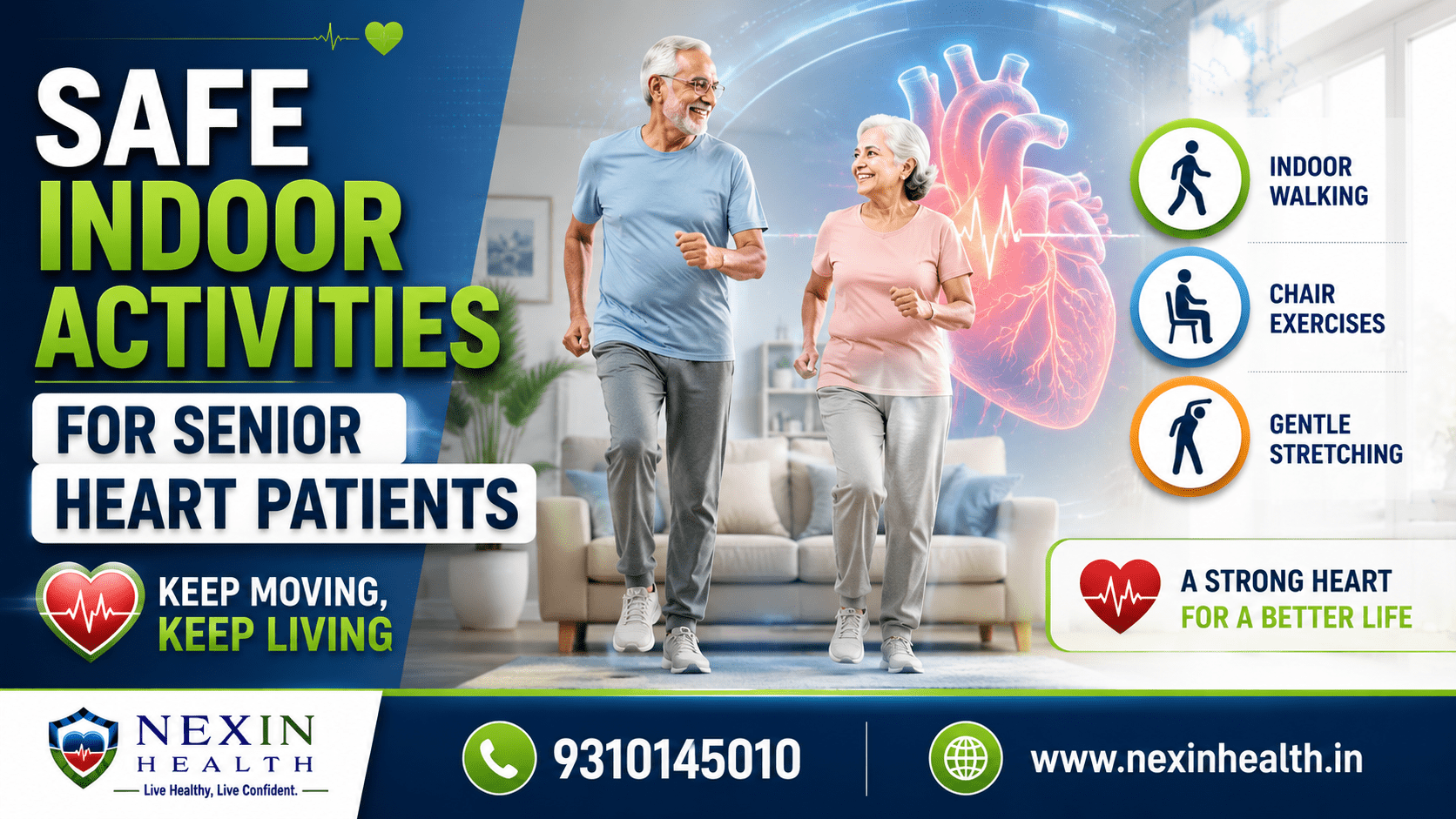


Growing older brings wisdom, experience, and cherished memories, but it also brings new responsibilities—especially when it comes to heart health. For seniors living with coronary artery disease, high blood pressure, diabetes, heart failure, or recovering from angioplasty or bypass surgery, staying physically active can sometimes feel challenging. Cold winters, extreme summer heat, air pollution, monsoon rains, joint pain, or fear of falling often make outdoor activities difficult.
Many older adults worry that exercise might put extra strain on their hearts. Some believe that having heart disease means they should avoid physical activity altogether. However, cardiologists and cardiac rehabilitation specialists agree that the opposite is often true. Appropriate exercise is one of the most powerful tools available for supporting cardiovascular health, improving mobility, and maintaining independence.
The good news is that staying active does not require expensive gym memberships, heavy weights, or intense workouts. Some of the best exercises for senior heart patients can be performed safely at home. Even simple movements such as indoor walking, chair exercises, stretching, light strength training, and balance activities can provide tremendous benefits when practiced consistently.
According to the American Heart Association (AHA), regular physical activity helps strengthen the heart muscle, improve circulation, lower blood pressure, reduce stress, control blood sugar levels, and support healthy aging. Studies have also shown that physically active heart patients tend to live longer and experience fewer cardiovascular complications than inactive individuals.
Whether you are a senior living with heart disease, diabetes, obesity, arthritis, or simply looking to maintain your health, safe indoor activities can help you remain active, confident, and independent throughout the year.
The American Heart Association recommends at least 150 minutes of moderate exercise every week.
Physically active heart patients often experience fewer heart attacks and better quality of life.
Indoor exercise can be just as beneficial as outdoor exercise.
Even short 10-minute activity sessions can improve circulation and heart health.
Regular movement helps lower blood pressure and improve blood sugar control.
Chair exercises are widely used in cardiac rehabilitation programs for older adults.
Strength training helps make everyday activities like climbing stairs and getting out of a chair easier.
Balance exercises help reduce the risk of falls and injuries.
Exercise improves sleep quality, memory, mood, and energy levels.
Consistency matters far more than intensity.
As we age, natural changes occur throughout the body. Muscles become weaker, joints become stiffer, metabolism slows down, and blood vessels lose some of their flexibility. These changes can increase the risk of several health conditions, including:
Physical inactivity can accelerate these problems. Long periods of sitting may contribute to reduced circulation, muscle loss, poor endurance, and increased cardiovascular risk.
Regular movement helps slow down many of these age-related changes. In fact, exercise acts like medicine for the heart, muscles, lungs, bones, and even the brain.
Research supported by the National Heart, Lung, and Blood Institute suggests that regular moderate physical activity helps strengthen the heart muscle, allowing it to pump blood more efficiently throughout the body. Better circulation means that oxygen and nutrients reach tissues more effectively, supporting overall health.
Many people use the words “physical activity” and “exercise” interchangeably, but they are slightly different.
Physical activity refers to any movement that gets your body moving during daily life.
Examples include:
These activities contribute to overall health and help prevent excessive sitting.
Exercise is more structured and planned. It is performed with the purpose of improving strength, endurance, flexibility, or balance.
Examples include:
Both physical activity and exercise are valuable for heart health.
For people living with heart disease, exercise offers benefits that extend far beyond the heart itself.
Regular physical activity can help:
Exercise helps blood vessels become more flexible, reducing resistance and improving blood flow.
Muscles use glucose during activity, helping people with diabetes maintain healthier blood sugar levels.
Regular exercise supports healthier cholesterol profiles and lowers cardiovascular risk.
Like any other muscle, the heart becomes stronger when used appropriately.
Better blood flow means more oxygen and nutrients reach the body’s tissues.
Physical activity stimulates hormones that improve mood and reduce emotional stress.
Maintaining a healthy weight helps reduce strain on the heart.
Exercise often leads to deeper and more restorative sleep.
Research suggests that staying physically active may lower the risk of dementia and depression.
Stronger muscles and better balance make everyday activities easier and safer.
Not every workout needs to be intense.
Most seniors benefit from low- to moderate-intensity activities.
Examples include:
You can easily carry on a conversation during these activities.
Examples include:
Your breathing becomes slightly faster, but you can still talk comfortably.
Examples include:
You breathe harder and may only be able to speak a few words at a time.
Most elderly heart patients should focus primarily on light to moderate activities unless advised otherwise by their physician.
Indoor exercises eliminate many of the barriers that prevent older adults from staying active.
Indoor activities help seniors avoid:
Exercising indoors also allows seniors to remain comfortable while maintaining a consistent routine throughout the year.
In addition, home-based activities can be modified according to individual fitness levels, mobility limitations, and medical conditions.
Before beginning any new activity routine, seniors with heart disease should always consult their healthcare provider or cardiologist. This is especially important for people who have:
Exercise is beneficial, but it should always be done safely.
✔ Start slowly and progress gradually.
✔ Wear comfortable clothing and supportive shoes.
✔ Stay hydrated before, during, and after exercise.
✔ Avoid exercising immediately after meals.
✔ Never hold your breath during exercise.
✔ Exercise in a cool, comfortable room.
✔ Stop immediately if you experience chest pain, dizziness, severe breathlessness, or unusual fatigue.
Not every workout has to be intense. In fact, low-impact exercises are often the safest and most sustainable for seniors with heart disease.
The goal is simple:
Move regularly, improve circulation, strengthen muscles, and support heart health.
Walking remains one of the safest and most effective exercises recommended by cardiac rehabilitation specialists.
Walking improves:
Start with 5–10 minutes and slowly build up to 30 minutes.
Remember:
Consistency matters more than speed.
Chair exercises are ideal for seniors who have:
These movements allow safe exercise while remaining supported.
Lift one knee at a time.
Straighten one leg slowly and hold for a few seconds.
Raise your heels while seated.
Move your arms slowly in circles.
Chair exercises are commonly used during cardiac rehabilitation exercises at home because they are simple and effective.
Low-impact exercises are gentle on the joints while providing excellent cardiovascular benefits.
These are ideal for seniors with:
Examples include:
Low-impact exercises for seniors help improve endurance without putting excessive strain on the body.
Strength training is important because stronger muscles reduce the workload on the heart during daily activities.
Resistance bands are inexpensive, safe, and easy to use.
Strengthen the arms and make lifting objects easier.
Improve posture and support breathing.
Enhances upper body strength.
Support balance and walking ability.
Experts recommend performing strength training at least two days each week.
Exercise should never feel like punishment.
Many enjoyable activities can support heart health.
Dancing increases heart rate and improves mood.
Benefits include:
Even dancing to favorite songs for 10–15 minutes provides benefits.
Gardening combines movement with relaxation.
Benefits include:
Simple daily tasks can also be heart healthy.
Examples include:
These activities count as physical activity and help reduce sedentary behavior.
Flexibility exercises improve mobility and reduce stiffness.
Common stretches include:
Helps relieve tension.
Improves upper-body flexibility.
Supports walking.
Improves circulation and mobility.
Hold each stretch for 20–30 seconds and avoid bouncing.
Yoga and Tai Chi are excellent forms of safe exercise for elderly cardiac patients.
These activities improve:
Chair yoga is particularly suitable for beginners.
Tai Chi’s slow and controlled movements help reduce fall risk and increase confidence.
Falls are one of the leading causes of injury among older adults.
Simple balance exercises include:
Hold onto a chair for support.
Improves coordination.
Strengthen hip muscles.
Enhances stability.
Improving balance supports independence and confidence.
According to the CDC and American Heart Association:
✔ 150 minutes of moderate physical activity each week.
✔ Muscle-strengthening exercises at least two days weekly.
✔ Balance and flexibility exercises regularly.
You do not need to complete everything in one session.
Even:
can provide meaningful benefits.
Stop immediately and seek medical advice if you experience:
Exercise should make you feel energized—not unwell.
| Activity | Intensity | Benefits | Best For |
|---|---|---|---|
| Indoor Walking | Low-Moderate | Heart health, endurance | Most seniors |
| Chair Exercises | Low | Mobility, circulation | Limited mobility |
| Resistance Bands | Moderate | Muscle strength | Weakness prevention |
| Yoga | Low | Flexibility, stress relief | Beginners |
| Tai Chi | Low | Balance and coordination | Fall prevention |
| Dancing | Moderate | Heart health and mood | Active seniors |
| Household Chores | Low | Daily activity | Sedentary individuals |
| Stationary Cycling | Moderate | Cardio fitness | Joint-friendly exercise |
Many seniors believe they need complicated workouts to improve their health.
That’s not true.
The secret is consistency.
Small daily movements performed regularly often provide greater benefits than occasional intense workouts.
Remember:
NexIn Health specializes in advanced non-invasive heart and spine care using integrated treatment approaches. With over 14 years of experience and more than 30,000 patient consultations, NexIn Health focuses on improving quality of life through personalized heart care, EECP therapy, rehabilitation, physiotherapy, and holistic wellness solutions.
📞 Phone & WhatsApp: +91 9310145010
🌐 Website: www.nexinhealth.in
📧 Email: care@nexinhealth.in
Read More: NexIn Health | Healing Hearts Naturally with EECP
Growing older and living with heart disease does not mean giving up an active lifestyle. In fact, regular movement is one of the best gifts you can give your heart.
Simple activities such as indoor walking, chair exercises, stretching, resistance band workouts, yoga, and balance training can improve circulation, mobility, confidence, and overall well-being.
The key is not doing everything perfectly.
The key is simply continuing to move.
Because every step, every stretch, and every small effort adds up to a healthier heart and a better quality of life.
Exercise is one of the best medicines for the aging heart.
Indoor activities can provide the same benefits as outdoor workouts.
Walking, chair exercises, yoga, resistance bands, and stretching are excellent choices.
Consistency matters more than intensity.
Even 10-minute sessions add up and support heart health.
Always listen to your body and consult your doctor before starting a new exercise program.
This article is intended for educational and informational purposes only and should not be considered medical advice. Exercise recommendations may vary depending on individual health conditions, medications, mobility limitations, and cardiac status.
Always consult your physician, cardiologist, or qualified healthcare professional before beginning any new exercise program, especially if you have:
If you experience chest pain, severe breathlessness, dizziness, fainting, or irregular heartbeat during exercise, stop immediately and seek medical attention.
Your heart doesn’t expect perfection. It simply benefits from movement.
Whether it’s walking around the house, doing chair exercises, stretching, or dancing to your favorite songs, every small step contributes to better circulation, stronger muscles, improved confidence, and a healthier future.
Because healthy aging isn’t about doing more. It’s about continuing to move, one day at a time.


Experience

Certified Therapists

Satisfied Patients
Contact us