Can Falling Barometric Pressure Increase Heart Attack Risk by 17%? What Research Reveals
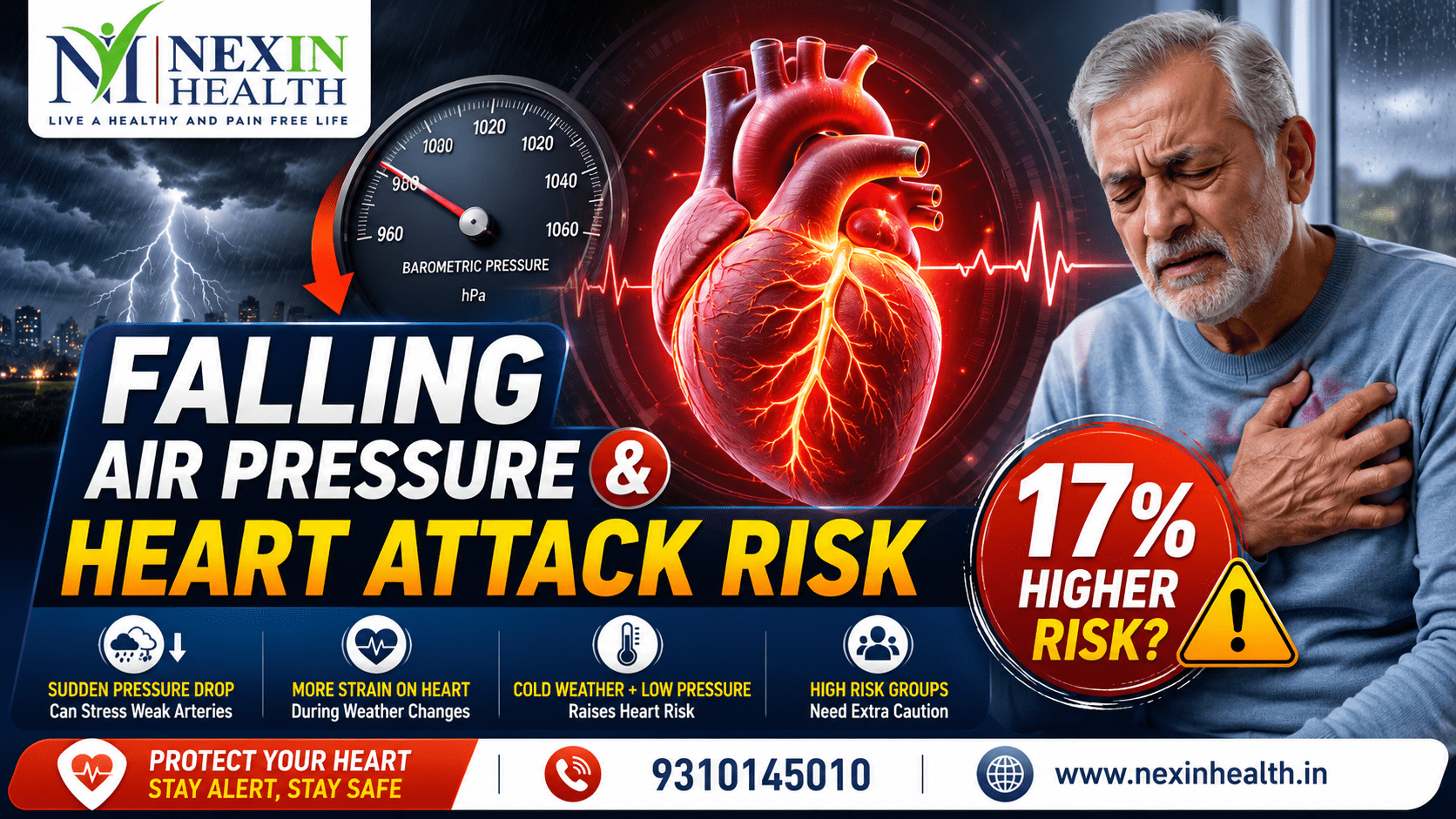



Can falling barometric pressure increase heart attack risk? This is a question more doctors and patients are asking as research grows on weather and heart health. The short answer is yes — falling air pressure can genuinely raise the chances of a heart attack, especially in people who already have weak heart arteries. Studies from different parts of the world have found that a sudden drop in atmospheric pressure puts extra stress on the heart’s blood vessels, and in some high-risk groups, this stress has been linked to a noticeably higher number of heart attack cases during such pressure changes.
This may sound surprising. Most people think only smoking, poor diet, or high cholesterol cause heart attacks. But the truth is, the weather outside your window can quietly affect what is happening inside your chest. If you or someone in your family has heart disease, diabetes, or high blood pressure, understanding this connection could help you stay safer during weather changes.
Atmospheric pressure is simply the weight of the air pressing down on us at all times. We don’t normally feel it because our body stays balanced with it. But when a storm or weather front moves in, this pressure can drop quickly, sometimes within just a few hours.
This is where atmospheric pressure changes and cardiovascular events become connected. Researchers in central Texas studied over 1,300 heart attack patients and found that when pressure dropped quickly, the number of heart attacks the next day went up in a way that could not be explained by chance. The faster the pressure fell, the stronger the link became.
Scientists explain this using a simple engineering idea. Imagine a balloon. If the air pressure around it drops suddenly, the balloon’s walls face more outward stress. Something similar may happen to fatty deposits, called plaques, sitting inside our artery walls. When outside pressure falls, the plaque experiences slightly more internal stress, and in a plaque that is already thin or weak, this added stress may be enough to cause it to crack open. A crack in a plaque is often the actual starting point of a heart attack, because the body’s blood-clotting system instantly reacts to seal the crack, and that clot can block the artery.
This mechanism also helps explain why not everyone reacts the same way to a weather change. A person with smooth, healthy artery walls has very little risk from this kind of pressure stress, because there is no weak spot for the pressure difference to act on. But a person who already has fatty buildup, especially a thin-walled or unstable plaque, has a genuine structural weak point. For this group, the same storm that feels like nothing more than a headache to a healthy neighbor could be the final trigger for a medical emergency. This is one of the clearest reasons doctors recommend that people with known artery blockages stay extra alert during sudden weather changes, rather than assuming the risk applies equally to everyone.
Low barometric pressure and heart health share a relationship that goes beyond just plaque stress. There are at least three more layers to this connection that are worth understanding.
Many people assume only falling pressure is risky, but does high barometric pressure affect blood pressure too? Research suggests yes, though the pattern looks different. A major French study tracking heart attacks and coronary deaths over ten years found a V-shaped pattern, where the safest pressure level was around 1016 millibars. Moving away from this number in either direction — higher or lower — increased the risk of coronary events.
This means both rising and falling atmospheric pressure can disturb the body’s balance, but falling pressure, especially rapid drops during storms, has shown the clearest and most repeated connection to heart attacks across multiple studies, including the central Texas hospital research.
Interestingly, when researchers looked closely at atmospheric pressure and blood pressure in humans, they noticed the body does not react the same way to every type of pressure change. A slow, gradual shift over several days tends to give the body time to adjust. A sudden shift within hours, however, does not give the heart and blood vessels enough time to adapt, which is why rapid pressure drops before storms are considered far riskier than the same amount of change spread across a week. This is also why doctors pay closer attention to the speed of a weather change, not just the final number on a barometer.
A common question patients ask their doctors is, can barometric pressure cause heart palpitations? While research focuses mostly on heart attacks, the same biological pathways — nervous system activation, blood pressure spikes, and blood thickness changes — can understandably cause some people to feel their heart racing, skipping a beat, or pounding during sudden weather shifts.
People who are more sensitive to weather changes, such as those with migraine, anxiety, or existing heart rhythm problems, may notice this more than others. While a few occasional palpitations during a weather change are usually harmless, palpitations that come with chest pain, dizziness, or breathlessness should never be ignored and need urgent medical attention.
The link between acute myocardial infarction and atmospheric pressure has been studied across different countries with surprisingly consistent results.
Across all these studies, one pattern stays the same: people aged 55 and above, and those who already had a previous heart attack, consistently show the strongest reaction to weather and pressure changes.
Not everyone faces the same level of danger when weather changes and heart attack risk are discussed together. Some groups are clearly more vulnerable:
If you fall into any of these groups, it does not mean a weather change will definitely cause a heart attack. It simply means your body has less reserve capacity to absorb sudden stress, so extra caution during weather shifts is wise.
Cold weather cardiovascular risk has been one of the most repeated findings across decades of research. Cold temperatures cause three things to happen almost at the same time: blood vessels narrow, blood pressure rises, and blood becomes thicker. Layer a sudden pressure drop from an incoming storm on top of this, and the heart faces a combined challenge instead of just one.
This is also why hospitals across different countries — the Netherlands, France, and the United States — all separately found that fall and winter months, or sudden weather-transition periods, carry the highest number of heart-related admissions.
While falling barometric pressure is an important piece of the puzzle, it works alongside other environmental triggers of heart attack:
Understanding that these triggers often arrive together — not one at a time — helps explain why certain weeks of the year see noticeably more cardiac emergencies than others.
India’s weather pattern makes this research especially relevant. The shift from intense pre-monsoon heat to sudden monsoon rains involves rapid drops in atmospheric pressure, sharp temperature swings, and high humidity — almost the exact combination flagged as risky across the global studies above. This is precisely why doctors in India are increasingly asking whether the same question studied abroad — can falling barometric pressure increase heart attack risk in local patients too — applies just as strongly during monsoon transitions as it does during a winter storm in colder countries.
For people managing heart disease, diabetes, or high blood pressure in cities with strong seasonal contrasts, the monsoon transition period deserves the same caution that Western studies recommend for sudden winter cold fronts. Simple steps like monitoring blood pressure more closely during weather transitions, staying hydrated, avoiding sudden cold exposure, and not skipping prescribed heart medication can meaningfully lower risk during these vulnerable weeks.
Knowing the warning signs of a weather-triggered cardiac event can make the difference between a close call and a tragedy. During sudden weather shifts, pay extra attention if you notice:
None of these symptoms should be self-diagnosed or waited out, especially in someone with existing heart disease, diabetes, or high blood pressure. Emergency medical care should be sought immediately if chest pain, breathlessness, or palpitations appear together, since these combinations are far more concerning than any single symptom alone.
Beyond medication and regular checkups, a few daily habits can meaningfully reduce the strain that falling pressure and weather shifts place on the heart:
These steps will not eliminate risk completely, but they meaningfully reduce the added burden that sudden weather changes place on an already vulnerable heart.
| Approach | What It Involves | Best Suited For | Limitation |
| Lifestyle monitoring | Tracking blood pressure, avoiding sudden cold exposure, staying hydrated during weather shifts | Healthy individuals and early-stage risk patients | Does not address existing arterial blockages |
| Medication adherence | Continuing prescribed heart or blood pressure medication without gaps, especially during weather transitions | Diagnosed hypertension, diabetes, or heart disease patients | Requires regular doctor supervision |
| Invasive procedures (angioplasty/bypass) | Surgical correction of blocked arteries | Patients with severe, confirmed blockages | Invasive, with recovery time and procedural risk |
| Non-invasive therapies like EECP | External counter pulsation therapy that improves blood flow to the heart without surgery | Patients seeking heart care without invasive intervention, including many older adults | Requires multiple sessions over several weeks |
The research is consistent across countries, decades, and patient populations: weather is not just a backdrop to daily life, it is an active factor in heart health. So, can falling barometric pressure increase heart attack risk? The evidence strongly suggests yes, particularly for people who already carry hidden risk in their arteries. The encouraging part is that this risk is manageable. With the right awareness, timely medical support, and consistent heart care, the added danger from weather swings can be significantly reduced.
Yes. Multiple hospital studies have found that a rapid drop in atmospheric pressure is followed by a measurable rise in heart attack cases, especially in people with existing heart disease.
Research findings vary by study and population, with some hospital data showing roughly a 10% rise in heart attack odds for each unit drop in pressure, and combined weather-factor models showing even higher cumulative risk during extreme weather days.
It can contribute to a racing or pounding heart feeling in sensitive individuals, mainly through nervous system activation and blood pressure changes, though persistent palpitations should always be checked by a doctor.
Yes, research shows a V-shaped pattern where both unusually high and unusually low-pressure levels are linked to increased cardiovascular risk compared to a stable mid-range pressure.
Cold temperatures narrow blood vessels, raise blood pressure, and thicken the blood, all of which place extra strain on the heart.
People above 55, those with a previous heart attack, and patients with diabetes, high blood pressure, or existing artery blockages face the highest risk.
Most studies, including detailed hospital research, found no significant link between atmospheric pressure changes and stroke, suggesting the heart and brain respond differently to weather shifts.
Yes. The rapid pressure drops, temperature swings, and humidity changes during monsoon transitions closely resemble the weather patterns linked to higher cardiac risk in global studies.
Yes, a large Canadian study found that air pollution combined with cold temperatures, wind, and pressure changes significantly raised hospital admissions for heart attacks and heart failure.
Patients should never change medication on their own but should continue prescribed doses without gaps and consult their doctor if symptoms increase during weather transitions.
Yes, people above 65 show a noticeably stronger blood pressure response to weather changes compared to younger adults.
Healthy individuals generally have stronger reserve capacity, but very sudden or extreme weather shifts can still cause mild symptoms like fatigue or headaches in sensitive people.
Research points to around 1016 millibars as the level associated with the lowest cardiac event rates, though this can vary slightly by region.
Therapies like EECP improve blood flow and circulation, which may help the heart cope better with the added strain of weather and pressure changes, especially in patients avoiding surgery.
Staying warm, monitoring blood pressure, staying hydrated, avoiding sudden exertion in extreme weather, and maintaining regular check-ups are the most practical protective steps.
NexIn Health is a trusted name in non-invasive heart and spine care, with over 14 years of experience and more than 30,000 patients consulted across multiple cities. Specializing in advanced, non-invasive treatments like EECP therapy, NexIn Health helps patients manage cardiovascular risk safely — including the added strain that weather and seasonal changes can place on the heart.
If you or a loved one has heart disease, diabetes, or high blood pressure, don’t wait for a weather-related warning sign. Reach out to NexIn Health today for a consultation.
Call or WhatsApp: +91 9310145010
Website: www.nexinhealth.in
Email: care@nexinhealth.in
Read More: NexIn Health | Healing Hearts Naturally with EECP


Experience

Certified Therapists

Satisfied Patients
Contact us