Beyond Breathlessness: Understanding Monsoon-Related Fatigue in Cardiovascular Patients
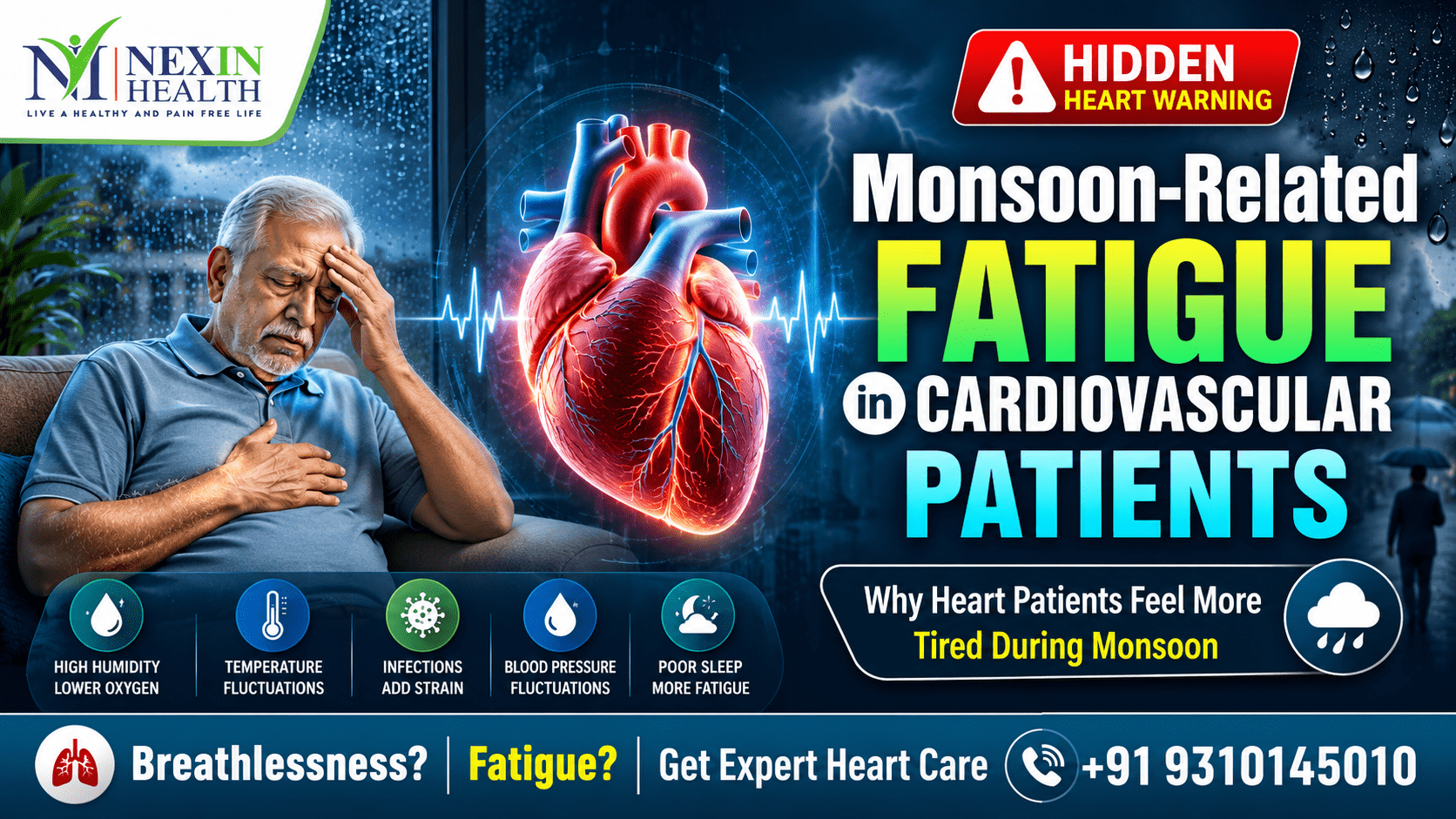



Monsoon-related fatigue in cardiovascular patients is far more common than most people realize, and it often shows up quietly, long before breathlessness or chest discomfort grabs attention. As the rains set in, many heart patients notice they feel unusually tired, drained, or weak — even on days when they have done very little physical activity. This tiredness is not “just in the mind.” It is the heart and body responding to real physiological changes brought on by humidity, temperature swings, and shifting air pressure.
For someone managing heart disease, diabetes, or high blood pressure, this fatigue deserves the same attention as more dramatic symptoms like chest pain. Left unaddressed, it can be an early warning sign of strain building up inside the cardiovascular system.
Understanding how monsoon affects your heart health starts with recognizing that rain season is not just a change in weather — it is a change in the internal environment your heart has to work within.
These four mechanisms rarely act alone. In most patients, two or three of them overlap during a single humid week, which is exactly why monsoon-related tiredness can feel so much heavier than ordinary seasonal sluggishness. A patient whose blood pressure rises slightly from cold exposure, who is also sleeping poorly because of rain noise, and who is mildly dehydrated from forgetting to drink water, experiences a combined effect that is far more draining than any single factor would be on its own. Recognizing this layered nature of monsoon fatigue helps patients and caregivers respond with more than just one isolated fix.
Monsoon and heart health risks differ from other seasons because multiple stressors arrive together rather than one at a time. Cold fronts, high humidity, frequent infections, and reduced physical activity all converge within the same few months, creating a uniquely demanding period for the cardiovascular system.
A common and important question patients ask is, what causes shortness of breath with a heart condition? In simple terms, when the heart cannot pump blood efficiently, fluid can back up into the lungs, making it harder for oxygen to pass into the bloodstream. This is the basic mechanism behind breathlessness in heart failure and related conditions.
During monsoon, this mechanism can be made worse by several seasonal factors working together:
This combination explains why many cardiovascular patients notice breathlessness becoming more frequent or more intense specifically during the rainy months, even without any major change in their underlying heart condition.
Patients often ask, what does shortness of breath from heart failure feel like, because it can be subtle at first and easy to dismiss as general tiredness. Common descriptions include:
Recognizing these patterns early, especially when they appear or worsen alongside unusual fatigue during monsoon, allows for quicker medical intervention before the condition progresses.
The connection between humidity and heart failure symptoms is well recognized by cardiologists, particularly because humidity affects the body in several interconnected ways.
High humidity makes it harder for sweat to evaporate, which is the body’s natural cooling mechanism. When this cooling process is less efficient, the heart has to pump more blood to the skin’s surface to help dissipate heat, adding to its workload. For someone with heart failure, this extra demand can intensify:
Cardiologists frequently recommend closer monitoring of weight and swelling during humid weeks, since sudden fluid gain is often the earliest measurable sign of worsening heart failure.
Fatigue in heart patients during rainy season is frequently dismissed as a normal reaction to gloomy weather, lower activity, or simply “feeling lazy.” This is precisely why it is so often overlooked until it becomes severe.
Unlike chest pain, which immediately signals something is wrong, fatigue develops gradually. A patient might first notice needing more rest after routine chores, then struggling with stairs they previously managed easily, and only later experience breathlessness or swelling. By recognizing fatigue as a legitimate early symptom — not just seasonal laziness — patients and caregivers can seek medical advice before the condition advances further.
Breathlessness in cardiovascular disease tends to follow a predictable pattern during monsoon. As humidity rises and temperatures fluctuate, the heart’s workload increases just as the body’s oxygen-extraction efficiency from the air decreases. This double effect explains why many patients who are otherwise stable notice a return or worsening of breathlessness specifically during the rainy months.
Importantly, research on weather and cardiovascular events has consistently shown that sudden environmental shifts — whether temperature, humidity, or atmospheric pressure — can act as triggers in people who already have underlying heart disease, even when their condition has been well controlled during other seasons.
Blood pressure fluctuations during monsoon are one of the most well-documented seasonal patterns in cardiovascular medicine. Cold-triggered vessel narrowing tends to push blood pressure upward, while dehydration from forgotten fluid intake can occasionally cause unexpected drops, especially in elderly patients on blood pressure medication.
Practical steps to manage this fluctuation include:
Congestive heart failure symptom management requires extra vigilance during the rainy season because several monsoon-specific factors can accelerate fluid buildup and breathlessness.
Seasonal changes and cardiovascular health are deeply connected, and monsoon represents one of the more demanding transitions for the heart in the Indian climate calendar. Unlike a single cold spell, monsoon brings weeks of fluctuating temperature, humidity, and air pressure, layered with a higher infection burden and reduced outdoor activity.
This combination is why doctors increasingly emphasize monsoon-specific precautions for cardiovascular patients, rather than treating it as just another rainy stretch of weeks. Patients who understand these seasonal mechanics are better equipped to recognize early symptoms and seek timely care.
Certain groups face a notably higher risk of monsoon-related fatigue in cardiovascular patients, and recognizing this risk early can make a real difference in how the season is managed:
While mild tiredness during monsoon is common, certain warning signs should never be ignored:
Anyone experiencing these symptoms, particularly in combination, should seek medical evaluation promptly rather than waiting for the rainy season to pass.
Food choices play a meaningful role in how tired or energetic a heart patient feels during the rainy season, and diet is one of the most controllable factors in reducing monsoon-related fatigue in cardiovascular patients. Heavy, oily, or overly salty meals demand more digestive effort and contribute to fluid retention, both of which can deepen the sense of fatigue already caused by humidity and pressure changes.
Alongside diet, maintaining a predictable daily routine — consistent meal times, a fixed bedtime, and scheduled medication — gives the body fewer surprises to adapt to during an already unpredictable season.
| Approach | What It Involves | Best Suited For | Limitation |
| Lifestyle and home monitoring | Daily weight tracking, indoor activity, hydration, and blood pressure checks | Stable heart patients and those at early risk | Cannot address advanced or unstable heart failure alone |
| Medication adherence and adjustment | Following prescribed heart failure or blood pressure medication, with doctor-guided adjustments if needed | Diagnosed heart failure, hypertension, or coronary artery disease patients | Requires regular follow-up and careful self-monitoring |
| Hospital-based intervention | Diuretic therapy, advanced monitoring, or procedures for unstable symptoms | Patients with significant fluid overload or worsening symptoms | More invasive, may require hospital stay |
| Non-invasive therapies like EECP | External counterpulsation therapy that improves circulation and reduces cardiac workload without surgery | Patients seeking to improve stamina and reduce fatigue without invasive procedures | Requires multiple sessions over several weeks |
Monsoon-related fatigue in cardiovascular patients is not something to brush aside as ordinary seasonal tiredness. It often reflects real, measurable changes happening inside the heart and blood vessels in response to humidity, temperature shifts, and pressure changes. The good news is that with consistent monitoring, sensible lifestyle adjustments, and timely medical support, this seasonal strain can be managed effectively, allowing patients to move through the monsoon months with greater confidence and safety.
It refers to unusual tiredness or low energy experienced by heart patients during the rainy season, caused by humidity, temperature changes, fluid retention, and reduced oxygen efficiency in moist air.
It happens when a weakened heart cannot pump blood efficiently, causing fluid to back up into the lungs and making oxygen exchange harder, which is often worsened by monsoon humidity and fluid retention.
It often feels like not getting a complete breath, worsening while lying flat, needing frequent rest while walking, or waking up at night gasping for air.
Monsoon affects heart health through temperature swings, humidity-related oxygen reduction, barometric pressure shifts, increased infection risk, and disrupted sleep, all of which add strain to the cardiovascular system.
Humidity reduces the body’s ability to cool itself through sweating, forcing the heart to work harder and often worsening swelling, fatigue, and breathlessness in heart failure patients.
Not always, but in patients with known cardiovascular disease, new or worsening fatigue during monsoon should be taken seriously and discussed with a doctor rather than dismissed.
Yes, cold-triggered vessel narrowing can raise blood pressure, while dehydration from reduced fluid intake can occasionally cause unexpected drops, especially in elderly patients.
Through daily weight monitoring, careful fluid intake, strict medication adherence, and prompt reporting of new or worsening symptoms to a doctor.
People with existing heart failure, coronary artery disease, high blood pressure, diabetes, the elderly, and those recovering from recent cardiac events face the highest risk.
Yes, infections common during monsoon, including viral fevers and waterborne illnesses, place extra strain on the heart and can intensify fatigue and other symptoms.
No, adequate hydration remains important unless a doctor has specifically advised fluid restriction, since dehydration can also strain the cardiovascular system.
Severe fatigue, breathlessness at rest or while lying flat, swelling, chest discomfort, palpitations with dizziness, and rapid weight gain all require prompt medical attention.
Yes, disrupted sleep due to humidity or rain has been linked to elevated blood pressure and irregular heart rhythms, which can compound daytime fatigue.
Therapies like EECP improve blood circulation and may help reduce the cardiac workload that contributes to fatigue, particularly in patients avoiding invasive procedures.
Whenever fatigue, breathlessness, swelling, or palpitations are new, worsening, or unusual for that individual, rather than waiting for the rainy season to pass on its own.
NexIn Health is a trusted name in non-invasive heart and spine care, with over 14 years of experience and more than 30,000 patients consulted across multiple cities. Specializing in advanced, non-invasive treatments like EECP therapy, NexIn Health helps cardiovascular patients manage seasonal strain safely, including the fatigue and breathlessness that monsoon weather can bring.
If you or a loved one is experiencing unusual fatigue, breathlessness, or swelling this monsoon, don’t wait for symptoms to worsen. Reach out to NexIn Health today for a consultation.
Call or WhatsApp: +91 9310145010
Website: www.nexinhealth.in
Email: care@nexinhealth.in
Read More : NexIn Health | Healing Hearts Naturally with EECP


Experience

Certified Therapists

Satisfied Patients
Contact us