Can Anxiety Cause Heart Attack-Like Symptoms? Doctors Explain the Difference


Can Anxiety Cause Heart Attack-Like Symptoms? Doctors Explain the Difference
Anxiety cause heart attack symptoms are more common than you might think. Every day, thousands of people rush to emergency rooms convinced they’re having a heart attack, only to discover their symptoms stem from anxiety or panic attacks. Understanding the difference between these two conditions can save you unnecessary worry and help you get the right treatment at the right time.
The confusion is understandable. Both conditions can trigger intense chest pain, shortness of breath, and overwhelming fear. However, knowing how to tell anxiety from heart attack symptoms can be life-saving. In this detailed guide, we’ll explore everything you need to know about these conditions, their differences, and when to seek medical help.
✨ Did You Know?
Your body’s stress response system is designed to protect you from danger. When you feel anxious, your brain releases stress hormones like adrenaline and cortisol. These chemicals prepare your body for “fight or flight” by increasing your heart rate, raising blood pressure, and quickening your breathing.
This natural response can create physical sensations that closely mimic heart problems. Your chest might tighten, your heart might race, and you might struggle to catch your breath. These are genuine physical symptoms, not just “in your head.”
According to research published by the American Heart Association, chronic anxiety can affect your cardiovascular system over time. However, the immediate symptoms you experience during a panic attack are typically not causing actual damage to your heart, even though they feel terrifying.
Understanding the differences between these conditions is crucial for your health and peace of mind.
Panic Attack Symptoms:
Heart Attack Symptoms:
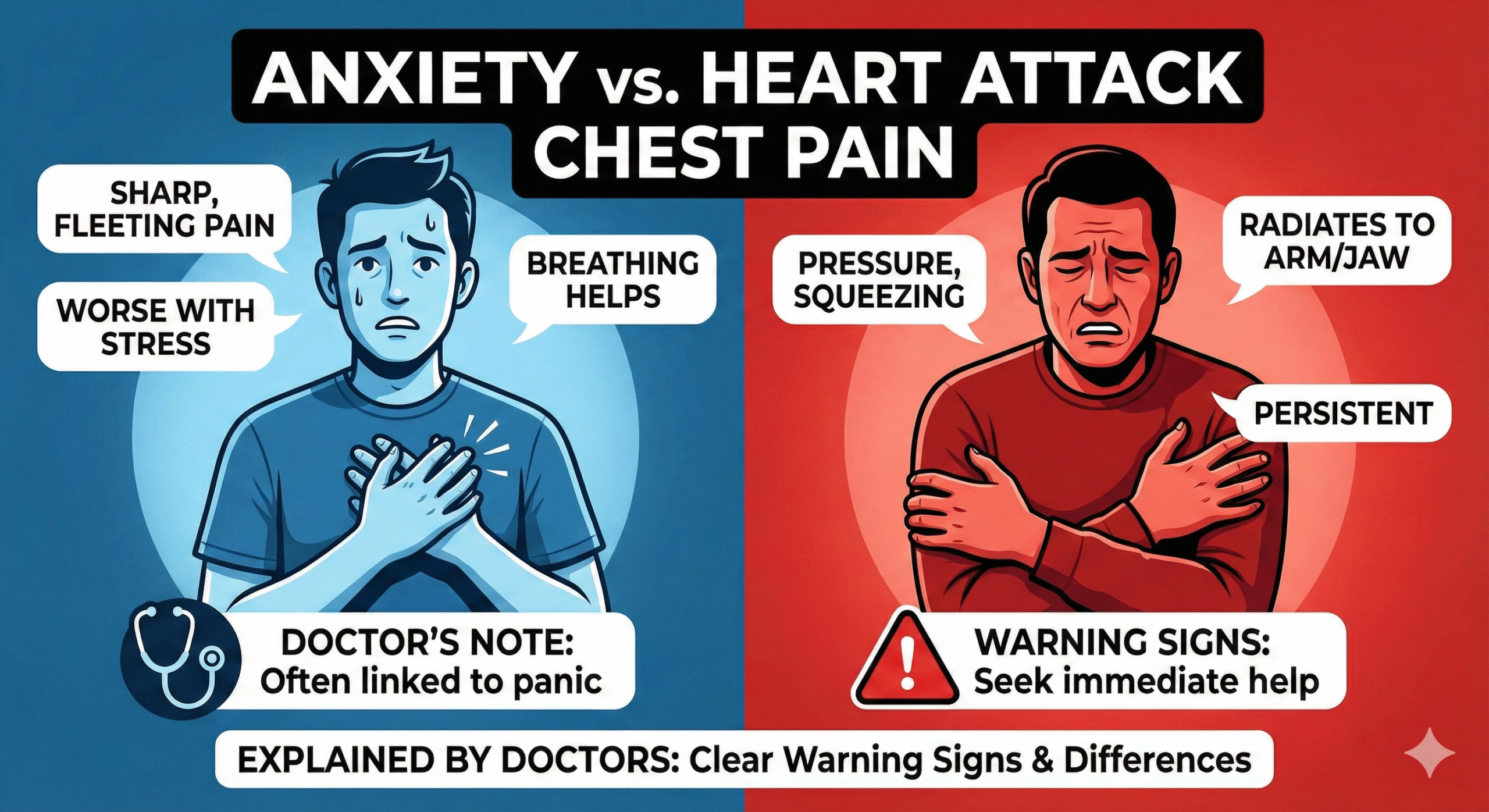
Chest Pain Due to Anxiety:
Heart Attack Chest Pain:
Anxiety Heart Symptoms Include:
Heart Attack Warning Signs:
Recent studies reveal important patterns about anxiety-related heart problems:
According to a Harvard Medical School study, people with anxiety disorders have a 26% higher risk of developing heart disease over time. However, this doesn’t mean anxiety directly causes heart attacks in the moment.
Research from the Journal of the American College of Cardiology shows that approximately 58% of people experiencing panic attack symptoms believe they’re having a heart attack. This misconception leads to millions of emergency room visits each year.
A clinical study published in the European Heart Journal found that chest tightness anxiety affects about 30-40% of people with generalized anxiety disorder at some point in their lives.
When anxiety strikes, your body activates its emergency response system. Here’s what happens:
Physical Changes During Anxiety:
These physical changes are protective mechanisms, but they can feel scary when you don’t understand what’s happening.
Yes, anxiety can definitely cause chest pain, and it’s more common than most people realize. This isn’t imaginary pain—it’s real physical discomfort caused by measurable changes in your body.
Three Main Ways Anxiety Creates Chest Pain:
According to research from Johns Hopkins Medicine, anxiety-related chest pain is typically reproducible—meaning you can often make it worse by pressing on your chest or moving certain ways. Heart attack pain usually doesn’t change with movement or touch.
While most anxiety symptoms aren’t dangerous, you should never ignore potential heart attack warning signs. It’s always better to be safe and get checked out.
Seek Emergency Medical Help If You Experience:
It’s Likely Anxiety If:
If you visit a doctor with chest pain, they’ll typically perform several tests to rule out heart problems:
Common Diagnostic Tests:
Once heart disease is ruled out, your doctor may diagnose anxiety or panic disorder based on your symptoms and medical history.
| Feature | Anxiety/Panic Attack | Heart Attack |
|---|---|---|
| Pain Type | Sharp, stabbing, shooting | Pressure, squeezing, heaviness |
| Pain Location | Localized to one spot | Center chest, spreading outward |
| Duration | 10-30 minutes typically | 20+ minutes, often worsening |
| Onset | Sudden, peaks quickly | Gradual or sudden, persistent |
| Pain with Movement | Often changes with position | Usually unchanged by position |
| Age Factor | Any age, common in 20s-40s | Risk increases after 45 |
| Additional Symptoms | Tingling, dizziness, fear | Arm/jaw pain, cold sweat |
| Response to Relaxation | Often improves with calming | No improvement with relaxation |
| Physical Activity | Can occur at rest | Often during/after exertion |
| Previous Episodes | History of similar attacks | Usually first occurrence |
Many people find relief from shortness of breath anxiety and other symptoms through natural approaches. These methods work best when combined with professional medical guidance.
Ashwagandha (Withania somnifera): This adaptogenic herb helps your body manage stress more effectively. Studies suggest it can reduce anxiety symptoms by up to 44% when taken regularly for 8 weeks. Typical dosage is 300-500mg twice daily.
Brahmi (Bacopa monnieri): Known for calming the nervous system and improving mental clarity. It helps reduce racing thoughts and promotes relaxation. Traditional dosage is 300mg daily.
Jatamansi (Spikenard): This Ayurvedic herb specifically targets anxiety-related heart palpitations and promotes restful sleep. Commonly used as 500mg capsules twice daily.
Aconitum Napellus: Often recommended for sudden panic attacks with intense fear and heart palpitations anxiety. Particularly helpful when symptoms come on suddenly.
Arsenicum Album: Used for anxiety accompanied by restlessness and chest tightness anxiety. Helpful for people who feel worse at night.
Ignatia Amara: Beneficial for emotional anxiety, especially after stressful life events. Helps with the feeling of a lump in the throat and chest constriction.
Magnesium Supplementation: Magnesium helps regulate your nervous system and can reduce muscle tension. Research shows 200-400mg daily can significantly reduce anxiety symptoms. Food sources include spinach, almonds, and dark chocolate.
Omega-3 Fatty Acids: Found in fish oil, these essential fats support brain health and reduce inflammation. Studies indicate 1-2 grams daily can help manage anxiety.
L-Theanine: This amino acid found in green tea promotes relaxation without drowsiness. Typical effective dose is 200mg daily.
Breathing Exercises: Regular practice of deep breathing techniques can retrain your nervous system. Try the 4-7-8 technique: breathe in for 4 counts, hold for 7, exhale for 8.
Regular Exercise: Physical activity naturally reduces stress hormones and releases feel-good endorphins. Even 20-30 minutes of walking daily can make a significant difference.
Enhanced External Counterpulsation (EECP) Therapy is an innovative, non-invasive treatment that benefits both heart health and anxiety-related symptoms.
What Is EECP Therapy?
EECP is a painless outpatient treatment where inflatable cuffs wrapped around your legs gently squeeze and release in sync with your heartbeat. This increases blood flow to your heart and throughout your body.
Benefits for Anxiety-Related Heart Symptoms:
Treatment Protocol:
EECP typically involves 35 one-hour sessions over 7 weeks. Many patients report feeling calmer and experiencing fewer anxiety heart symptoms after completing the full course.
Research published in the American Journal of Cardiology shows that EECP can improve quality of life and reduce chest pain in patients with various heart conditions. While primarily used for cardiac patients, the therapy’s stress-reducing effects can also benefit those with anxiety-related symptoms.
| Treatment Type | Effectiveness | Duration | Side Effects | Cost |
|---|---|---|---|---|
| Medication (SSRIs) | High (60-70%) | 4-6 weeks to work | Nausea, weight changes | Moderate |
| Cognitive Behavioral Therapy | Very High (70-80%) | 12-20 sessions | None | Moderate-High |
| EECP Therapy | High for cardiac symptoms | 7 weeks (35 sessions) | Minimal (leg discomfort) | High |
| Ayurvedic Herbs | Moderate (40-50%) | 4-8 weeks | Minimal | Low |
| Homeopathy | Varies (30-40%) | Ongoing | None | Low |
| Lifestyle Changes | Moderate-High (50-60%) | Ongoing | None | Free-Low |
| Beta Blockers | High for physical symptoms | Immediate | Fatigue, dizziness | Low-Moderate |
| Meditation/Yoga | Moderate (40-50%) | Daily practice | None | Free-Low |
Recognizing the relationship between anxiety and physical symptoms offers several important advantages:
Reduced Emergency Room Visits: When you understand your symptoms, you’re less likely to rush to the ER unnecessarily. This saves time, money, and reduces healthcare system burden.
Better Anxiety Management: Knowing that your symptoms are anxiety-related helps you develop effective coping strategies rather than fearing heart disease constantly.
Improved Quality of Life: Understanding your body’s responses reduces fear and allows you to engage more fully in daily activities without constant worry.
Targeted Treatment: Proper diagnosis ensures you receive appropriate treatment for anxiety rather than unnecessary cardiac interventions.
Peace of Mind: Knowledge about your condition reduces the fear-anxiety cycle that often makes symptoms worse.
When chest pain strikes, follow these steps to assess your situation:
Step 1: Notice the Pain Characteristics
Step 2: Check for Additional Symptoms
Step 3: Try Simple Interventions
Step 4: Monitor the Timeline
Step 5: Consider Your Risk Factors
When in Doubt: Call Emergency Services
If you’re unsure or symptoms are severe, always err on the side of caution. Emergency medical professionals would rather check you out and find nothing serious than have you delay care for a real heart attack.
Successfully managing anxiety-related heart symptoms requires a comprehensive, ongoing approach:
Therapy Options:
Medication When Needed:
Daily Routines:
Mindfulness and Meditation: Regular meditation practice can reduce anxiety symptoms by 30-40% according to research from Stanford University. Even 10 minutes daily makes a difference.
Journaling: Writing about your symptoms helps identify triggers and patterns. Track when symptoms occur, what you were doing, and how you responded.
While you can’t always prevent panic attacks, you can reduce their frequency and intensity:
Identify Your Triggers: Common triggers include caffeine, lack of sleep, specific situations, or stressful life events. Once you know your triggers, you can work to avoid or manage them.
Build Stress Resilience:
Physical Health:
Social Support: Having a strong support network reduces anxiety significantly. Share your experiences with trusted friends or join a support group for people with anxiety disorders.
Panic attacks involve a complex set of physical and psychological symptoms that can be overwhelming:
Physical Symptoms:
Psychological Symptoms:
Understanding that these symptoms, while frightening, are not actually dangerous can help reduce their intensity over time.
If you’re struggling with chest pain, whether from anxiety or heart-related concerns, getting expert evaluation is essential for peace of mind and proper treatment.
About NexIn Health:
NexIn Health specializes in comprehensive heart and spine treatment using non-invasive integrated techniques. With over 14 years of experience and more than 30,000 patients consulted, our expert team understands the complex relationship between anxiety and cardiac symptoms. We offer advanced diagnostic services, EECP therapy, and personalized treatment plans that address both physical and emotional aspects of your health. Our integrated approach combines conventional medicine with complementary therapies to provide complete care for your cardiovascular wellness.
Get in Touch:
Our compassionate team is ready to help you understand your symptoms and guide you toward effective treatment, whether you need cardiac care, anxiety management, or both.
Que: Can anxiety actually damage my heart over time?
Ans: While acute anxiety attacks don’t typically cause immediate heart damage, chronic long-term anxiety can contribute to heart disease development. Persistent stress hormones can lead to high blood pressure, inflammation, and unhealthy coping behaviors like smoking or overeating. Managing anxiety properly protects your long-term heart health.
Que: How long does chest pain from anxiety typically last?
Ans: Anxiety-related chest pain usually peaks within 10 minutes and resolves within 20-30 minutes. If chest pain persists beyond 30 minutes or gradually worsens over time, it’s more likely to be a cardiac issue requiring immediate medical evaluation.
Que: Can I have both anxiety and heart problems at the same time?
Ans: Yes, absolutely. Having anxiety doesn’t mean your chest pain is always anxiety-related. Many people with diagnosed anxiety disorders also develop heart conditions. This is why it’s important to get new or different chest pain symptoms evaluated by a doctor, even if you have a history of panic attacks.
Que: What should I do during a panic attack to make it stop faster?
Ans: Focus on slow, controlled breathing—breathe in for 4 counts, hold for 4, exhale for 6. Remind yourself that this is temporary and not dangerous. Ground yourself by naming 5 things you can see, 4 you can touch, 3 you can hear, 2 you can smell, and 1 you can taste. Sit down and relax your shoulders and jaw consciously.
Que: Are women’s symptoms different from men’s when it comes to heart attacks?
Ans: Yes, women often experience different heart attack symptoms than men. Women are more likely to have shortness of breath, nausea, vomiting, jaw or back pain, and unusual fatigue rather than the classic crushing chest pain. Women should never dismiss unusual symptoms, especially if they have heart disease risk factors.
Que: Can heart palpitations from anxiety be dangerous?
Ans: Heart palpitations from anxiety are typically not dangerous if you have a healthy heart. However, if you experience frequent palpitations, it’s wise to get an ECG to rule out any underlying heart rhythm problems. Palpitations accompanied by chest pain, fainting, or extreme shortness of breath require immediate medical attention.
Que: How can I convince myself I’m not having a heart attack during a panic attack?
Ans: Keep a symptom diary noting that previous episodes resolved without harm. Remind yourself that panic attacks peak within 10 minutes. Focus on the characteristics: anxiety pain is usually sharp and localized, while heart attack pain is pressure-like and spreading. If you’ve had cardiac testing that showed a healthy heart, remember those results. When in doubt, call your doctor or emergency services.
Que: Is EECP therapy covered by insurance for anxiety-related symptoms?
Ans: EECP therapy is typically covered by insurance for approved cardiac conditions like angina or heart failure. Coverage for anxiety-related symptoms varies by insurance provider and policy. It’s best to check with your insurance company and discuss medical necessity with your doctor who can help with prior authorization if appropriate.
Que: Can changing my diet really help reduce anxiety-related heart symptoms?
Ans: Yes, diet plays a significant role. Reducing caffeine can decrease heart palpitations and anxiety. Increasing omega-3 fatty acids, magnesium-rich foods, and complex carbohydrates can stabilize mood and reduce anxiety. Avoiding sugar spikes by eating regular balanced meals prevents blood sugar fluctuations that can trigger anxiety symptoms.
Que: Should I avoid exercise if I have anxiety-related chest pain?
Ans: No, regular exercise is actually one of the best treatments for anxiety. Start slowly with gentle activities like walking, and gradually increase intensity. Exercise releases natural anxiety-reducing chemicals in your brain and strengthens your cardiovascular system. If you experience chest pain during exercise that’s different from your usual anxiety symptoms, stop and get medical evaluation to rule out cardiac issues.
Understanding whether anxiety cause heart attack-like symptoms is crucial for your health and peace of mind. While the physical sensations can be frightening, recognizing the differences between panic attacks and actual cardiac events empowers you to respond appropriately.
Remember, anxiety-related chest pain is real, common, and manageable. With proper diagnosis, treatment, and lifestyle modifications, most people successfully reduce both the frequency and intensity of their symptoms. Whether through conventional medicine, natural approaches, EECP therapy, or a combination of methods, effective help is available.
Never hesitate to seek medical attention when you’re uncertain about chest pain. It’s always better to be evaluated and find nothing serious than to delay care for a real emergency. Your heart health and peace of mind are worth it.


Experience

Certified Therapists

Satisfied Patients
Contact us