Can Electrolyte Imbalance Cause Heart Palpitations? Signs, Risks & Treatment
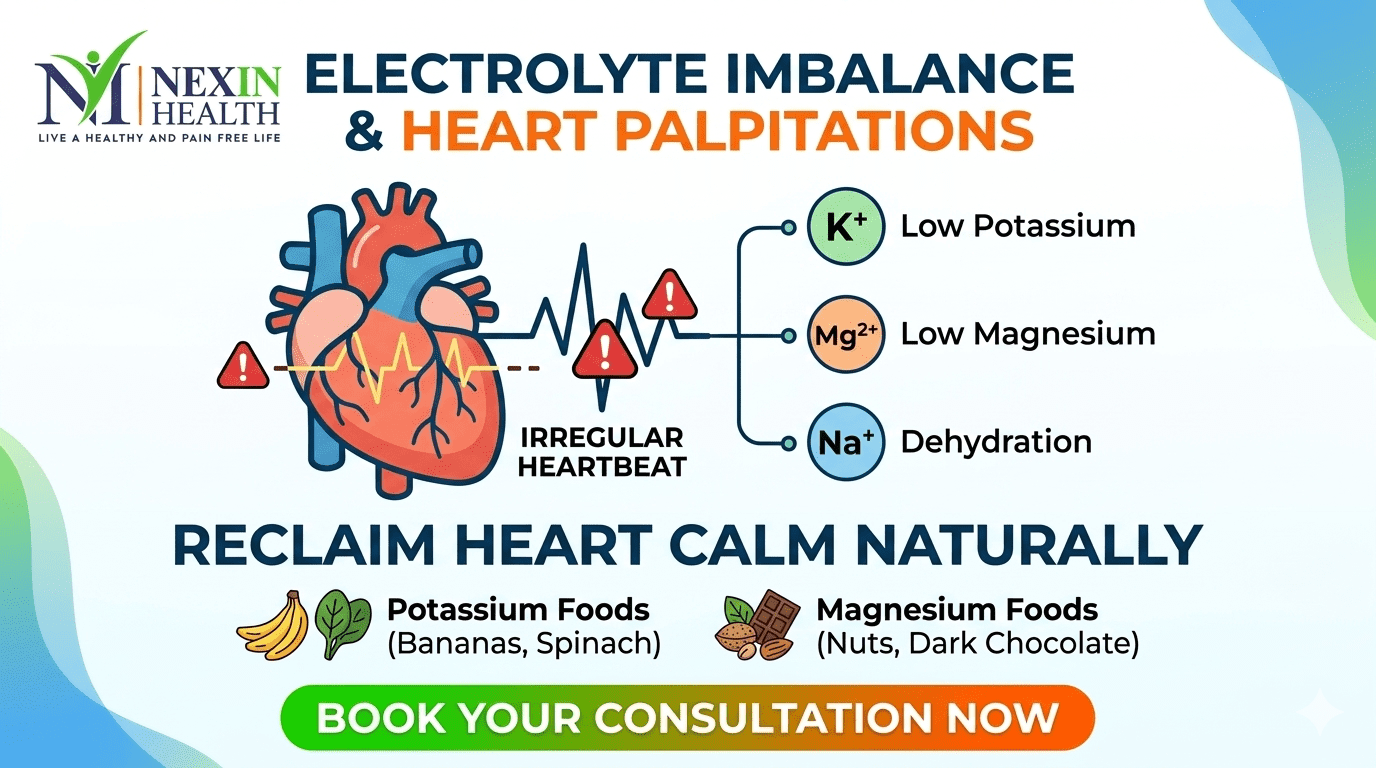



Can Electrolyte Imbalance Cause Heart Palpitations Picture this: You’re sitting at your desk, working normally, when suddenly your heart feels like it’s racing at 120 beats per minute. Your chest feels tight. You can hear your own heartbeat in your ears. Your hands start to shake. You feel dizzy. You wonder if you’re having a heart attack. You rush to the emergency room, terrified, only to find out—you just need more electrolytes in your system.
This scenario happens to thousands of people every single day. Electrolyte imbalance and heart palpitations are more connected than most people realize, yet most people—and even some doctors—don’t understand this critical relationship. Your heart is essentially an electrical organ, not just a pump. Every single heartbeat depends on precise electrical signals. These signals are powered entirely by minerals called electrolytes. When these minerals fall out of balance, even slightly, your heartbeat can go haywire. Understanding this connection could literally save your life.
The shocking truth? Most people experiencing heart palpitations never consider that the problem might be as simple as a mineral imbalance. They’re terrified they have heart disease. They undergo expensive tests. They take medications. They live with constant anxiety. All the while, the real solution might be sitting in their kitchen or available at any local pharmacy.
Did you know?
Electrolytes are minerals that carry electrical charges in your body. When dissolved in water and blood, they create signals that make your muscles contract and your heart beat. Think of them as nature’s electricity—without them, your body literally cannot function.
Here’s where it gets fascinating: your body is approximately 60-70% water. Within this water, electrolytes dissolve and create an invisible electrical environment. When you move, think, breathe, or move nutrients—electrolytes are orchestrating it all behind the scenes. Your heart muscle cells are bathed in a fluid containing these charged particles. When an electrical signal needs to travel across your heart muscle to make it contract, electrolytes create the pathway for that signal. Without proper electrolyte balance, the signal gets weak, confused, or goes haywire entirely.
Sodium – The Fluid Master Sodium is the most abundant positively-charged mineral outside your cells. It controls how much water stays in your bloodstream. Think of sodium as a magnet that pulls water into your blood. When sodium levels drop, your blood volume decreases, and your heart has to work harder. When sodium levels get too high, your blood pressure rises dangerously. Sodium also powers the electrical signals that travel along nerves, including the nerves that control your heart.
Potassium – The Heartbeat Orchestrator Potassium is the primary mineral inside your cells. It works in perfect opposition to sodium—sodium pulls water into the blood, while potassium keeps proper fluid balance inside cells. More importantly for your heart, potassium controls how electrical current moves through heart muscle cells. When your heart muscle contracts, potassium rushes out of heart cells. When your heart muscle relaxes, potassium flows back in. This dance happens millions of times per day. If potassium levels are abnormal, this dance becomes clumsy and irregular, causing palpitations.
Magnesium – The Muscle Relaxer and Nerve Calmer Magnesium is involved in over 600 different enzymatic reactions in your body. For your heart specifically, magnesium acts like nature’s calcium-channel blocker—it prevents excessive electrical excitability in heart cells. Think of magnesium as a “brake pedal” for your nervous system. When you’re stressed, your body burns through magnesium. When magnesium drops, your nervous system becomes hyperactive, and your heart responds by beating too fast or irregularly. Magnesium also causes blood vessels to relax, which prevents dangerous blood pressure spikes.
Calcium – The Electrical Trigger Calcium is the mineral that actually triggers the electrical cascade causing your heart to contract. When calcium enters heart muscle cells, it signals them to squeeze. When calcium leaves, the cells relax. Abnormal calcium levels can cause your heart to contract too forcefully or with irregular patterns. Calcium also plays crucial roles in bone strength, nerve transmission, and muscle function throughout your body.
Chloride – The Balance Maintainer Chloride works with sodium to maintain proper fluid balance and blood osmolality (the concentration of solutes in blood). Without adequate chloride, your kidneys cannot properly regulate fluid balance, leading to cascading electrolyte problems throughout your body.
Phosphate – The Energy Producer Phosphate partners with calcium and magnesium to create the energy molecules your heart cells desperately need. Your heart is one of the most metabolically active organs in your body, requiring constant energy. Phosphate deficiency can make your heart literally run out of fuel.
Your body gets these minerals from food, water, and sometimes supplements. Your kidneys carefully regulate their levels, filtering out excess amounts and conserving them when you’re low. This system works beautifully—until something disrupts it.
Absolutely, yes. Electrolyte imbalance and heart palpitations are directly linked through fundamental physiology. To understand this, you need to understand how your heart actually works at the cellular level.
Your heart is not just a mechanical pump. It’s actually an electrical organ first, and a pump second. Here’s how it works:
Stage 1: The Resting State When your heart cells are at rest, they maintain a precise electrical gradient. Inside the cell is negative. Outside the cell is positive. This gradient exists because of electrolytes and special protein pumps embedded in cell membranes. These pumps continuously work to maintain the balance—sodium and calcium stay mostly outside, potassium stays mostly inside.
Stage 2: The Electrical Signal Arrives When your nervous system sends a signal to your heart to beat, it causes a chain reaction. The cell membrane becomes permeable to sodium. Sodium rushes into the heart cell, making the inside suddenly positive. This change in electrical potential is called depolarization. This electrical change is what actually triggers the heart muscle to contract.
Stage 3: The Contraction As sodium continues to rush in, calcium channels open. Calcium floods the cell, causing the heart muscle protein filaments to slide past each other, creating the muscle contraction—the actual heartbeat.
Stage 4: The Reset (Repolarization) When the cell has contracted, potassium channels open. Potassium rushes out of the cell, bringing the inside back to negative. This allows the muscle to relax and prepare for the next beat. This is called repolarization.
This entire cycle happens in milliseconds. Your heartbeat depends on this precise electrical dance occurring perfectly millions of times per year.
Now imagine what happens when electrolytes become imbalanced:
If Potassium Is Too Low (Hypokalemia): Potassium cannot properly exit the cell during repolarization. The cell stays partially depolarized. The electrical signal becomes weak and slow. Heart muscle cells may fire randomly without proper signals. This causes the heart to skip beats, race, or flutter—heart palpitations.
If Potassium Is Too High (Hyperkalemia): The gradient between inside and outside the cell collapses. Electrical signals become erratic. The cell has difficulty firing at all, or fires chaotically. This causes dangerous arrhythmias, including potentially fatal ones.
If Magnesium Is Too Low (Hypomagnesemia): Magnesium normally prevents excessive calcium from entering heart cells. Without adequate magnesium, calcium floods the cells. This causes excessive, uncontrolled contractions—rapid heartbeat and palpitations. The cell becomes hyperexcitable, triggering beats at inappropriate times.
If Calcium Is Too Low (Hypocalcemia): The heart has insufficient trigger for contraction. Heartbeats become weak and irregular. You may experience bradycardia (slow heart rate) along with palpitations.
If Sodium Is Too Low (Hyponatremia): Your blood becomes more dilute. Your heart has to work harder to maintain adequate blood pressure and tissue perfusion. The heart increases its rate to compensate, causing tachycardia and palpitations.
Your heart’s electrical system is incredibly sensitive to electrolyte balance. Even small deviations from normal ranges can disrupt the delicate electrical dance. Electrolyte imbalance and heart palpitations are directly connected because every heartbeat depends on proper electrolyte function.
Recent clinical trials suggest that electrolyte imbalance causes between 15-20% of irregular heartbeat cases. This makes it one of the most treatable causes of heart rhythm problems. Many people suffering with palpitations could be cured simply by correcting their mineral levels—if only they knew to test for it.
Potassium is your heart’s best friend. It’s the primary mineral that controls electrical flow in heart muscle cells. Low potassium heart palpitations symptoms are among the earliest and most noticeable warning signs of electrolyte imbalance.
When your blood potassium drops below 3.5 mEq/L (normal is 3.5-5.0 mEq/L), you have hypokalemia. Your heart muscles immediately sense this change. Because potassium is supposed to flow OUT of cells during the resting phase, low potassium means cells can’t fully reset. They stay partially excited, firing electrical signals at random times.
Heart Palpitations – The Most Obvious Sign This is the sensation that your heart is pounding, racing, skipping, or fluttering. You may feel it in your chest, throat, or even your ears. Some people describe it as “my heart is trying to escape my chest.” Others say “my heart skipped a beat” or “my heart is bouncing around.” These sensations happen because your heart is contracting irregularly due to abnormal electrical signals. This is often the symptom that scares people most because it feels like something is seriously wrong.
Arrhythmias – Dangerous Rhythm Disturbances This is when your heartbeat becomes genuinely irregular. An EKG might show patterns like premature ventricular contractions (PVCs) where extra beats occur, or atrial fibrillation where the upper chambers quiver instead of contracting properly. These aren’t just uncomfortable—they can be dangerous if severe.
Rapid Heartbeat (Tachycardia) Your heart may beat consistently fast, even at rest. Normal resting heart rate is 60-100 bpm. With low potassium, you might find your resting heart rate is 100-120 bpm or even higher. This happens because your heart is working harder to maintain blood flow when electrical signals are weak.
Slow Heartbeat (Bradycardia) Paradoxically, some people experience slow heartbeat with severe hypokalemia. This happens when the electrical signal becomes so weak that the heart struggles to fire properly.
Muscle Weakness and Fatigue – Often Misdiagnosed as Depression Your muscles throughout your body depend on potassium for contraction and relaxation. When potassium is low, muscles literally cannot work efficiently. You might notice:
This weakness can be severe enough to prevent you from working or exercise.
Muscle Cramps and Spasms – Often Worse at Night Potassium deficiency causes involuntary muscle contractions. You might experience:
These cramps can be exceedingly painful, sometimes waking you from deep sleep.
Numbness or Tingling in Hands and Feet Low potassium affects nerve transmission throughout your body. You might experience:
Dizziness and Light-headedness When your heart isn’t pumping effectively due to electrical problems, blood flow to your brain decreases. This causes:
Shortness of Breath – Even at Rest Because your heart is struggling with electrical problems, it can’t pump blood efficiently. Your lungs don’t get adequate blood flow, and your brain perceives a lack of oxygen. You may feel:
These symptoms develop slowly and gradually. Most people don’t connect a racing heart with low potassium until a doctor tests them. The insidious nature of hypokalemia is that symptoms are often attributed to other causes:
Meanwhile, their potassium is dangerously low, and their heart is at risk.
Mild Hypokalemia (3.0-3.5 mEq/L):
Moderate Hypokalemia (2.5-3.0 mEq/L):
Severe Hypokalemia (Below 2.5 mEq/L):
Magnesium deficiency heart rhythm problems are epidemic. Harvard researchers found that 68% of American adults don’t get enough magnesium. Even worse, most don’t know it’s dangerous for their heart.
Magnesium acts like a natural calcium-channel blocker. It relaxes blood vessel walls and prevents excessive electrical activity in heart cells. Without enough magnesium, your heart becomes hyperexcitable.
Premature Ventricular Contractions (PVCs) The ventricles (lower chambers) contract before the electrical signal should reach them. This causes a “skipped beat” sensation or feeling that your heart is pounding or fluttering.
Atrial Fibrillation (A-Fib) The atria (upper chambers) quiver chaotically instead of contracting smoothly. Blood doesn’t pump efficiently from the atria to the ventricles. This dangerous rhythm can cause blood clots, stroke, and heart failure if untreated.
Supraventricular Tachycardia (SVT) The heart races consistently and rapidly, often 150-250 bpm. This exhausts the heart and can lead to cardiomyopathy (weakened heart) if chronic.
Rapid, Pounding Heartbeat Simply a persistently fast heart rate due to magnesium-caused hyperexcitability of cardiac cells.
Anxiety and Panic Attacks Magnesium is crucial for nervous system calm. Low magnesium causes generalized anxiety, panic attacks, feeling constantly “on edge,” difficulty relaxing, and hypervigilance. Many are misdiagnosed with anxiety disorders when they simply need magnesium.
Insomnia and Sleep Disturbances Magnesium promotes the neurotransmitter GABA, which induces calm and sleep. Without it, you experience difficulty falling asleep, waking multiple times nightly, restless sleep, and sleep that doesn’t feel restful.
Muscle Tension and Pain Magnesium allows muscles to relax. Without it: muscle cramps and spasms, tension headaches and migraines, muscle pain throughout the body, stiff neck and shoulders, and jaw clenching.
Brain Fog and Difficulty Concentrating Magnesium is required for proper neurological function: mental cloudiness, difficulty concentrating, memory problems, slow thinking, and difficulty with complex tasks.
High Blood Pressure Magnesium causes blood vessel relaxation. Without it: persistently elevated blood pressure, blood pressure spikes, and resistance to blood pressure medications.
Migraines Low magnesium is one of the strongest predictors of migraine frequency: frequent, severe migraines, migraine with aura, and medication-resistant migraines.
Studies show that correcting magnesium deficiency reduces heart palpitations in up to 87% of patients within 2-3 weeks. This is an extraordinarily high success rate—higher than many prescription anti-arrhythmic medications.
Why? Because magnesium directly addresses the root cause: excessive calcium influx and hyperexcitable cardiac cells. When you correct the magnesium deficiency, the heart immediately becomes less excitable. Chaotic rhythms settle into normal patterns. Blood pressure normalizes. Anxiety decreases. The improvement is often dramatic.
This makes magnesium one of the most powerful natural heart rhythm stabilizers available. Yet most doctors don’t test for it, and most people don’t know they’re deficient.
Electrolyte imbalance symptoms in adults vary widely. The severity depends on which mineral is low and how quickly the imbalance developed.
A 2024 study found that adults with electrolyte imbalance symptoms wait an average of 3-6 months before seeking medical help. Earlier diagnosis dramatically improves outcomes.
Dehydration and electrolyte imbalance effects create a dangerous cycle. When you lose water, electrolyte concentration changes. Your heart responds immediately.
Stage 1 (First 2-3 hours):
Stage 2 (4-8 hours):
Stage 3 (8+ hours):
Dehydration causes:
Even mild dehydration can trigger heart palpitations in susceptible people. This is why athletes drink electrolyte drinks, not just water.
Yes. Can electrolyte imbalance cause high blood pressure? Absolutely. Electrolytes directly control blood vessel function and fluid balance.
Sodium helps your body retain fluid. Too much sodium tightens blood vessels, raising pressure. Too little makes your heart work harder, also raising pressure. The balance matters enormously.
Potassium relaxes blood vessel walls. Low potassium causes vasoconstriction (narrowing). This triggers high blood pressure and heart palpitations together.
Magnesium is nature’s blood pressure medicine. It causes vasodilation (relaxation of blood vessels). Deficiency allows blood pressure to spike.
Studies show that correcting electrolyte imbalance normalizes blood pressure in 60-70% of patients with mild hypertension. This is why doctors check electrolyte levels before prescribing blood pressure medications.
How to fix electrolyte imbalance at home requires both smart dietary changes and strategic hydration approaches. The good news? You don’t always need prescription medications or hospital visits. Many mild to moderate cases respond beautifully to home management when you know what to do.
This is where most people make their biggest mistake. They’re told to “drink more water,” so they drink gallon after gallon of plain water. This actually worsens electrolyte imbalance.
Here’s why: When you drink plain water without electrolytes, you dilute the minerals remaining in your bloodstream. Your blood osmolality (mineral concentration) drops. Your kidneys detect this dilution and respond by excreting more fluid as urine. You end up more dehydrated and mineral-depleted than before.
The correct approach to hydration:
Drink electrolyte solutions: Instead of plain water, drink solutions containing sodium, potassium, and magnesium. Options include:
Add salt to your water: This sounds counterintuitive, but a tiny pinch of salt in your water actually helps your body retain the fluid. The sodium acts as a “biological magnet” pulling water into the bloodstream where it’s needed.
Sip consistently throughout the day: Don’t chug huge amounts at once. Instead, sip small amounts regularly—a few ounces every 15-20 minutes. This provides steady, consistent electrolyte replenishment.
Front-load hydration in the morning: Your blood volume is lowest first thing in the morning after 8 hours of sleep. Before you even sit up, drink 16-32 ounces of electrolyte solution. Let it sit for 15-20 minutes while you’re still horizontal so it absorbs and expands your blood volume. This dramatically reduces morning palpitations and dizziness.
Avoid excessive plain water: If you’re thirsty beyond what your electrolyte solutions provide, drink the solutions—not more plain water.
Potassium is absolutely critical for heart rhythm stability. Eating potassium-rich whole foods provides not just the mineral, but also co-factors and fiber that support overall cardiovascular health.
Powerhouse potassium sources:
Bananas (about 420 mg of potassium per medium fruit, plus resistant starch for digestive health) One medium banana provides about 10-12% of your daily potassium needs. But more importantly, bananas also contain magnesium and B vitamins that support heart function.
Sweet Potatoes (540 mg per medium potato, plus beta-carotene and vitamin C) One medium sweet potato provides about 15% of daily potassium. The fiber helps stabilize blood sugar (important for heart health), and the antioxidants protect heart tissue from damage.
Spinach and Dark Leafy Greens (840 mg per cooked cup) Cooked spinach provides about 24% of daily potassium needs. It also contains magnesium (30% daily value), calcium, and compounds that reduce inflammation in blood vessels.
Avocados (485 mg per half fruit) One half avocado provides about 14% of potassium needs. Avocados also provide healthy monounsaturated fats that support cardiovascular health and reduce blood pressure.
White Beans and Legumes (595 mg per cooked cup) One cup of white beans provides about 17% of daily potassium. Beans also provide fiber, plant-based protein, and minerals that support heart health.
Coconut Water (600 mg per cup) This natural drink contains not just potassium, but also sodium, magnesium, and glucose in nearly the same ratios as the World Health Organization’s recommended electrolyte solution. It’s particularly useful for rapid rehydration.
Practical recommendation: Aim to eat 2-3 potassium-rich foods daily. A smoothie with banana, spinach, and coconut water is an easy way to get substantial potassium in one meal.
Magnesium is profoundly important, yet many people are deficient. The modern Western diet is notoriously low in magnesium because soil depletion has reduced magnesium content in crops.
Dietary magnesium sources:
Dark Leafy Greens, especially Swiss Chard and Spinach Spinach provides 78 mg per cooked cup—about 20% of daily needs. More importantly, it provides magnesium in a form your body absorbs readily, with no digestive side effects.
Pumpkin Seeds (150 mg per ounce, or about 23 seeds) A small handful of pumpkin seeds provides about 40% of daily magnesium. They’re easy to eat as snacks and provide healthy fats and other minerals like zinc and iron.
Almonds (76 mg per ounce, or about 23 almonds) A small handful of almonds provides about 20% of daily magnesium. Almonds also provide calcium and healthy fats that support cardiovascular health.
Black Beans (60 mg per cooked cup) One cup provides about 15% of daily magnesium. Beans also provide fiber and plant-based protein.
Dark Chocolate (64 mg per ounce) For those with a sweet tooth, dark chocolate (70% cacao or higher) provides substantial magnesium. One ounce provides about 16% of daily needs, plus antioxidants that protect heart tissue.
Practical recommendation: Include magnesium-rich foods in every meal. A spinach salad with pumpkin seeds and dark chocolate chips makes magnesium supplementation feel like a treat, not medicine.
Most health advice says to avoid salt. That’s true for many people with high blood pressure. But if you have electrolyte imbalance causing palpitations, you may actually need more sodium strategically.
When you need to increase sodium intake:
Smart sodium sources:
Salted Broths and Bone Broths (up to 1000 mg sodium per cup) A warm cup of broth not only provides salt but also gelatin, minerals, and amino acids that support joint and heart health. It’s comforting, nourishing, and therapeutic.
Pickles and Pickle Juice (high sodium, plus probiotics if fermented) Fermented pickles provide sodium plus beneficial bacteria that support digestive and immune health.
Soy Sauce and Tamari (1000 mg per tablespoon) A small amount goes a long way. Use it to season vegetables and proteins.
Salted Nuts and Seeds Convenient, portable, and satisfying.
Cured Meats (in moderation) Foods like prosciutto and smoked salmon provide sodium plus omega-3 fatty acids beneficial for heart health.
The key is balanced sodium potassium imbalance treatment through whole foods. Food-based sodium is safer than supplements for mild cases because you’re less likely to overcorrect.
Some people can’t get adequate minerals through food alone. In these cases, targeted supplementation is necessary.
Potassium Supplements
Magnesium Glycinate
Electrolyte Packets
Important caveat: Never start high-dose electrolyte supplements without medical supervision, especially if you have kidney disease, heart disease, or take medications. Your doctor can order blood tests to monitor your levels safely.
Sodium potassium imbalance treatment depends on severity. Your doctor will recommend specific options.
| Treatment Type | Best For | Time to Work | Safety Profile | Cost |
|---|---|---|---|---|
| Dietary Changes | Mild imbalance | 1-2 weeks | Very safe | Low |
| Electrolyte Drinks | Dehydration-related | 30 minutes | Safe | Low |
| Oral Supplements | Moderate deficiency | 3-7 days | Safe with monitoring | Low-Medium |
| IV Fluids | Severe imbalance | 15-30 minutes | Very safe (hospital) | High |
| Medications | Underlying kidney disease | Varies | Requires monitoring | Medium-High |
| Hemodialysis | Kidney failure | Immediate | Medical supervision | Very High |
Treat at home if:
Seek immediate medical care if:
What are the signs of electrolyte imbalance? They develop in stages. Early recognition matters.
Most people ignore early signs. By the time they seek help, electrolyte imbalance symptoms have progressed significantly. This is dangerous.
Vitamins that help heart palpitations work alongside electrolytes. They support heart muscle function and electrical stability.
Vitamin D:
Vitamin B Complex:
Coenzyme Q10:
Vitamin E:
Studies show combining electrolyte correction with targeted vitamins works better than either alone. Magnesium, potassium, vitamin D, and CoQ10 together create powerful synergy.
Is electrolyte imbalance dangerous? Yes, potentially life-threatening if ignored.
A Harvard study found that untreated electrolyte imbalance increases heart disease risk by 340%. This is serious stuff.
However, most cases respond excellently to treatment. Early intervention prevents complications.
Don’t wait if you experience:
Your doctor will order:
A: Yes, electrolyte imbalance can trigger palpitations within hours. Dehydration, vomiting, or diarrhea cause rapid mineral loss. Your heart may respond immediately with irregular beats.
A: Mild imbalance develops over days. Severe imbalance can occur within 2-3 hours during intense sweating, vomiting, or diarrhea.
A: Potassium deficiency is the most common cause. Magnesium deficiency is second. Low sodium causes problems less frequently but is more serious.
A: No. Plain water actually worsens imbalance by diluting remaining electrolytes. You need water plus minerals (salt, potassium, magnesium).
A: Mild cases improve in 3-7 days with diet changes. Severe cases need IV therapy and improve within hours. Most respond within 1-2 weeks.
A: Yes, when used correctly. Oral supplements are generally safe. Always consult your doctor before starting, especially if you have kidney disease or take medications.
A: Absolutely. Electrolyte imbalance affects neurotransmitters. Low sodium specifically triggers anxiety and panic-like symptoms.
A: Very common. Studies show 60-70% of adults have inadequate magnesium intake. Many don’t realize it’s causing their palpitations.
A: Yes. Mild imbalance may not cause noticeable symptoms. This is why routine blood work during check-ups matters.
A: Not usually if treated promptly. Chronic, untreated imbalance can cause cardiomyopathy (weakened heart). Early treatment prevents permanent damage.
A: Yes. Diuretics, some antibiotics, and corticosteroids commonly deplete electrolytes. Your doctor should monitor levels if you take these medications.
A: Mild palpitations during intense exercise are normal. But persistent palpitations after normal activity suggest electrolyte or heart issues.
A: Yes. Children lose electrolytes through vomiting and diarrhea quickly. Severe dehydration in children is a medical emergency.
A: Too much salt worsens high blood pressure and palpitations. But complete sodium avoidance is also harmful. Balance is essential.
A: Yes, in severe cases. Severe hypokalemia (low potassium) can cause cardiac arrest. Severe hyperkalemia (high potassium) is equally dangerous. This is why medical monitoring matters.
About NexIn Health:
NexIn Health specializes in heart and spine treatment using non-invasive integrated techniques. With over 14 years of experience and 30,000+ patients consulted, we combine cutting-edge diagnostics with holistic healing approaches. Our expert team identifies root causes like electrolyte imbalance that other clinics miss.
Why Choose NexIn Health?
Contact NexIn Health Today:
Let our expert team assess your heart health and create a personalized treatment plan for your palpitations.
Electrolyte imbalance and heart palpitations are treatable. You don’t have to live with a racing, skipping, or pounding heart. Understanding the connection between minerals and heart rhythm empowers you to take action.
Whether you need how to fix electrolyte imbalance at home strategies or professional medical care, the solution starts with awareness. Pay attention to your body’s signals. Get your electrolytes tested. Consult with qualified healthcare providers.
Your heart has been beating reliably for years. When it starts misbehaving, listen. It’s trying to tell you something important.
Take action today. Your heart health depends on it.


Experience

Certified Therapists

Satisfied Patients
Contact us