Early Warning Signs of a Heart Attack: Symptoms You Should Never Ignore
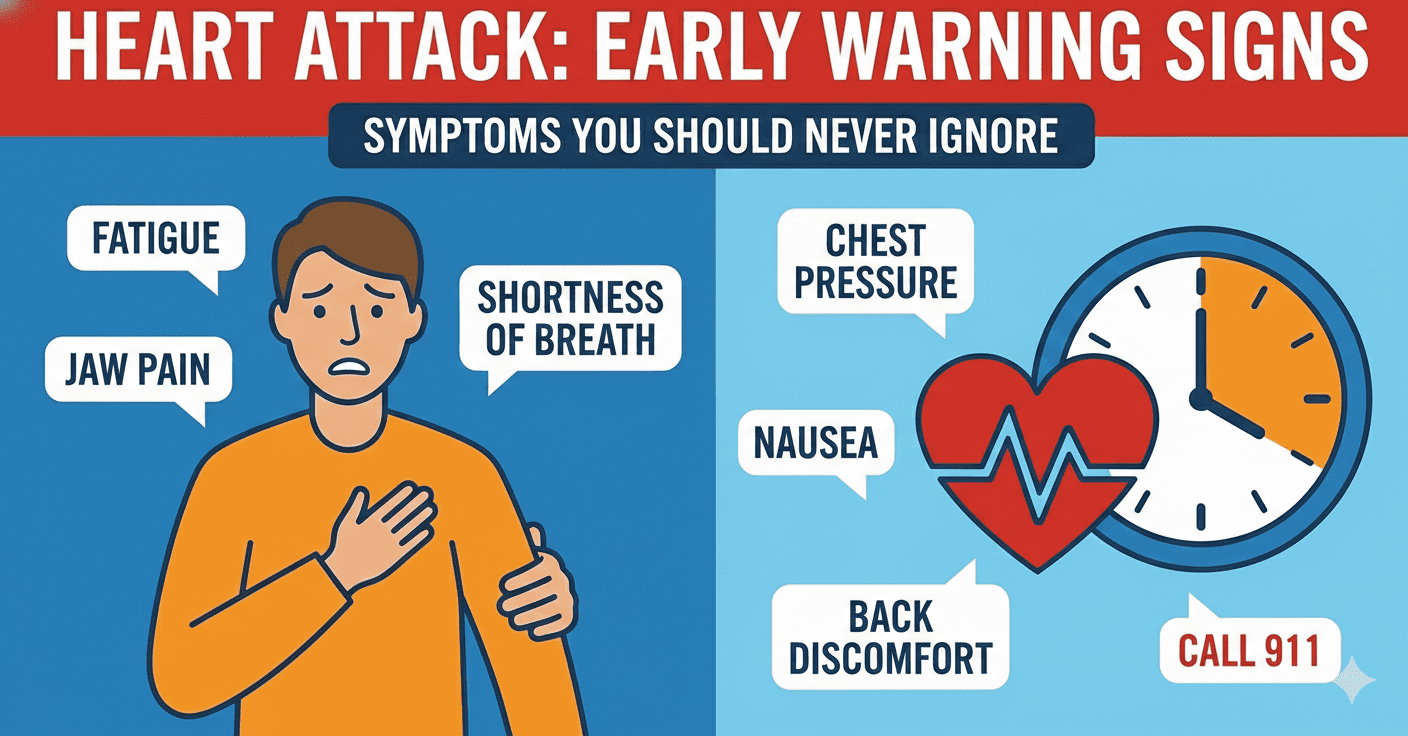


Early Warning Signs of a Heart Attack are often subtle, yet recognizing them can be the difference between life and death. Your heart usually gives you signals before a major event occurs. Unfortunately, many people ignore these signals, thinking they are just gas, acidity, or tiredness.
If you have diabetes, high blood pressure, or a history of metabolic disorders, knowing the Early Warning Signs of a Heart Attack is vital. In this guide, we will explain how to recognize a heart attack early, what the initial heart attack signs look like, and the steps you must take to protect your health.
Here are some surprising facts about heart attacks that everyone should know:
Silent Attacks are Common: nearly 45% of heart attacks are “silent,” meaning they happen without the classic chest pain, especially in diabetic patients.
Time is Muscle: The longer you wait to seek help after symptoms start, the more damage occurs to the heart muscle.
Monday Morning Risk: Research shows that heart attacks are most likely to occur on Monday mornings due to the sudden rise in stress hormones like cortisol.
Not Just Chest Pain: For women and elderly people, the only symptom might be sudden extreme fatigue or jaw pain, not chest pain.
The Golden Hour: Getting treatment within the first hour of symptoms increases survival rates by over 50%.
When we talk about Early Warning Signs of a Heart Attack, we are referring to the body’s way of telling you that blood flow to the heart is blocked. A heart attack happens when an artery supplying blood to the heart gets blocked by a clot or plaque.
Many people think a heart attack is always sudden and dramatic, like in the movies where a person clutches their chest and falls. However, early heart attack symptoms often start slowly. They may come and go for hours or even days before the actual attack. Understanding What are Early Sign of Heart Attack helps you act fast.
By learning to spot the warning signs of heart attack, you can seek help before the heart muscle suffers permanent damage. This is especially important for patients with metabolic disorders, whose nerves might be less sensitive to pain due to neuropathy.
The most common signal among the Early Warning Signs of a Heart Attack is discomfort in the chest. However, it is not always “pain.”
Most heart attacks involve discomfort in the center or left side of the chest. It usually lasts for more than a few minutes or goes away and comes back. It can feel like uncomfortable pressure, squeezing, fullness, or pain. These chest discomfort signs are often described as feeling like an elephant is sitting on the chest.
Pain that spreads to the arm is a classic symptom. Left arm pain heart symptoms occur because the nerves from the heart and the arm send signals to the same brain cells. This confuses the brain, making you feel pain in the arm even though the problem is in the heart. If you have sudden arm pain without any injury, do not ignore it.
Pain or discomfort can also spread to the jaw or neck. Jaw pain heart attack symptoms are more common in women. If you feel a dull ache in your jaw combined with chest pressure, this is a major red flag among the initial heart attack signs.
Another area where pain radiates is the back. Upper back pain heart symptoms can feel like a muscle strain between the shoulder blades. If this pain comes on suddenly with other symptoms, it is one of the heart attack symptoms you should never ignore.
Sometimes, the Early Warning Signs of a Heart Attack have nothing to do with pain. These are called “autonomic” symptoms.
Feeling short of breath, as if you have run a marathon while sitting still, is a serious sign. Breathlessness heart issues happen because the heart is unable to pump blood effectively, causing fluid to back up in the lungs. This can happen with or without chest discomfort.
Breaking out in a cold sweat for no reason is a very common sign. Sweating heart attack symptoms occur because the body is under extreme stress trying to pump blood through a blocked artery. If you wake up with wet sheets or have sudden cold sweats heart episodes while resting, call for help immediately.
If the heart cannot pump enough blood to the brain, you may feel lightheaded. Dizziness heart attack symptoms can cause you to feel faint or unsteady. If this happens alongside chest pressure, it is a critical warning signs of heart attack.
This section is very important for diabetic patients. Often, Early Warning Signs of a Heart Attack are confused with stomach problems.
Many patients report feeling sick to their stomach before a heart attack. Nausea heart symptoms are common because the heart sits just above the stomach, and distress signals can get mixed up.
A burning sensation in the chest or upper abdomen is often mistaken for acidity. However, indigestion heart attack symptoms do not go away with antacids. If you have severe heartburn that feels different than usual, it could be one of the first symptoms of heart attack.
Unexplained tiredness is a huge warning sign. If you feel too tired to make the bed or walk to the bathroom, this fatigue heart warning suggests your heart is struggling to pump blood. This often happens days or weeks before the attack.
Your mind often knows something is wrong before your conscious brain does. Early Warning Signs of a Heart Attack can be psychological too.
An intense feeling of anxiety or nervousness can occur during a heart event. Anxiety heart attack symptoms are the body’s reaction to the lack of oxygen.
Many survivors report a “sense of impending doom.” This sudden fear heart attack symptom is a feeling that something terrible is about to happen. If you feel this along with physical symptoms, trust your instincts.
If you have diabetes, spotting Early Warning Signs of a Heart Attack is harder. High blood sugar can damage nerves over time, a condition called neuropathy. This means you might not feel the chest pain that others feel.
For diabetics, the initial heart attack signs are often shortness of breath, dizziness, or just feeling “off.” This is why knowing how to recognize a heart attack early is crucial for metabolic patients. Regular checkups and keeping an eye on fatigue heart warning signs are your best defense.
Knowing the Early Warning Signs of a Heart Attack is only the first step. You must act.
If you or someone else has chest discomfort or other symptoms that last more than 5 minutes:
Call an ambulance immediately. Do not drive yourself.
Chew an aspirin (if not allergic). This helps thin the blood.
Stay calm. Panic increases the heart’s demand for oxygen.
Unlock the door so paramedics can enter easily.
Remember, these are heart attack symptoms you should never ignore. It is better to go to the hospital and find out it was just gas than to stay home and suffer a heart attack.
Men and women often experience Early Warning Signs of a Heart Attack differently.
Men: More likely to have the classic crushing chest pain and left arm pain heart symptoms.
Women: More likely to have breathlessness heart issues, jaw pain heart attack symptoms, back pain, and extreme nausea.
Because of these differences, women often delay seeking help. Understanding What are Early Sign of Heart Attack specific to your gender can save your life.
While knowing the Early Warning Signs of a Heart Attack is good, preventing one is better.
Simple lifestyle changes can lower your risk:
Diet: Eat a heart-healthy diet low in salt and saturated fats.
Exercise: Walk for 30 minutes daily.
Stress: Manage stress to avoid sudden spikes in blood pressure.
Control: Keep your diabetes and blood pressure numbers in check.
These steps help prevent the warning signs of heart attack from ever appearing.
If you have been diagnosed with heart disease or angina (chest pain) and want to prevent a future heart attack, you should know about EECP Therapy.
EECP (Enhanced External Counterpulsation) is a non-invasive treatment often called a “Natural Bypass.” It uses cuffs on the legs to pump blood back to the heart. This action helps open up new blood pathways (collaterals) around blocked arteries. It improves blood flow and reduces symptoms like breathlessness and chest pain, addressing the root cause behind Early Warning Signs of a Heart Attack.
Many patients wonder about the difference between natural treatments and surgery. Here is a comparison to help you understand your options.
| Parameter | EECP Therapy (Natural Bypass) | Angioplasty (Stent Surgery) |
| Invasiveness | Non-Invasive (No cuts, no needles) | Invasive (Catheter inserted in artery) |
| Recovery | Immediate (Walk out after session) | Days to weeks of rest required |
| Risks | Zero to minimal risk | Risk of bleeding, clots, infection |
| Mechanism | Improves global blood flow naturally | Mechanically opens blockage with stent |
| Hospital Stay | Outpatient (No admission) | Requires hospitalization |
| Cost | Cost-effective | Expensive procedure |
| Best For | Chronic angina, weak heart, prevention | Acute emergency heart attack |
We cannot stress this enough: Indigestion is the most dangerous confusion.
Many people take an antacid when they feel heavy in the chest. If the heaviness is accompanied by sweating heart attack signs or dizziness heart attack feelings, it is NOT gas. The stomach and heart share nerve pathways. If you are sweating and feel sick, assume it is Early Warning Signs of a Heart Attack and seek help.
If your parents or siblings had heart attacks, your risk is higher. You need to be more vigilant about Early Warning Signs of a Heart Attack.
Genetics can influence how your body handles cholesterol and inflammation. If you have a family history, do not wait for the first symptoms of heart attack. Start regular screenings today.
If you are worried about Early Warning Signs of a Heart Attack or have existing heart disease, NexIn Health is here to guide you.
NexIn Health is a leading expert in Heart and Spine Treatment using Non-Invasive Integrated Techniques. We focus on healing the heart naturally without unnecessary surgeries. With over 14+ Years of Experience, we have successfully Consulted Over 30,000 patients, helping them improve their heart function and quality of life.
Phone & WhatsApp: +91 9310145010
Website: www.nexinhealth.in
Email: care@nxinhealth.in
Contact us today to strengthen your heart naturally!
Que:
What are the very first Early Warning Signs of a Heart Attack?
Ans:
The first signs are often mild chest discomfort, unusual fatigue, or shortness of breath that happens with physical activity or emotional stress.
Que:
Can indigestion heart attack symptoms be distinguished from real acidity?
Ans:
Yes. Heart-related indigestion usually comes with sweating, shortness of breath, or jaw pain and does not get better with antacids or burping.
Que:
Why do cold sweats heart symptoms happen?
Ans:
Cold sweats occur because the body activates the “fight or flight” response due to stress on the heart, causing sudden perspiration even if you are not hot.
Que:
Is left arm pain heart symptoms always present?
Ans:
No, not always. While common, pain can also be in the right arm, both arms, the jaw, the back, or the stomach area.
Que:
What do What are Early Sign of Heart Attack look like in women?
Ans:
Women often experience extreme fatigue, nausea, dizziness, and back or jaw pain rather than the classic crushing chest pain.
Que:
How long do chest discomfort signs last during a heart attack?
Ans:
They usually last more than a few minutes, or they may go away and come back. Continuous pain that doesn’t stop is a major warning.
Que:
Can anxiety heart attack symptoms mimic a panic attack?
Ans:
Yes, the symptoms are very similar. However, if the anxiety comes with chest pressure or spreading pain, treat it as a heart issue first.
Que:
What should I do if I notice heart attack symptoms you should never ignore?
Ans:
Stop whatever you are doing, sit down, try to stay calm, and call for an ambulance immediately. Do not drive yourself to the hospital.
Que:
Does breathlessness heart issues happen only during exercise?
Ans:
In early stages, it happens with exercise. But during a heart attack, breathlessness can happen suddenly while you are resting or sleeping.
Que:
Why is fatigue heart warning considered a silent symptom?
Ans:
Because people often blame tiredness on work or lack of sleep. But sudden, unexplained exhaustion is a sign the heart isn’t pumping enough oxygen.


Experience

Certified Therapists

Satisfied Patients
Contact us