EECP Therapy for Low Ejection Fraction: How It Improves Heart Pumping and Quality of Life
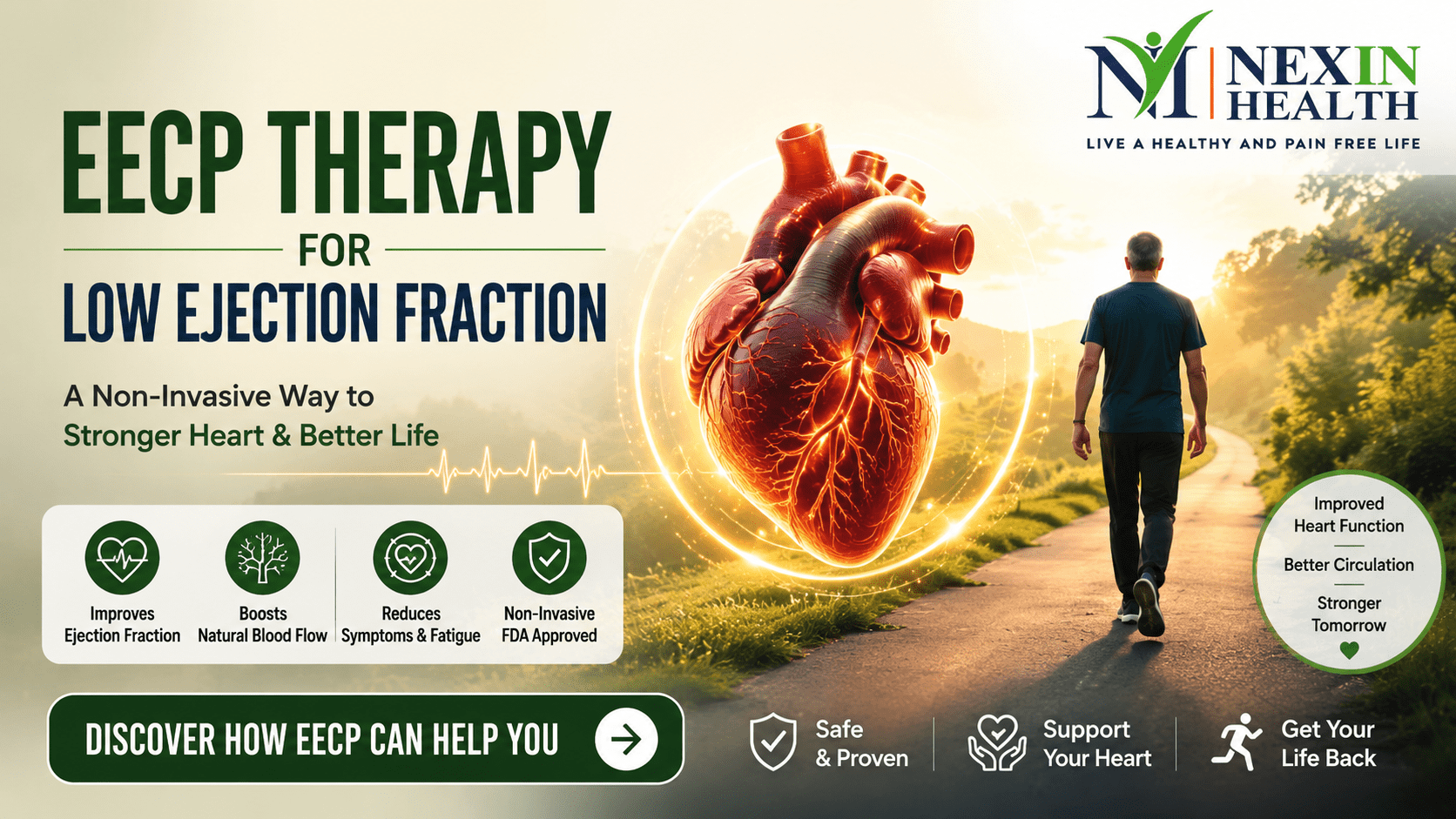


EECP Therapy for Low Ejection Fraction is one of the most searched topics among heart patients in India today — and for good reason. Millions of people are living with a weak heart and low ejection fraction, and many of them are told that their only options are bypass surgery, stents, or lifelong medicines. But clinical research tells a very different story.
If your doctor has told you that your heart’s ejection fraction (EF) is below 40%, you may be feeling scared, confused, and overwhelmed. You are not alone. In India alone, over 8 million people are currently living with heart failure, and a large number of them have a low EF. What most patients do not know is that there is a powerful, non-invasive treatment option available that has been approved by the U.S. Food and Drug Administration (FDA) and supported by multiple international clinical studies.
This blog breaks down everything you need to know about EECP Therapy for Low Ejection Fraction — what the research says, how it works, who it helps, and why it may be the answer you have been looking for.
| Quick Fact | What the Research Shows |
| LVEF Improvement | A 2025 study published in the European Journal of Preventive Cardiology showed average LVEF jumped from 44.9% to 55.3% — a 10.4% improvement — after EECP therapy. |
| Works Without Surgery | EECP improved heart function equally in patients who had CABG, PCI, and those who refused any cardiac intervention — results were completely independent of surgery. |
| FDA Approved | EECP is FDA-approved for refractory angina and heart failure — one of very few non-invasive therapies to hold this distinction. |
| 72% Angina Relief | According to the International EECP Patient Registry (363 patients), 72% of LVD patients improved from severe angina to mild or no angina at all. |
| 52% Stopped Nitroglycerin | More than half the patients with severe LV dysfunction were able to discontinue nitroglycerin use after completing EECP therapy. |
| Nitric Oxide Boost | EECP increased nitric oxide (the body’s natural blood vessel relaxer) by up to 55% — a key reason blood flow and heart function improve. |
| Exercise Capacity | Peak oxygen uptake (VO2) improved by 36% in CAD patients and 21% in LVD patients — comparable to 6 months of supervised exercise training. |
| 2-Year Survival | The 2-year survival rate in high-risk LVD patients treated with EECP was 83%, with 70% remaining free of major cardiovascular events. |
Your heart works like a pump. Every time it beats, it fills with blood and then squeezes to push that blood out to the rest of your body. Ejection Fraction is the percentage of blood your heart pumps out with each beat. A healthy heart pushes out 55% to 70% of the blood inside it. When this number falls below 40%, your body is not getting the blood and oxygen it needs — and that is when heart failure sets in.
| EF Range (%) | What It Means |
| 55% – 70% | Normal — Heart is pumping well |
| 40% – 54% | Mild dysfunction — Early warning sign |
| 30% – 39% | Moderate dysfunction — Needs immediate attention |
| Below 30% | Severe dysfunction — High-risk, urgent care needed |
Low EF can cause breathlessness, fatigue, swelling in the feet, irregular heartbeat, and chest discomfort. The good news is that with the right treatment — especially the non-invasive treatment for low ejection fraction — your heart’s pumping ability can improve significantly.
Enhanced External Counterpulsation — or EECP — is a FDA approved EECP therapy that uses a set of three pneumatic cuffs wrapped around your calves, lower thighs, and upper thighs. These cuffs inflate and deflate in perfect rhythm with your heartbeat, guided by your ECG signals.
Think of it as giving your heart a helping hand with every single beat. Here is what happens inside your body during each EECP session:
EECP Therapy for Heart Failure is approved by the FDA and recommended by the American College of Cardiology. It is completely non-invasive — no needles, no anaesthesia, no recovery time.
Many patients ask — how can squeezing cuffs on my legs improve my heart’s pumping power? The answer lies in four powerful biological pathways that EECP activates inside your body.
Your heart has backup blood vessels — natural bypass routes called collaterals. When your main arteries are blocked, these small vessels can carry blood to the starved heart muscle. EECP creates strong, repetitive surges of blood flow that stimulate these collaterals to open up and grow stronger. This is why EECP is especially effective as ischemic left ventricular dysfunction treatment — it feeds the parts of the heart that were oxygen-starved for years.
The inner lining of your blood vessels (the endothelium) is critical for heart health. In heart patients, this lining is damaged and produces less nitric oxide — the body’s natural blood vessel relaxer. Clinical research shows EECP Therapy for Low Ejection Fraction increased nitric oxide levels by up to 55% and prostacyclin (another vasodilator) by up to 70%. These chemicals relax blood vessels, reduce blood pressure, and dramatically improve blood flow to the heart muscle.
When the cuffs deflate before your heart beats, they create a drop in vascular resistance — meaning your heart has less pressure to push against. This is called afterload reduction. For a weak, struggling heart, this is like removing a heavy weight from its shoulders. Over 35 sessions, this repeated unloading helps the heart muscle recover, strengthen, and pump more efficiently — directly improving ejection fraction.
This is one of the most remarkable enhanced external counterpulsation benefits. EECP increases levels of Vascular Endothelial Growth Factor (VEGF) — the body’s own signal for growing new blood vessels. Animal studies have confirmed that EECP significantly increases capillary density in damaged heart tissue. More blood vessels mean more oxygen delivery — and that means a better-functioning heart.
Let us look at the numbers — real data from real patients across multiple published clinical studies.
In this landmark study, 24 patients with coronary artery disease — including 9 patients with severe left ventricular dysfunction (EF of 34.5%) — completed 35 sessions of EECP. Results showed brachial artery endothelial function improved by 53% to 70%, nitric oxide levels rose by 28% to 55%, and peak exercise capacity (VO2) improved by 21% to 36%. These results were identical in patients with normal heart function AND those with weak hearts — proving that EECP Therapy for Low Ejection Fraction works even in the most severe cases.
This was the most recent study, published in May 2025. It included 10 patients with ischemic heart failure — some had CABG, some had PCI, and some refused all cardiac interventions. After completing EECP, average LVEF increased from 44.9% to 55.3% — an improvement of more than 10 percentage points. Most importantly, this improvement happened independently of what cardiac procedure (if any) the patient had undergone before.
This is the largest and most comprehensive real-world data on EECP Therapy for Heart Failure with LV dysfunction. Among 363 patients with EF of 35% or lower, 72% improved from severe angina to mild or no angina. 52% were able to stop using nitroglycerin. At the 2-year follow-up, 83% were still alive, 70% remained free of major cardiovascular events, and 81% had no congestive heart failure events. These are outcomes that rival many surgical interventions — without a single cut.
Success rate of EECP treatment varies based on patient condition, how many sessions are completed, and how early the therapy is started. But the data is clear: patients who complete the full 35-hour course have significantly better outcomes.
According to registry data, patients who did not complete the full course needed repeat EECP 2.9 times more often than those who completed all 35 sessions. Here is a realistic overview of what EECP achieves:
These numbers make a strong case. If you are looking to improve heart pumping naturally without surgery, EECP deserves serious consideration.
EECP Therapy vs Bypass Surgery is one of the most common questions patients ask. Here is a detailed, side-by-side comparison of available treatment options for low ejection fraction and heart failure:
| Treatment | EF Improvement | Invasive? | Duration | FDA Approved | Best For |
| EECP Therapy | Up to 10.4% | No | 35 hrs / 7 weeks | Yes | Heart failure, Angina, Diabetes, Post-stent |
| Bypass Surgery (CABG) | Variable | Yes | 4–6 hrs + recovery | Yes | Multi-vessel blockage |
| Angioplasty + Stent (PCI) | Variable | Minimally | 1–3 hrs + recovery | Yes | Single/double vessel |
| Medications Only | Minimal | No | Lifelong | Yes | Early-stage, Mild dysfunction |
| Cardiac Rehab (Exercise) | Up to 8% | No | 3–6 months | Yes | Stable patients post-event |
| Heart Transplant | Full restoration | Yes (Major) | 6–8 hrs + lifelong | Yes | End-stage heart failure |
Key Insight: EECP Therapy vs Bypass Surgery — EECP is the only FDA-approved non-invasive therapy that improves ejection fraction, reduces angina, enhances endothelial function, and boosts exercise capacity — all without surgery, anaesthesia, or hospital admission.
One of the most common reasons patients seek EECP is triple vessel disease — when all three major coronary arteries are blocked and the patient is either not a candidate for surgery or wants to avoid it. EECP treatment for triple vessel disease works by building collateral circulation around these blockages, delivering blood to the heart through alternate pathways.
In the NIH-funded trial, over 93% of the CAD patients and 89% of the LVD patients had multi-vessel coronary artery disease. Despite this, EECP significantly improved their heart function, exercise capacity, and quality of life — without any revascularisation procedure. This makes EECP a powerful option for patients who have exhausted surgical options or are afraid of the risks associated with open-heart surgery.
Heart disease and diabetes are deeply connected. In the clinical trials discussed above, over 53% of patients had diabetes — and EECP worked equally well for them. This is particularly relevant in India, where diabetes and metabolic syndrome are driving the epidemic of heart failure.
EECP improves microvascular circulation — the tiny blood vessels throughout the body — which is directly damaged by high blood sugar over time. By restoring nitric oxide production and endothelial function, EECP helps diabetic patients improve both their heart function and peripheral blood flow. If you are a diabetic patient with low EF, EECP is one of the most well-researched and safe non-invasive treatment for low ejection fraction available today.
EECP is suitable for a wide range of heart patients. You should strongly consider EECP if:
EECP is safe for most patients, but it should be avoided in people with severe aortic regurgitation, active deep vein thrombosis, uncontrolled arrhythmias, aortic aneurysm requiring surgery, or decompensated heart failure. A specialist evaluation is essential before starting therapy.
| NEXIN HEALTH — YOUR HEART DESERVES THE BEST CARE
NexIn Health is a specialized centre for Heart and Spine Treatment using Non-Invasive Integrated Techniques. With 14+ years of experience and over 30,000 patients consulted, our expert team helps you improve heart function, boost ejection fraction, and live better — without surgery. 📞 Phone & WhatsApp: +91 9310145010 Book Your FREE Consultation Today — Seats Are Limited! |
Q1. Can EECP therapy really improve ejection fraction?
Yes. A 2025 study published in the European Journal of Preventive Cardiology showed LVEF improving from an average of 44.9% to 55.3% after a full course of EECP — a jump of over 10 percentage points.
Q2. How many EECP sessions are needed to see improvement?
A standard course is 35 sessions of one hour each, typically five days a week for seven weeks. Most patients start noticing improvement in angina and breathlessness within the first 15 to 20 sessions.
Q3. Is EECP therapy safe for elderly patients?
Yes. EECP is non-invasive and has a well-established safety record. The International EECP Patient Registry, covering over 2,500 patients, reported a death rate of only 0.3% during the treatment period — making it one of the safest heart therapies available.
Q4. Can EECP replace bypass surgery?
EECP is not a replacement for emergency bypass surgery in acute cases. However, for patients with stable heart disease, refractory angina, or low EF who are not surgical candidates or want to avoid surgery, EECP is an FDA-approved, clinically proven alternative.
Q5. Is EECP therapy painful?
No. Most patients find EECP sessions comfortable and even relaxing. Some people feel mild pressure from the cuffs on their legs. Side effects, if any, are minor — such as slight leg soreness or skin irritation — and resolve quickly.
Q6. Does EECP help patients with diabetes and heart failure?
Yes. In clinical trials, more than 53% of EECP patients also had diabetes. EECP improved their heart function, endothelial health, and exercise capacity — making it highly suitable for patients with both diabetes and heart disease.
Q7. What is the success rate of EECP treatment for low EF?
Based on international registry data, 72% of patients with severe LV dysfunction improved significantly after EECP. LVEF improved by an average of 10 percentage points in recent trials, and 2-year survival rates reached 83% in high-risk patients.
Q8. Can EECP help after bypass surgery or stenting?
Yes. Many patients who have already had bypass (CABG) or stenting (PCI) still experience symptoms. EECP has been proven to improve heart function in post-surgical patients — in fact, in one 2025 study, 30% of participants had prior CABG and 30% had prior PCI, and all groups improved equally.
Q9. How long do the benefits of EECP last?
Benefits can last up to 2 to 5 years. The International EECP Patient Registry showed that improvements in angina and quality of life were maintained at 2 years in 55% of patients. Some research suggests benefits can persist for up to 5 years after completing the course.
Q10. Is EECP approved by the FDA?
Yes. EECP is FDA-approved for both refractory angina (Class IIb) and heart failure. It was approved for angina in 1999 and for heart failure in June 2002, making it one of very few non-invasive cardiac therapies with this level of regulatory approval.
Q11. What happens inside the body during EECP?
During diastole, the cuffs inflate upward from the legs, pushing blood back to the heart and increasing coronary blood flow. Just before systole, they deflate rapidly, reducing the workload on the heart. Over 35 sessions, this trains blood vessels to function better, grow new pathways, and produce more nitric oxide.
Q12. How does EECP compare to medicines for heart failure?
Medicines for heart failure provide benefits only while being taken — there is no lasting improvement after stopping medication. EECP, on the other hand, produces vascular changes that can persist for years. Clinical data show that EECP benefits are additive to optimal drug therapy — meaning EECP works on top of medicines, not instead of them.
Q13. Can a patient with triple vessel disease benefit from EECP?
Absolutely. EECP is one of the best options for EECP treatment for triple vessel disease. It builds collateral circulation around blocked arteries, delivering blood through natural bypass routes — without any surgical procedure.
Q14. How does NexIn Health deliver EECP therapy?
NexIn Health offers EECP therapy as part of a comprehensive, non-invasive integrated heart treatment programme. With 14+ years of experience and over 30,000 patients consulted, our team combines EECP with personalised diet, lifestyle, and medical management to deliver maximum improvement in heart function and quality of life.
Q15. How can I book an EECP consultation at NexIn Health?
You can reach NexIn Health by calling or WhatsApp at +91 9310145010, visiting www.nexinhealth.in, or emailing care@nexinhealth.in. Our team will assess your condition, review your reports, and guide you on whether EECP is the right option for you.
If you or someone you love is living with a low ejection fraction, the message from clinical research is clear: EECP Therapy for Low Ejection Fraction is a safe, FDA-approved, and clinically proven way to improve heart function — without surgery, without hospitalisation, and without the risks of invasive procedures.
From increasing nitric oxide and building new blood vessels, to reducing heart workload and improving exercise capacity, EECP works through multiple biological pathways to help your heart heal and strengthen. With a 2-year survival rate of 83% in high-risk patients and LVEF improvements of over 10 percentage points in recent trials, the evidence is compelling.
Whether you have triple vessel disease, are a diabetic with heart failure, have already had bypass surgery, or are simply looking for a non-invasive treatment for low ejection fraction — EECP deserves to be at the top of your list. Talk to the experts at NexIn Health today.


Experience

Certified Therapists

Satisfied Patients
Contact us