EECP Treatment as an Alternative to Angioplasty: Benefits, Safety, and Results
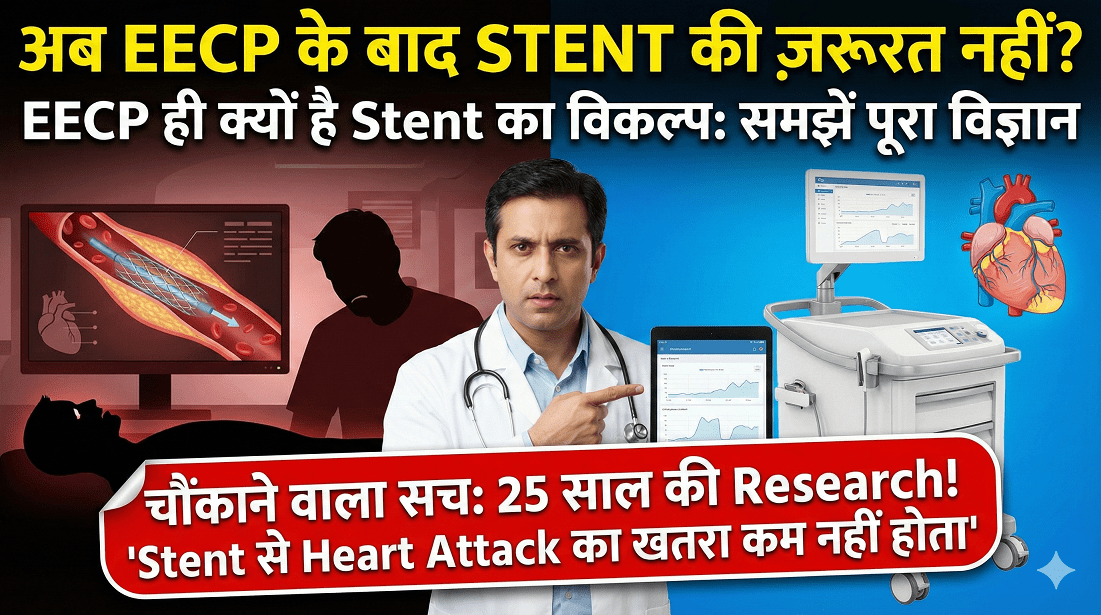



EECP Treatment as an Alternative to Angioplasty is becoming a primary choice for thousands of heart patients who are worried about surgery. For decades, when a patient heard the words “heart blockage,” the immediate solution offered was often a stent or bypass surgery. But medical science has advanced. Today, you don’t always need an invasive operation to feel better. Many people are now discovering that they can improve their heart health, reduce chest pain, and regain energy without ever entering an operating room.
If you are looking for a safe, Non-Surgical Alternative to Angioplasty, this guide will explain everything you need to know about EECP therapy.
The “Natural Bypass” Effect: EECP is scientifically proven to trigger the formation of new, tiny blood vessels around blocked arteries. This creates a natural detour for blood flow, effectively doing what a surgical bypass does, but without the knife!
NASA Connection: The technology behind counterpulsation (used in EECP) was originally studied to help keep blood flowing in pilots and astronauts under high G-force. Now, it saves heart patients.
No Hospital Stay: Unlike angioplasty, which requires hospitalization, EECP is a “walk-in, walk-out” treatment. You can finish your session and go straight to work or home.
Long-Lasting Results: Clinical data suggests that the benefits of a full EECP course can last for 3 to 5 years in many patients.
- Stent do not prevent the Risk of Future Heart Attack: In the past 25 years of research (Courage Trial, FAME Trial, BARI 2D Trial, ISCHEMIA Trial, ORBITA Trial) it has been found that stent do not prevent the risk of future heart attack and improve life expectancy.
Heart disease is scary. When doctors find a blockage, the fear is real. Traditionally, angioplasty (using a balloon and stent to open arteries) has been the standard fix. However, not everyone is comfortable with it.
EECP Treatment as an Alternative to Angioplasty is gaining popularity because angioplasty has limitations. Some patients are too weak for surgery. Others have diabetes or kidney issues that make invasive procedures risky. Furthermore, stents can sometimes get blocked again (restenosis).
Because of these risks, many people ask: Is EECP Better Than Angioplasty? For patients who want to avoid the physical and mental stress of surgery, EECP offers a gentle, effective path to recovery.
EECP stands for Enhanced External Counterpulsation. Think of it as a “second heart” pumping from the outside. It is a mechanical treatment that increases the blood flow to your heart muscle while the heart is resting.
This Non-Surgical Alternative to Angioplasty is FDA-cleared in the USA and widely accepted in India. It does not involve cutting, needles, or anesthesia. It is specifically designed for patients with chronic stable angina (chest pain) and heart failure.
You might wonder, Can EECP Open Heart Blockages Without Surgery?
Technically, EECP doesn’t “remove” the plaque like a roto-rooter. Instead, it does something smarter. It forces blood to flow through tiny, dormant vessels that are usually closed.
This process reduces the workload on your heart while feeding it more oxygen. Over 35 sessions, this creates “Collateral Circulation”—essentially, nature’s own bypass.
To help you decide, here is a comparison table. This helps answer the question: Can EECP Replace Angioplasty?
| Parameter | EECP Treatment | Angioplasty (Stenting) |
| Invasiveness | 100% Non-Invasive (No cuts) | Invasive (Catheter inserted in body) |
| Hospital Stay | None (Outpatient) | 1-3 Days Hospitalization |
| Pain Level | Painless (External Pressure) | Moderate Discomfort/Pain |
| Recovery Time | Immediate (Zero downtime) | Days to Weeks |
| Risk of Complications | Extremely Low | Bleeding, Clotting, Kidney damage |
| Cost | Affordable (₹80’000 – ₹1.35 Lakh) | High (₹2.5 – ₹6+ Lakhs) |
| Medication | Works with your current meds | Requires strong blood thinners long-term |
| Goal | Improves overall blood flow globally | Opens a specific local blockage locally |
As you can see, using EECP Treatment as an Alternative to Angioplasty is often safer and more cost-effective for stable patients.
Not every patient is the same. When EECP Is Preferred Over Angioplasty depends on your specific medical condition. Doctors often recommend this Non-Surgical Alternative to Angioplasty for:
If you fall into these categories, choosing EECP Treatment as an Alternative to Angioplasty might be your best life-saving decision.
This is a common question. Can EECP Replace Angioplasty? Doctors Explain that while EECP cannot replace emergency angioplasty (like during a massive heart attack), it is a powerful substitute for elective (planned) angioplasty.
Many cardiologists now agree that for “Stable Angina,” medication and therapy like EECP are just as effective as stents in preventing death and heart attacks. It focuses on the whole heart, not just one blocked pipe.
One of the biggest reasons people choose EECP Treatment as an Alternative to Angioplasty is safety. It is one of the safest heart treatments available.
Common Mild Side Effects:
There is no risk of stroke or heart perforation, which are rare but real risks with angioplasty.
Since our readers often deal with metabolic disorders, it is important to note that EECP Treatment as an Alternative to Angioplasty has a “whole body” benefit.
Because EECP improves blood flow everywhere, it helps:
Financial stress can be bad for the heart. EECP Treatment as an Alternative to Angioplasty is generally much lighter on the pocket.
For a treatment that offers lasting relief, this Non-Surgical Alternative to Angioplasty provides immense value.
When we ask, Is EECP Better Than Angioplasty?, we must look at the long term. Stents fix a mechanical problem, but they don’t stop the disease.
EECP acts like exercise. It trains your blood vessels to stay open and healthy. Combined with the lifestyle changes we promote for diabetes and heart patients, EECP offers a holistic path to health that surgery alone cannot provide.
If you are considering EECP Treatment as an Alternative to Angioplasty, you need a trusted partner.
NexIn Health is a pioneer in Non-Invasive Integrated Techniques for Heart and Spine care. With over 14+ Years of Experience, we have successfully consulted over 30,000 patients, helping them avoid surgery and regain their quality of life. We specialize in advanced therapies like EECP, ensuring you get world-class care without the hospital stress.
Take the first step towards a healthy heart today.
Que: Can EECP Treatment as an Alternative to Angioplasty apparent blockages?
Ans: It does not mechanically remove the plaque, but it creates “natural bypasses” (new vessels) that allow blood to flow around the blockage, relieving symptoms effectively.
Que: Is EECP painful for the patient?
Ans: No, it is not painful. Patients feel a firm pressure on their legs, similar to a massage. Many patients even sleep during the session.
Que: How long does the treatment take?
Ans: A standard course involves 35 sessions. Each session is 1 hour long, usually done once a day, six days a week.
Que: Who Should Choose EECP Instead of Angioplasty?
Ans: Patients with stable angina, those with small vessel disease, diabetics, or those who want to avoid the risks of surgery are ideal candidates.
Que: Is this treatment safe for elderly patients?
Ans: Yes, it is very safe. Since there is no anesthesia or surgery, it is often the preferred choice for patients over 70 or 80 years old.
Que: Can EECP Replace Angioplasty if I have had a heart attack?
Ans: In an emergency acute heart attack, angioplasty is usually required. EECP is used for recovery and stable heart conditions afterward or to prevent future attacks.
Que: Will I need to be hospitalized?
Ans: No. EECP is an outpatient therapy. You come to the clinic, take the treatment, and go back home.
Que: Can EECP Open Heart Blockages Without Surgery in diabetics?
Ans: Yes. Diabetic patients often have excellent results with EECP because it improves micro-circulation, which diabetes often damages.
Que: Is EECP covered by insurance?
Ans: Many insurance providers and CGHS in India now cover EECP treatment on a conditional basis. Usually, a patient does not have other options available, but it is best to check with your specific policy provider.
Que: Can I do EECP if I already have a stent?
Ans: Yes. If you have a stent but are feeling pain again (restenosis), EECP is highly recommended to improve blood flow without putting in another stent.


Experience

Certified Therapists

Satisfied Patients
Contact us