Heart Attack First Aid: What to Do Before Medical Help Arrives
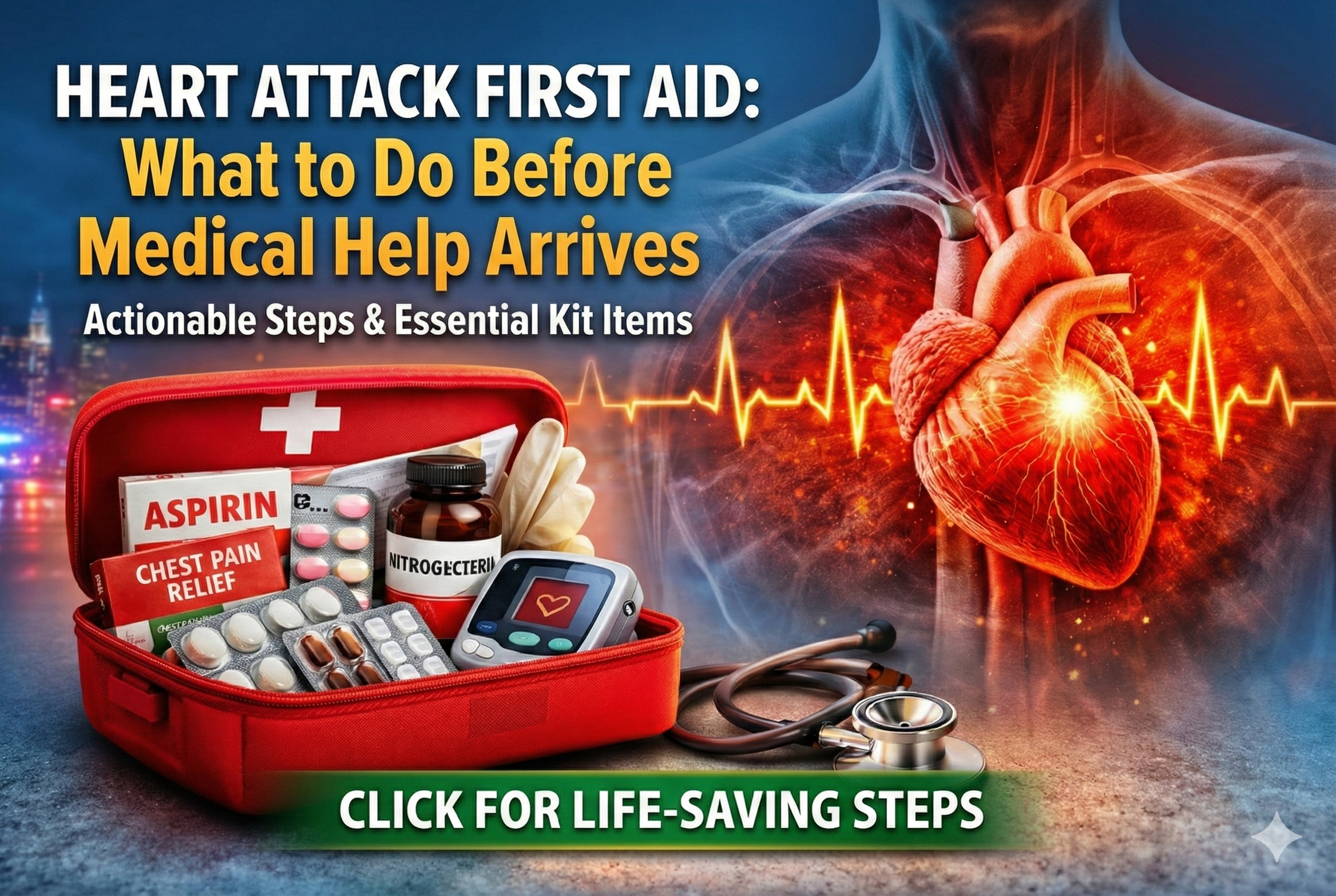


Heart Attack First Aid: What to Do Before Medical Help Arrives: When someone experiences a heart attack, every second counts. Knowing the right steps for heart attack first aid can mean the difference between life and death. A heart attack happens when blood flow to the heart muscle gets blocked, usually by a blood clot. This stoppage can damage or destroy part of the heart muscle within minutes.
Many people feel helpless when they see someone having a heart attack. But you don’t need to be a doctor to help. Simple, quick actions can keep the person alive until medical professionals arrive. This guide will teach you exactly what to do in those critical first moments.
Did You Know?
Your heart is a powerful muscle that needs constant oxygen-rich blood to work properly. This blood flows through vessels called coronary arteries. When a fatty substance called plaque builds up in these arteries, it narrows the passage. Sometimes, this plaque breaks open and forms a blood clot.
This clot blocks the blood flow completely. Without oxygen, the heart muscle starts to die. The longer the blockage lasts, the more damage occurs. This is why immediate heart attack first aid is so important.
Think of it like a water pipe in your house. If the pipe gets blocked, water can’t reach where it’s needed. Similarly, when blood can’t reach your heart muscle, the tissue starts to suffer.
Recognizing a heart attack quickly gives you precious time to act. Here are the most common warning signs:
Chest Discomfort: Most heart attacks cause discomfort in the center of the chest. It may feel like uncomfortable pressure, squeezing, fullness, or pain. This feeling may last more than a few minutes, or it may go away and come back.
Upper Body Pain: Pain or discomfort can spread beyond the chest to the shoulders, arms, back, neck, jaw, or stomach. Some people describe it as a heavy weight pressing down.
Breathing Problems: You may feel short of breath. This can happen with or without chest discomfort. It feels like you cannot get enough air.
Other Signs: Cold sweat, nausea, vomiting, or sudden dizziness can also signal a heart attack. Some people feel extremely tired for no reason.
Women’s Symptoms: Women are more likely to experience unusual tiredness, sleep problems, shortness of breath, indigestion, and anxiety in the weeks before a heart attack.
When you suspect someone is having a heart attack, follow these steps immediately:
Step 1: Call Emergency Services Right Away
Call your local emergency number (911 in the US, 102 in India) without delay. Don’t wait to see if symptoms go away. Every minute matters. Tell the operator you think someone is having a heart attack. Stay on the line and answer all questions.
Step 2: Help the Person Sit Down and Rest
Have the person sit down in a comfortable position. A half-sitting position with knees bent and head and shoulders supported is ideal. This position makes breathing easier and reduces strain on the heart.
Loosen any tight clothing around the neck and chest. Keep the person calm and still. Any physical activity makes the heart work harder, which increases damage.
Step 3: Give Aspirin If Available
If the person is not allergic to aspirin and not already taking blood-thinning medicines, give them one regular aspirin (300mg) or four baby aspirins (75mg each). Tell them to chew the aspirin slowly rather than swallowing it whole. Chewing helps it work faster.
Aspirin helps prevent blood clots from getting bigger. According to research published by the American Heart Association, aspirin given during a heart attack can reduce death risk significantly.
Step 4: Stay With the Person
Keep the person calm and reassured. Anxiety increases heart rate, which makes the heart work harder. Talk to them in a soothing voice. Let them know help is coming. Monitor their condition constantly.
Step 5: Be Ready to Perform CPR
If the person becomes unconscious and stops breathing normally, start CPR immediately. Push hard and fast in the center of the chest at a rate of 100 to 120 compressions per minute. Keep doing this until medical help arrives.
If an automated external defibrillator (AED) is available nearby, use it. These devices give voice instructions that are easy to follow.
If you think you’re having a heart attack and you’re alone, follow these steps:
Call for Help First: Don’t wait. Call emergency services immediately. Unlock your front door so paramedics can get in easily.
Take Aspirin: If you have aspirin and no allergies, chew one regular aspirin.
Sit or Lie Down: Rest in a comfortable position. Don’t try to drive yourself to the hospital. Driving increases stress and puts others at risk if you lose consciousness.
Stay Calm: Try to breathe slowly and deeply. Panic makes your heart work harder.
Let’s break down the complete first aid process into clear, easy steps:
Before Help Arrives:
If Symptoms Change:
When Paramedics Arrive:
Yes, absolutely. Proper heart attack first aid can be the difference between life and death. Here’s how:
Aspirin reduces clot size by preventing platelets from sticking together. Studies show this can prevent up to 25% of deaths from heart attacks.
CPR keeps blood flowing to the brain and vital organs when the heart stops. Brain damage begins within 4 to 6 minutes without oxygen. CPR buys time until professional help arrives.
Quick emergency calls ensure advanced medical treatment starts sooner. The faster someone gets to a hospital, the more heart muscle can be saved.
According to a study in the New England Journal of Medicine, patients who received bystander CPR had twice the survival rate compared to those who didn’t.
Don’t Wait to Call for Help: Many people wait to see if symptoms improve. This delay costs precious time. Call immediately if you suspect a heart attack.
Don’t Drive Yourself: If you’re having symptoms, never drive to the hospital. You could lose consciousness and cause an accident.
Don’t Give Aspirin Without Checking: Some people take blood thinners or have bleeding problems. In these cases, aspirin could be harmful.
Don’t Leave the Person Alone: Conditions can change quickly. Someone should always stay with the patient.
Don’t Give Food or Water: The person might need surgery soon. An empty stomach is safer.
DO:
DON’T:
| Treatment Type | How It Works | When It’s Used | Recovery Time |
|---|---|---|---|
| Emergency Medicines | Dissolve blood clots and restore blood flow | First few hours after heart attack | Immediate effect |
| Angioplasty | Opens blocked arteries using a balloon and stent | During or soon after heart attack | 1-2 days hospital stay |
| Bypass Surgery | Creates new path around blocked arteries | When multiple arteries blocked | 6-12 weeks recovery |
| EECP Therapy | Increases blood flow naturally using external pressure | After stabilization for ongoing treatment | 6-7 weeks (35 sessions) |
| Lifestyle Changes | Reduces future risk through diet and exercise | Long-term prevention | Ongoing |
While emergency medical care is essential during a heart attack, natural approaches can support recovery and prevent future episodes:
Ayurvedic Approaches:
Homeopathic Support:
Dietary Supplements:
Important Note: Natural remedies should never replace emergency medical care during a heart attack. They work best as part of long-term prevention and recovery under medical supervision.
Enhanced External Counter Pulsation (EECP) therapy is an excellent option for people recovering from heart attacks or dealing with chronic heart conditions.
How EECP Works:
EECP uses inflatable cuffs placed on your calves, thighs, and buttocks. These cuffs inflate and deflate in sync with your heartbeat. This action pushes oxygen-rich blood toward your heart, helping to form new tiny blood vessels around blocked arteries.
Benefits of EECP:
Treatment Schedule:
EECP typically involves 35 one-hour sessions over 7 weeks. Patients lie comfortably during treatment and can return to normal activities immediately after.
Research from Harvard Medical School shows that 80% of patients experience significant symptom improvement with EECP therapy.
Once medical help arrives, the person will be rushed to the hospital. Doctors will perform several tests:
Electrocardiogram (ECG): Shows electrical activity of the heart and identifies damage
Blood Tests: Detect enzymes released when heart muscle is damaged
Imaging Tests: Such as echocardiogram or angiogram to see blocked arteries
Treatment may include clot-dissolving medicines, angioplasty to open blocked arteries, or bypass surgery in severe cases.
Understanding heart attack statistics helps us take prevention seriously:
The good news? About 80% of heart attacks are preventable through lifestyle changes.
After a heart attack, making lasting changes protects your heart:
Diet Modifications:
Physical Activity:
Stress Management:
Medicine Compliance:
Learning heart attack first aid isn’t just for medical professionals. When more people know these skills:
Communities become safer because help is available anywhere, anytime
Survival rates increase as more people receive immediate assistance
Hospital outcomes improve when patients arrive earlier with less damage
Fear decreases as people feel empowered to help
Awareness spreads about prevention and early warning signs
According to the American Heart Association, immediate bystander CPR can double or triple survival chances from cardiac arrest.
If you have diabetes, your heart attack risk is higher. Here’s what makes you different:
Silent Heart Attacks: Diabetes can damage nerves, making chest pain less noticeable. You might have a heart attack with very mild symptoms.
Multiple Risk Factors: High blood sugar often comes with high blood pressure and high cholesterol, multiplying heart risks.
Slower Healing: Diabetes affects blood vessels and healing, making recovery from heart attacks more complicated.
Important Actions:
When it comes to comprehensive heart care without invasive procedures, NexIn Health stands at the forefront of integrated treatment approaches. With over 14 years of experience and having consulted more than 30,000 patients, NexIn Health specializes in heart and spine treatment using non-invasive integrated techniques. Their expert team combines modern medical science with holistic approaches to provide personalized care for every patient, ensuring the best possible outcomes without surgery.
Contact NexIn Health:
Que: How long do I have to act before heart damage becomes permanent?
Ans: You have about 90 minutes to 2 hours from when symptoms start. However, damage begins within 20-30 minutes. This is why calling emergency services immediately is so important. The faster blood flow is restored, the less damage occurs.
Que: Can I give aspirin to someone who has stomach problems?
Ans: If the person has a history of stomach ulcers or bleeding problems, do not give aspirin. When calling emergency services, mention this condition. The operator or arriving paramedics will guide you on what to do instead.
Que: What if the person refuses help because they think it’s just indigestion?
Ans: Many heart attack victims deny their symptoms. Don’t let embarrassment prevent life-saving action. Explain that it’s better to check and be wrong than to ignore a real heart attack. Call emergency services even if the person protests.
Que: Should I perform CPR if the person is still breathing but unconscious?
Ans: No. CPR is only for people who are not breathing normally or not breathing at all. If the person is unconscious but breathing, place them in the recovery position (on their side) and wait for help while monitoring their breathing constantly.
Que: How hard should I push during CPR chest compressions?
Ans: Push down at least 2 inches (5 centimeters) deep on an adult’s chest. You need to compress hard enough to pump blood. Don’t worry about pushing too hard – it’s better to push too hard than too gently. You might hear or feel ribs crack, but continue CPR.
Que: Can heart attack first aid differ for diabetic patients?
Ans: The basic first aid steps remain the same. However, diabetic patients may have unusual symptoms like extreme tiredness without chest pain. If a diabetic person feels extremely unwell, sweaty, or confused, treat it as a possible heart attack and call for help.
Que: Is it safe to use an AED if I’ve never been trained?
Ans: Yes. AEDs are designed for untrained users. The device talks you through each step with clear voice instructions. You cannot hurt someone by using an AED – it only delivers a shock if the heart rhythm is dangerous. Follow the device’s instructions carefully.
Que: What should I do if I’m alone and start having heart attack symptoms while driving?
Ans: Pull over immediately to a safe spot. Turn on your hazard lights. Call emergency services and tell them your exact location. Unlock your doors. If you have aspirin, take it. Do not try to drive yourself to the hospital.
Que: How can I tell the difference between a heart attack and a panic attack?
Ans: This is difficult even for doctors. Panic attacks usually peak within 10 minutes and improve, while heart attack symptoms persist or worsen. Panic attacks often happen during stressful moments, while heart attacks can occur anytime. When in doubt, always assume it’s a heart attack and call for help.
Que: Can women having heart attacks show completely different symptoms than men?
Ans: Yes. Women are more likely to experience shortness of breath, nausea, vomiting, back pain, jaw pain, and extreme fatigue instead of the classic chest pain. Some women describe a feeling of indigestion or pressure in the upper stomach. Any unusual or severe symptoms should be taken seriously.
Heart attack first aid is a skill everyone should know. You don’t need special training to save a life. Remember the simple steps: call emergency services immediately, help the person rest comfortably, give aspirin if safe, stay with them, and be ready to perform CPR if needed.
The few minutes you spend learning these steps could save your loved one’s life. Keep aspirin in your home, learn CPR, and never hesitate to call for help. When it comes to heart attacks, quick action makes all the difference.
Stay prepared, stay informed, and keep your heart healthy!


Experience

Certified Therapists

Satisfied Patients
Contact us