How Seasonal Changes Affect Blood Pressure: Causes and Prevention



Seasonal changes affect blood pressure in more ways than most people realize. Whether it is the cold bite of winter or the humid heat of summer, your body is always working hard to adjust. For people with heart disease, diabetes, or metabolic disorders, these shifts can be especially dangerous. Understanding how and why these changes happen is the first step to staying safe and healthy all year round.
Did You Know? Eye-Opening Blood Pressure Facts:
|
Your body works like a heating and cooling system. When the temperature outside changes, your blood vessels react. This is why seasonal changes affect blood pressure throughout the year. In cold weather, blood vessels tighten (called vasoconstriction). This makes it harder for blood to flow, pushing BP higher. In warm weather, vessels open up (vasodilation), which can lower BP.
This natural reaction is normal. But for heart patients, diabetics, and people with metabolic disorders, these fluctuations can lead to serious health events like heart attacks or strokes. Knowing the pattern helps you plan better.
When your body senses cold, the nervous system releases adrenaline and other stress hormones. These hormones make the heart beat faster and blood vessels narrow — raising blood pressure. This is the body’s natural survival response, but it puts extra strain on a weak or diseased heart.
Seasonal variation in blood pressure is strongly linked to temperature. Studies published in the Journal of Hypertension confirm that for every 10°C drop in temperature, systolic blood pressure (the upper number) rises by about 5 mmHg on average. For someone already on the edge of hypertension, this can be the trigger that causes a crisis.
Summer brings its own set of problems. Heat causes blood vessels to expand and the body to sweat more, which lowers blood volume. This is why some patients feel dizzy, weak, or lightheaded in summer — their BP may actually drop too low, especially if they are on BP medications.
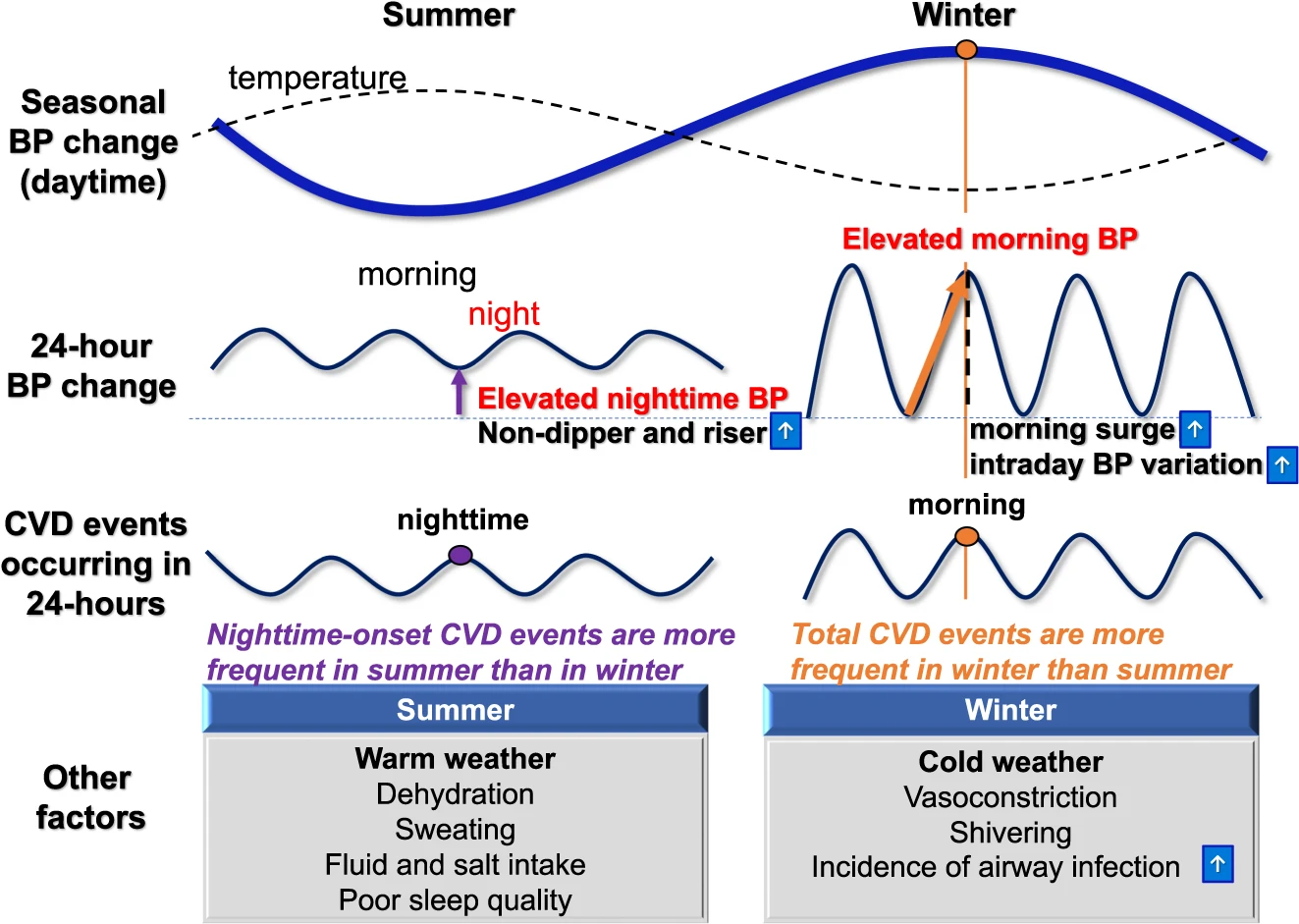
This is one of the most common questions cardiologists hear. The answer lies in a chain of events: cold air → blood vessels tighten → heart works harder → BP rises. In summer, the reverse happens. But it is not just about temperature. Here is what else changes with each season and how seasonal changes affect blood pressure:
Recent clinical trials suggest that the combination of reduced activity, salty diet, and cold stress in winter creates a ‘perfect storm’ for hypertensive emergencies — particularly in patients with heart disease or diabetes.
Can seasonal changes raise blood pressure? Yes — and for some people, the risk is much higher. Individuals at greatest risk include:
If you belong to any of these groups, you must monitor your blood pressure more often during seasonal transitions and not wait for symptoms to appear.
Does weather affect blood pressure? The answer is a clear yes. Beyond temperature, several weather-related factors play a role:
High humidity in summer makes your body work harder to cool itself. This increases heart rate and can raise BP, especially in obese or diabetic patients.
When air pressure drops suddenly — before rain or storms — some people experience a sudden change in blood pressure. This is more common in older adults and those with stiff arteries.
Sunlight helps the body produce Vitamin D, which regulates the renin-angiotensin system — a key system that controls blood pressure. Less sunlight in winter = less Vitamin D = higher BP. This is why seasonal changes affect blood pressure even when people stay indoors in cold weather.
Here is a simple comparison of different approaches to manage seasonal BP changes:
| Treatment Option | How It Works | Best For | Side Effects | Cost Level |
| Lifestyle Changes (Diet + Exercise) | Reduces BP through natural means | All patients | None | Low |
| Antihypertensive Medicines | Relax blood vessels; reduce heart effort | Moderate to severe BP | Possible; needs monitoring | Moderate |
| EECP Therapy | Improves heart circulation non-invasively | Heart disease, stable angina | Minimal; non-invasive | Moderate |
| Ayurvedic / Herbal Remedies | Naturally support BP regulation | Mild BP; supplement to treatment | Rare when guided by expert | Low |
| Yoga & Pranayama | Calms nervous system; lowers cortisol | All patients | None | Very Low |
| Homeopathy | Individualised remedies for BP patterns | Mild to moderate seasonal spikes | Very rare | Low |
| Dietary Supplements (Vitamin D, Magnesium) | Address deficiencies linked to BP | Winter BP spikes | Minimal when dosed correctly | Low |
Along with medications, many patients ask about natural ways to manage seasonal variation in blood pressure. Here are some well-known options backed by traditional medicine and modern research:
Important: Always talk to your doctor before starting any herbal or homeopathic treatment, especially if you are already on BP medications.
EECP (Enhanced External Counterpulsation) Therapy is a powerful, non-surgical treatment that has shown excellent results for patients with heart disease, angina, and high blood pressure — especially when seasonal changes affect blood pressure and circulation.
EECP uses special pressure cuffs placed around the legs and buttocks. These cuffs inflate and deflate in sync with the heartbeat — helping push more blood to the heart and improving overall circulation. It is like giving the heart a natural ‘internal bypass’ without any surgery.
EECP is recommended by the American Heart Association and is available at select specialized centers like NexIn Health, which has extensive experience treating heart patients using integrated, non-invasive methods.
Knowing that seasonal changes affect blood pressure is one thing. Preventing the damage is another. Here are practical tips that all heart and diabetes patients must follow:
One of the most important things you can do when seasonal changes affect blood pressure is to monitor it regularly. Many patients only check BP when they feel unwell — but by then, damage may have already started. Use a home BP monitor and keep a log.
The DASH Diet (Dietary Approaches to Stop Hypertension) is one of the most effective nutritional strategies against seasonal blood pressure variation. It focuses on fruits, vegetables, low-fat dairy, whole grains, and limits sodium. Following this diet can reduce BP by 8–14 mmHg — as effective as some medications.
| About NexIn Health
NexIn Health is a trusted centre specialising in Heart and Spine Treatment using Non-Invasive Integrated Techniques. With 14+ years of experience and over 30,000 patients consulted, NexIn Health offers expert care including EECP Therapy, Holistic Cardiology, and personalised heart health programs — all without surgery. 📞 Phone & WhatsApp: +91 9310145010 🌐 Website: https://www.nexinhealth.in/ 📧 Email: care@nexinhealth.in Concerned about seasonal blood pressure changes? Book a consultation with our expert team today.
|
Que: Why does blood pressure fluctuate during seasonal transitions?
Ans: During seasonal transitions, temperature changes cause blood vessels to expand or contract. In cold weather, vessels tighten and BP rises. In warm weather, they relax and BP can drop. These changes are more intense for heart patients and diabetics because their blood vessels are already less flexible.
Que: Is it normal for blood pressure to change with the weather?
Ans: Yes, some change is normal. But for people with hypertension, heart disease, or diabetes, even small seasonal BP changes can be risky. It is important to monitor BP regularly and consult your doctor if you notice regular spikes during certain seasons.
Que: Can seasonal changes affect my heart medication?
Ans: Yes. In summer, BP-lowering medicines may cause BP to drop too much due to sweating and dehydration. In winter, you may need a slightly higher dose. Always talk to your cardiologist before changing any dose — never adjust medications on your own.
Que: Why is blood pressure higher in the morning during winter?
Ans: BP is naturally highest in the early morning due to the body’s circadian rhythm. In winter, this is made worse by cold air. Heart patients should avoid sudden outdoor activity in early morning during winter, as this combination is a common trigger for heart attacks.
Que: Can low blood pressure in summer be dangerous for heart patients?
Ans: Yes. Summer heat causes blood vessels to widen and the body to lose fluids through sweat. This can drop BP too low — causing dizziness, fainting, or, in severe cases, a cardiac event. Stay hydrated and keep monitoring BP through summer.
Que: How does diabetes make seasonal blood pressure changes worse?
Ans: Diabetes damages the small blood vessels and nerves that control BP regulation. This makes diabetic patients much more vulnerable to seasonal BP swings. They may not even feel symptoms when BP is dangerously high or low — making regular monitoring even more essential.
Que: What are the best natural remedies to control seasonal blood pressure?
Ans: Garlic, hibiscus tea, and beetroot juice have solid clinical evidence for lowering BP. Ayurvedic herbs like Arjuna and Ashwagandha are also beneficial. However, always use these as a complement to — not replacement for — your prescribed medications. Consult your doctor first.
Que: Is EECP therapy suitable for patients with seasonal high blood pressure?
Ans: Yes. EECP Therapy strengthens blood vessels, improves heart circulation, and can help stabilise BP over time. It is especially beneficial in winter months when the heart is under extra stress. It is non-invasive and safe for stable heart patients.
Que: Should I check my blood pressure every day during seasonal changes?
Ans: Absolutely. During seasonal transitions (especially autumn to winter and summer to monsoon), check BP at least once a day, ideally at the same time. If you notice consistent changes of 10 mmHg or more, consult your cardiologist promptly.
Que: Can stress during festivals or holidays also affect seasonal BP?
Ans: Yes. Festival seasons often come with emotional stress, salty food, disrupted sleep, and late nights — all of which raise blood pressure. Being mindful of your diet and schedule during festive periods can significantly help in controlling seasonal blood pressure variation.
© 2025 NexIn Health | www.nexinhealth.in | care@nexinhealth.in | +91 9310145010
Disclaimer: This blog is for educational purposes only. Please consult your doctor before making any changes to your treatment plan.


Experience

Certified Therapists

Satisfied Patients
Contact us