Is EECP Better Than Angioplasty?



Is EECP Better Than Angioplasty: In recent years, cardiovascular diseases have become one of the leading causes of death worldwide. With more people experiencing heart problems, there is growing awareness about treatment options. Two prominent approaches to managing blocked coronary arteries are Enhanced External Counterpulsation (EECP) and Angioplasty. Both methods aim to improve blood flow to the heart and relieve symptoms like chest pain or angina. However, the choice between the two depends on various factors, including the patient’s health, condition of arteries, and lifestyle preferences.
In this blog, we’ll explore whether EECP is better than angioplasty, analyze their differences, and provide insights into why patients may opt for one over the other.
If you’re considering alternatives to angioplasty and seeking EECP treatment in Noida, NexIn Healthcare offers advanced, non-invasive heart care solutions.
Enhanced External Counterpulsation (EECP) is a non-invasive, outpatient treatment used primarily to relieve symptoms of chronic angina (chest pain). It is also effective for improving overall heart function, especially in patients with heart failure. EECP works by improving the circulation of blood to the heart muscle through mechanical means.
Also Read:
During an EECP session, the patient lies down comfortably while cuffs are wrapped around the legs and lower body. These cuffs inflate and deflate in sync with the patient’s heartbeat, helping push blood toward the heart during the relaxation phase of the heart cycle (diastole). Over time, this process creates collateral blood vessels or natural bypasses, improving oxygen supply to the heart muscles.
Each EECP session lasts about 1 hour, and most treatment plans require 35 to 40 sessions over several weeks to achieve optimal results.
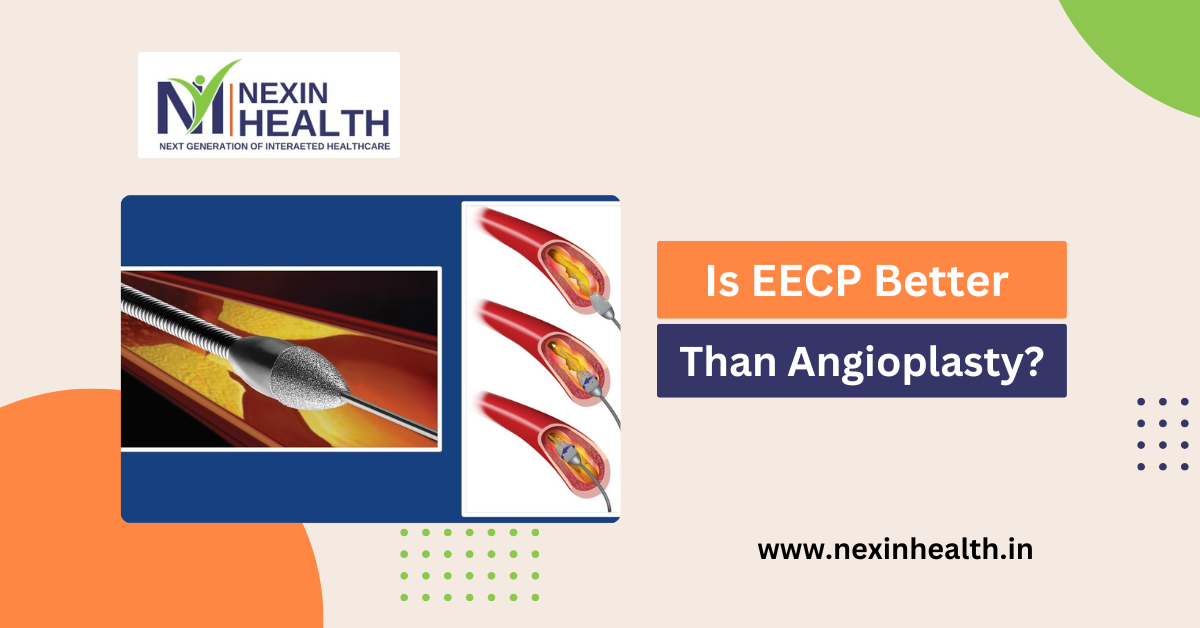
Angioplasty, also known as Percutaneous Coronary Intervention (PCI), is a minimally invasive surgical procedure used to open blocked coronary arteries. It is commonly performed in patients with severe blockages in their arteries, often to prevent a heart attack or relieve chest pain.
In this procedure, a thin catheter with a balloon is inserted through the patient’s blood vessels, typically via the arm or groin. Once it reaches the blocked artery, the balloon is inflated to widen the artery. In most cases, a stent (metal mesh tube) is placed to keep the artery open and prevent further blockages.
While angioplasty offers immediate relief from severe blockages, it is not free from risks such as restenosis (re-blockage of arteries) and complications like blood clots or infection.
To determine whether EECP is better than angioplasty, it’s important to compare these treatments based on key factors. Here’s how they differ:
Verdict: If avoiding surgery is a priority, EECP is the better option.
Verdict: EECP works well for chronic conditions and preventive care, while angioplasty is essential for emergencies.
Verdict: EECP offers a more convenient and comfortable recovery experience.
Verdict: EECP is safer for patients looking for a low-risk alternative to surgery.
Verdict: Angioplasty is more effective in emergencies, but EECP offers long-term benefits for chronic conditions.
Verdict: EECP is cost-effective, especially for patients who need long-term management of heart conditions.
The answer to whether EECP is better than angioplasty depends on individual circumstances. Both treatments have their unique advantages and limitations:
In some cases, a combination of both treatments may provide the best results. For example, a patient who has undergone angioplasty may later opt for EECP to improve long-term heart health and prevent future blockages.
If you are exploring non-invasive heart care solutions, NexIn Healthcare in Noida offers advanced EECP treatment tailored to your needs. Our skilled professionals ensure that each patient receives personalized care in a comfortable environment. EECP is not just a treatment—it’s a preventive measure that promotes natural heart health, helping you lead a better life without the risks of surgery.
At NexIn Healthcare, we believe in empowering patients with safer, effective alternatives to surgery. Whether you are managing chronic heart conditions or looking to improve your heart function, our EECP therapy can be a game-changer.
So, is EECP better than angioplasty? The answer depends on the patient’s specific health condition and treatment goals. EECP shines as a non-invasive, low-risk treatment that promotes long-term heart health, while angioplasty offers instant relief for critical blockages. Consulting with a healthcare expert is crucial to determine which option is right for you.
If you’re interested in EECP treatment in Noida, NexIn Healthcare provides expert care designed to improve your quality of life without the risks associated with invasive procedures. Choose a safer, natural approach to heart health with EECP and experience the difference.
Also Read:
EECP can be an excellent alternative for some patients, but it is not suitable for emergencies where immediate artery clearance is required.
Patients typically experience improvement after 15 to 20 sessions, with full benefits appearing after 35 to 40 sessions.
In many cases, EECP is covered by insurance for patients with chronic angina. It’s recommended to check with your provider.
Some patients may experience mild leg discomfort or fatigue, but these effects usually resolve quickly.
To schedule an appointment or consultation, contact NexIn Healthcare in Noida, and our team will guide you through the process.
Choosing between EECP and angioplasty requires careful evaluation. If you are in search of a non-invasive option, NexIn Healthcare is here to support you on your journey to better heart health with EECP treatment in Noida.


Experience

Certified Therapists

Satisfied Patients
Contact us