Morning Heart Attack in Winters: Causes, Risks & Prevention Tips
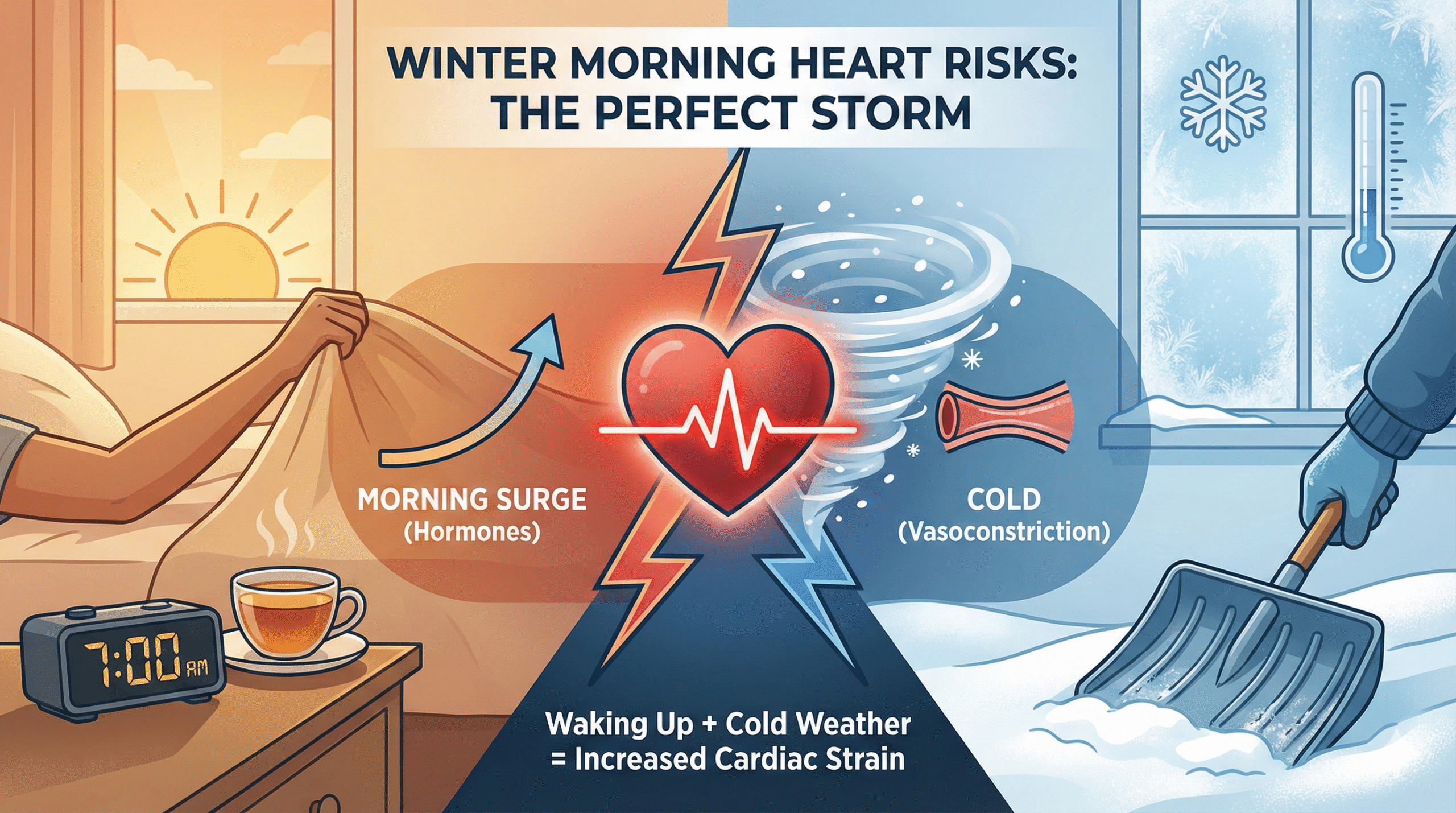



Morning Heart Attack in Winters:Imagine waking up on a chilly winter morning. The air is crisp, the ground might be cold, and you feel the urge to pull the blanket tighter. For most people, this is just another start to the day. But for millions of people living with heart disease, diabetes, or high blood pressure, these early hours of a winter day represent a hidden danger zone. It is a time when the body is under a unique biological storm, a perfect collision of internal rhythms and external weather that significantly raises the risk of a major cardiac event.
At NexIn Health, we have spent over 13 years treating more than 25,000 patients, helping them navigate the complexities of heart health without resorting to invasive surgeries whenever possible.1 We have seen firsthand how the changing seasons affect our patients. We know that the phrase ‘morning heart attack winter’ is not just a collection of words for a search engine; it is a serious medical reality that requires awareness, preparation, and the right preventive care.
This comprehensive guide is designed to be the ultimate resource for you and your loved ones. We will explore exactly why the winter months are so tough on the heart, why the early morning is the most vulnerable time, and most importantly, what you can do about it. We will look at the science of your blood vessels, the impact of stress, and the powerful, non-invasive treatments like EECP therapy that are changing the way we treat heart blockages.3 We will also dive into the wisdom of nature, exploring how remedies like Arjuna and Garlic can support your heart health.4
This is not just a medical report; it is a roadmap to surviving and thriving during the winter season. Whether you have been diagnosed with a heart condition, suffer from diabetes, or simply want to protect your heart as you age, this guide will provide you with the knowledge you need to stay safe.
To understand why ‘early morning heart attack’ risks are so high, we first need to understand how the human body reacts to cold. Your body is like a finely tuned machine designed to operate at a specific temperature—around 98.6°F (37°C). When the temperature outside drops, your body has to work overtime to maintain its internal heat. It does this through a process of self-preservation that, unfortunately, puts significant stress on the cardiovascular system.
When cold air hits your skin, your brain sends an immediate signal to your nervous system. This signal triggers a “fight or flight” response, activating the sympathetic nervous system.6 The primary goal is to stop heat from escaping your body. To do this, the body narrows the blood vessels in your skin, fingers, and toes. This process is called vasoconstriction.
Think of a garden hose. If you squeeze the hose, the water pressure inside builds up. The same thing happens in your body. As your blood vessels narrow to keep blood closer to your warm core organs, the space for the blood to flow gets smaller. This forces your heart to pump harder to push the blood through these tighter vessels. The result is an immediate spike in blood pressure.9 For a healthy young person, this is just a temporary adjustment. But for someone with stiff arteries, plaque buildup, or a weak heart, this extra pressure can be the tipping point that leads to a heart attack.
The cold does not just affect your blood vessels; it actually changes the blood itself. During the winter, and specifically in cold temperatures, your blood composition shifts. Research has shown that in winter, the body produces more clotting factors, such as fibrinogen.10 These are the proteins that help stop bleeding when you are cut, but inside intact arteries, they can be dangerous.
In addition to clotting factors, cold weather can lead to mild dehydration. We often don’t feel as thirsty in winter as we do in summer, so we drink less water. However, the dry winter air sucks moisture from our bodies with every breath. When you are dehydrated, your blood volume decreases, but the number of cells remains the same, making the blood thicker and more viscous.10
Thicker blood is harder to pump. It moves more slowly through the arteries and is more likely to clump together. If you have a narrowed artery due to cholesterol plaque, this thick, sticky blood is much more likely to form a clot that blocks the flow completely. This blockage is what causes a heart attack or stroke.11 Studies have also found that red blood cell counts can vary with the seasons, further influencing how much oxygen is delivered to your tissues and how hard the heart has to work.6
Another surprising factor is that cholesterol levels tend to fluctuate with the seasons. Research suggests that cholesterol levels often rise during the colder months.7 This may be due to changes in diet—we tend to eat heavier, fattier “comfort foods” in winter—and a decrease in physical activity. People are less likely to go for walks or exercise when it is freezing outside, leading to a more sedentary lifestyle.7 This combination of higher cholesterol, less movement, and comfort eating adds another layer of risk to the ‘morning heart attack winter’ scenario.
Winter is also the season of flu, pneumonia, and bronchitis. Respiratory infections are a major trigger for heart attacks. When your lungs are infected, the body fights back with inflammation. This systemic inflammation can destabilize the plaque in your arteries.10 A stable plaque might just narrow the artery, but an inflamed plaque is prone to rupturing. When it ruptures, a clot forms instantly. This is why getting a flu shot is often recommended as a heart-protective measure. The physical stress of coughing and the reduced oxygen from a lung infection forces the heart to work even harder when it is already under strain from the cold.
You might think that sleep is a time of total rest for the body, and waking up is a gentle process. However, physiologically, waking up is one of the most stressful events your body goes through each day. This is governed by your circadian rhythm, your internal 24-hour biological clock.12
Just before you wake up, your body begins to prepare for the activity of the day. It dumps a cocktail of hormones into your bloodstream to get you moving. The most important of these is cortisol, often called the “stress hormone.” Cortisol levels skyrocket in the early morning, usually peaking between 6:00 AM and 8:00 AM.10
Alongside cortisol, your body releases adrenaline (catecholamines). These hormones tell your heart to beat faster and squeeze harder. They also tell your blood vessels to tighten up to raise your blood pressure, ensuring blood gets to your brain so you can stand up without fainting. This natural “morning surge” in blood pressure is healthy for most, but for heart patients, it is a period of extreme vulnerability.9
The data on this is clear and consistent. Studies have shown that heart attacks are not randomly distributed throughout the day. There is a distinct peak in the incidence of sudden cardiac death and heart attacks during the morning hours, specifically the first few hours after waking.13
Why does this happen? It is a supply and demand problem.
So, you have a situation where the heart needs more fuel (oxygen), the fuel lines (arteries) are narrow, the fuel itself (blood) is thick and sticky, and the safety valve (clot-dissolving system) is turned off. This is why the ‘morning heart attack winter’ risk is so real.
It is not just the time of day; the day of the week matters too. Research has consistently found that heart attacks are more common on Mondays than any other day of the week.10 This phenomenon is often attributed to the psychological stress of returning to the workweek.
After a relaxing weekend, the transition back to work schedule creates a mental and physical shock. The anticipation of emails, deadlines, and commutes triggers an additional release of stress hormones on Monday morning. One study presented at the British Cardiovascular Society conference found a 13% increase in severe heart attacks (STEMI) on Mondays.14
When you combine the Winter factor (cold weather vasoconstriction) with the Morning factor (hormonal surge) and the Monday factor (psychological stress), you create a “perfect storm” for cardiovascular failure. This helps explain why emergency rooms see such a spike in admissions on cold Monday mornings in January and February.
Your sleep quality the night before also plays a role. If you have sleep apnea—a condition common in people with heart disease and diabetes—your oxygen levels drop repeatedly during the night. This puts stress on the heart and keeps blood pressure high even while sleeping. Waking up after a night of poor oxygenation places the heart in an oxygen-deprived state right before the morning demand surge hits. This is why treating sleep apnea is a crucial part of preventing the ‘morning heart attack winter’ scenario.
We have looked at winter and morning separately, but the real danger lies in their combination. When a person with heart disease wakes up on a freezing winter morning, the risks multiply rather than just add up.
One of the classic triggers for a winter heart attack is snow shoveling, or any sudden exertion in the cold. While this is less common in warmer parts of India, the principle applies to any activity: walking fast to catch a bus in the fog, carrying heavy grocery bags in the cold, or even the exertion of a morning jog in winter.
When you lift heavy snow (or any weight), you often hold your breath (the Valsalva maneuver), which spikes blood pressure. You are doing this upper-body work, which taxes the heart more than leg work, while standing in freezing air. This creates a massive demand on the heart while the cold air is simultaneously restricting blood flow. For many people with undiagnosed heart disease, this is the moment the ‘morning heart attack winter’ event occurs.6
For patients with Diabetes, the risk is even more insidious. Diabetes can damage the nerves that sense pain (neuropathy). This means a diabetic patient might not feel the classic crushing chest pain (angina) that warns them of a heart attack. Instead, their “silent” heart attack might manifest as sudden breathlessness, nausea, extreme fatigue, or sweating.10
In winter, it is easy to dismiss these symptoms. You might think, “I’m just out of breath because the air is cold,” or “I’m tired because it’s gloomy outside.” This delay in recognizing symptoms is fatal. Because diabetic patients often don’t feel the warning pain, they might continue exerting themselves in the cold, causing more damage to the heart muscle. At NexIn Health, we emphasize that for our diabetic patients, any sudden change in stamina or breathing on a cold morning should be treated as a potential emergency.
To help you understand the scale of this issue, we have compiled the latest research data into this fact sheet. These numbers highlight why proactive care is essential.
When you are diagnosed with heart blockages or severe angina, the fear can be overwhelming. Often, patients feel they are rushed into surgery without understanding their options. At NexIn Health, we believe in empowering you with knowledge. While surgery is sometimes necessary for emergencies, many chronic conditions can be managed effectively with non-invasive therapies.
Below is a detailed comparison of the three main approaches to treating heart blockages: Angioplasty (Stenting), Bypass Surgery (CABG), and the non-invasive EECP Therapy offered at NexIn Health.
| Feature | EECP Therapy (Enhanced External Counterpulsation) | Angioplasty (PCI / Stenting) | Bypass Surgery (CABG) |
| What is it? | A non-invasive therapy using pressure cuffs on legs to pump blood. | A procedure to insert a balloon and stent to open an artery. | Major open-heart surgery to graft a new vessel around a blockage. |
| Invasiveness | Non-Invasive. No cuts, no needles, no anesthesia. | Minimally Invasive. Catheter inserted through wrist or groin. | Highly Invasive. Chest is opened, breastbone cut. |
| Hospital Stay | Zero. It is an outpatient treatment (1 hour/day). | 1-2 Days. Requires overnight monitoring. | 5-7 Days. Includes ICU stay. |
| Recovery Time | Immediate. You can go back to work right after a session. | 1 Week. Limited activity for a few days. | 6-12 Weeks. Long, painful recovery period. |
| Risk of Complications | Very Low. Minor skin irritation or muscle fatigue. | Moderate. Bleeding, clot in stent, artery damage. | High. Infection, stroke, “pump head” (cognitive decline). |
| Mechanism | Treats the whole heart by growing new natural vessels (collaterals).20 | Treats one spot (the blockage) mechanically. | Bypasses the specific blocked area surgically. |
| Cost (Estimated in India) | ₹70,000 – ₹1.6 Lakh (Affordable).21 | ₹2 Lakh – ₹4 Lakh (Depends on stent type). | ₹3 Lakh – ₹8 Lakh (Expensive).21 |
| Best For | Chronic stable angina, Heart Failure, Unfit for surgery. | Acute Heart Attack (Emergency), Single blockage. | Multiple blockages, Complex disease. |
EECP stands for Enhanced External Counterpulsation. It is often described as a “Natural Bypass” because it helps the heart grow its own new blood vessels.
How does it work?
Imagine you have a blocked highway (your artery). Surgery builds a new bridge over it. Angioplasty widens the road. EECP, however, opens up all the small side roads and service lanes (collateral vessels) so traffic (blood) can flow around the blockage naturally.
You lie on a comfortable bed, and cuffs (like large blood pressure cuffs) are wrapped around your calves, thighs, and buttocks. These cuffs are synchronized with your heartbeat using an ECG machine.
The Result:
Over a course of 35 sessions, this mechanical pumping trains your blood vessels. It increases the release of Nitric Oxide and VEGF (Vascular Endothelial Growth Factor), which are chemicals that tell your body to widen existing vessels and grow new tiny ones.22 Patients report less chest pain, more energy, and the ability to walk further without breathlessness.23
At NexIn Health, we have successfully used EECP to treat thousands of patients who were told they had no other options, or who simply wanted to avoid the risks of surgery. It is particularly effective for the ‘morning heart attack winter’ prevention because it improves the overall circulation and endothelial function, helping vessels resist the spasm caused by cold.2
At NexIn Health, we don’t just rely on machines. We believe in an Integrated Health Approach. This means combining modern technology like EECP with ancient wisdom and nutritional science. There are powerful natural remedies that can help protect your heart during the dangerous winter months.
Arjuna is a tree bark that has been used in Ayurveda for centuries specifically for heart health. Modern science is now validating what ancient doctors knew.
Garlic is more than just a flavor enhancer; it is potent medicine.
Ginger is known as a “warming” spice. In winter, it is essential.
Homeopathy offers unique solutions for the specific triggers of winter heart attacks. The remedy Aconitum Napellus (Aconite) is famous in homeopathy as the first line of defense for sudden, acute conditions.
Treating the heart requires looking at the whole body. NexIn Health specializes in connecting the dots that other clinics might miss.
Did you know your spine health can affect your heart? The nerves that control your heart’s rhythm and blood vessels exit the spine from the upper back (thoracic vertebrae T1-T5). If you have bad posture, a hunchback, or spinal misalignments—common in winter when we hunch our shoulders against the cold—it can irritate these nerves. This irritation can mimic chest pain (Cervical Angina) or even disrupt the signals to the heart.
NexIn Health offers Advanced Spine Adjustment Treatment to ensure your nervous system is communicating clearly with your heart.2
Winter depression (SAD) and the stress of “Blue Mondays” are real triggers. We use Quantum Healing and stress management techniques to help you balance your emotions. Reducing mental stress lowers cortisol levels, which directly lowers the risk of that morning blood pressure spike.2
In winter, we get less sun, leading to a drop in Vitamin D. Low Vitamin D is strongly linked to heart disease and heart attacks.19 We monitor and supplement Vitamin D levels as a core part of our winter heart safety protocol.
To protect yourself from the ‘morning heart attack winter’ risk, follow these simple, actionable steps from the experts at NexIn Health:
The ‘morning heart attack winter’ phenomenon is a serious threat, but it is not a random act of bad luck. It is a biological event driven by cold, hormones, and blood chemistry. By understanding these risks, you can take control.
You do not have to live in fear of the cold. With the right knowledge, lifestyle changes, and advanced non-invasive treatments like EECP, you can protect your heart and enjoy the season safely.
NexIn Health is here to support you. Whether you need a second opinion on surgery, want to explore natural options, or simply need a check-up to ensure you are winter-ready, our team of experts is just a call away.
Is your heart ready for winter? Don’t leave it to chance.
At NexIn Health, we specialize in Non-Invasive Heart Treatments that treat the root cause of heart disease without surgery. With over 13 years of experience and 25,000+ happy patients, we are India’s trusted leaders in Integrated Healthcare.
Why Choose NexIn Health?
Book Your Consultation Today!
📞 Call Us: +91 93101 45010
📧 Email: care@nexinhealth.in
📍 Visit Us: Centers in Noida, Delhi, Gurugram, and across India.
🌐 Website: www.nexinhealth.in
🌐 visit our Noida center-https://www.nexinhealth.in/eecp-treatment-in-noida/
Special Offer: Mention this blog post for a FREE Heart Health Assessment at our Noida clinic!
Q1: Why do heart attacks happen more often in the morning?
A: In the morning, your body releases a surge of “waking” hormones like cortisol and adrenaline. These raise your blood pressure and heart rate. Combined with blood that is thicker from overnight dehydration, this puts extra strain on the heart, increasing the risk of a blockage.10
Q2: How does cold weather affect my heart?
A: Cold weather triggers your body to conserve heat. It does this by narrowing your blood vessels (vasoconstriction). This narrows the path for blood to flow, causing your blood pressure to spike and forcing your heart to work much harder to pump blood.7
Q3: What is the “Monday Effect” on heart attacks?
A: Studies show heart attacks are most common on Mondays. This is linked to the “Blue Monday” stress of returning to work after the weekend, which raises stress hormone levels and blood pressure.14
Q4: Can EECP therapy really replace bypass surgery?
A: For many patients with chronic stable angina or those unfit for surgery, EECP is an excellent alternative. It creates a “natural bypass” by growing new blood vessels. However, in acute emergency situations (like a massive heart attack in progress), surgery or stenting may still be required. Always consult a cardiologist.20
Q5: Is garlic really good for heart blockages?
A: Yes, garlic contains Allicin, which helps thin the blood, lower cholesterol, and relax blood vessels. While it cannot “dissolve” a hard calcified blockage overnight, regular consumption helps prevent clots and improves overall blood flow.5
Q6: Why is Vitamin D important for my heart in winter?
A: We get Vitamin D from sunlight, which is scarce in winter. Low Vitamin D levels are linked to high blood pressure, inflammation, and heart failure. Supplementing can reduce these risks significantly.19
Q7: How do I know if I am having a “silent” heart attack?
A: Silent heart attacks often do not cause chest pain. Watch for sudden shortness of breath, breaking out in a cold sweat, nausea, lightheadedness, or extreme, unexplained fatigue. This is especially common in diabetics.15
Q8: What is the “NexIn Health” approach?
A: We use an “Integrated Approach.” We don’t just treat the heart blockage; we treat the whole person. We combine EECP therapy (to improve blood flow) with spine adjustments, nutritional changes, and stress management to ensure long-term health.2
Q9: Is it safe to exercise outdoors in winter?
A: It can be risky for heart patients. If you do go out, dress warmly, cover your mouth with a scarf, and avoid high-intensity exertion like running or heavy lifting. It is often safer to do indoor exercises during the coldest months.36
Q10: What is Aconite and how does it help?
A: Aconite is a homeopathic remedy often used for sudden anxiety, panic, or shock caused by exposure to dry, cold winds. It can help calm the intense fear often associated with heart symptoms. It should only be taken in homeopathic dilution (like 30C), never in raw form.28


Experience

Certified Therapists

Satisfied Patients
Contact us