New Dietary Guidelines for Americans: The 50 Year Cholesterol Lie Finally Broken
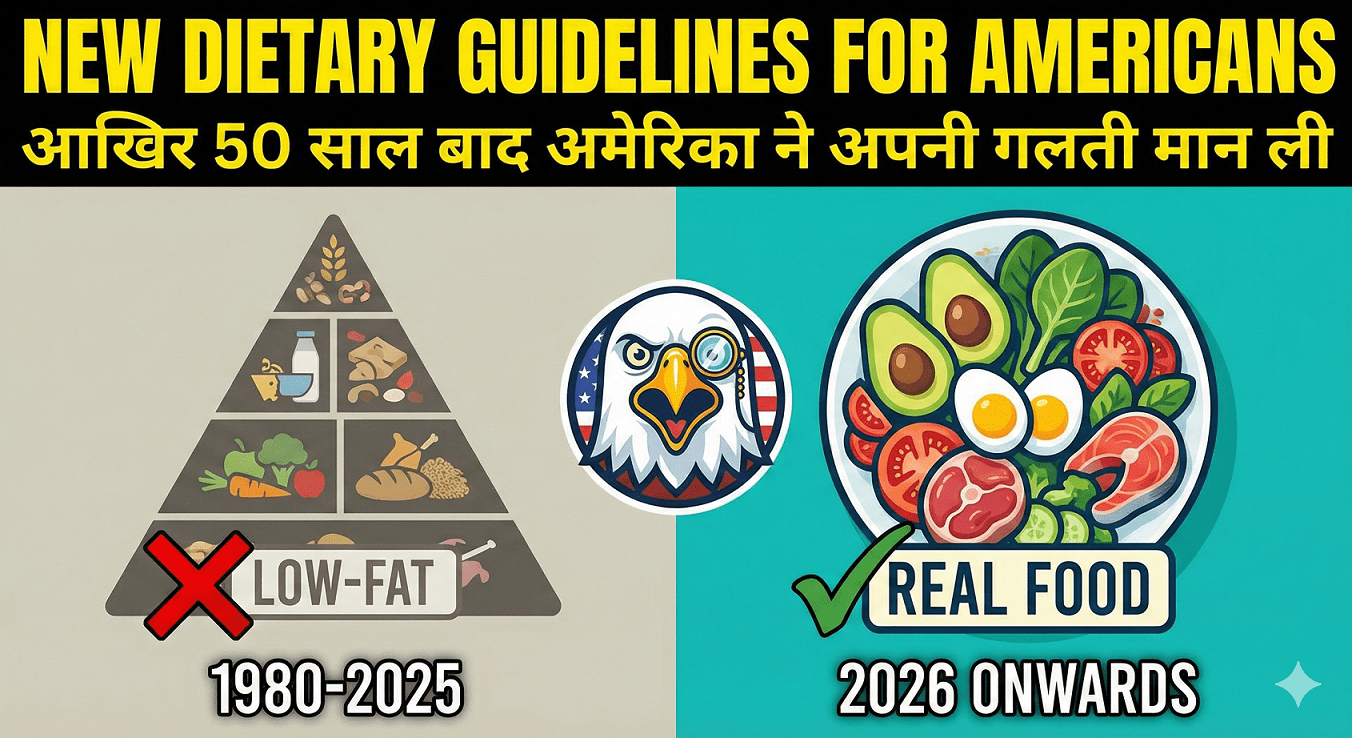



On January 7, 2026, the White House released a historic update to the nation’s nutrition policy. The New Dietary Guidelines for Americans mark a complete “reset” of the advice that has governed our plates for decades. Under the new administration, the federal government has officially admitted that the old rules—favoring processed grains and fearing natural fats—have not worked.
For millions of patients struggling with heart disease, diabetes, and metabolic disorders, this is the news we have been waiting for. The government is finally prioritizing “Real Food” over industrial products. If you have been confused by conflicting advice about eggs, butter, or meat, the New Dietary Guidelines for Americans provide clarity. This blog explores why the “pyramid” has been inverted and how these changes can save your health.
Here are the most surprising and eye-catching updates from the January 7, 2026 release:
- The Pyramid is Upside Down: The New Dietary Guidelines for Americans prioritize high-quality proteins and healthy fats as the foundation of health, demoting grains and carbohydrates.
- End of the “Low-Fat” Era: The government explicitly states that we must End the War on Healthy Fats. Full-fat dairy (like whole milk) and natural animal fats are now recommended over processed vegetable oils.
- Sugar is the Enemy: A strict new standard states that “no amount of added sugar is considered safe,” especially for children under four.
- Processed Food Warning: For the first time, the guidelines officially warn against “ultra-processed foods,” labeling them as a primary driver of chronic disease.
- Protein is King: The New Protein Guidelines for USA (1.2 – 1.6 gram / kilograms) recommend prioritizing protein at every meal to combat frailty and metabolic disease, a massive shift from previous years.
https://youtu.be/RIQ8L0KiI3w
Many patients ask, What Are the New Dietary Guidelines for the USA actually saying? In simple terms, the government is moving away from “corporate-friendly” advice and returning to common sense.
For over 50 years, Americans were told to eat low-fat, high-carb diets. The result? A massive increase in obesity and diabetes. The New Dietary Guidelines for Americans reverse this by focusing on nutrient density. The core message is simple: Eat Real Food.
The guidelines explain that the human body needs essential nutrients found in natural sources—meat, eggs, vegetables, and fruits—not in a box of fortified cereal. This shift is designed to tackle the root cause of modern illness: insulin resistance and inflammation caused by refined food.
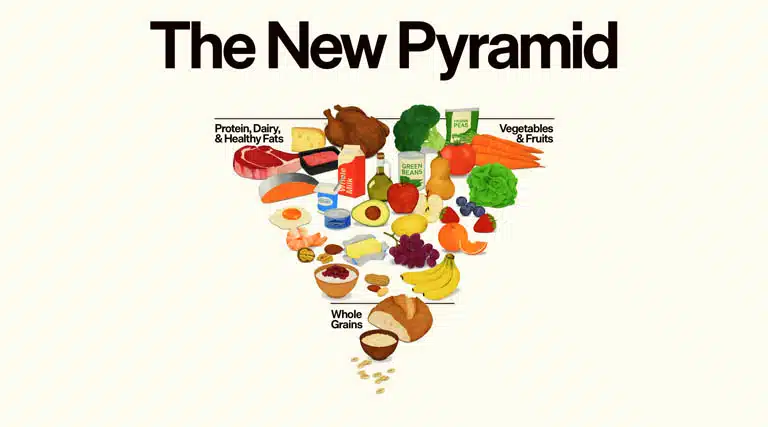
One of the most critical updates is the topic of Dietary Cholesterol Revisited. For decades, we were told to avoid egg yolks and shrimp because they contain cholesterol. The New Dietary Guidelines for Americans finally put this myth to rest.
Science now confirms that Dietary Cholesterol Does Not Cause Cholesterol problems in the blood for the vast majority of people. The liver adjusts its production based on what you eat. The real danger to your heart is not the egg yolk, but the toast and jam you eat with it. This understanding is central to the New Cholesterol Hypothesis USA, which blames sugar and inflammation—not natural fat—for heart disease.
To truly understand how the New Dietary Guidelines for Americans can heal your metabolism, we need to look at how they treat the three main food groups. The changes here are drastic compared to the 2020 guidelines.
The New Protein Guidelines for USA are a game-changer for diabetics and heart patients. Previously, protein was often demonized or restricted. Now, it is recognized as the most important nutrient for blood sugar control and muscle health.
Animal & Plant: The guidelines explicitly endorse a variety of sources: eggs, poultry, seafood, and yes, red meat, alongside beans and lentils.
Why It Matters: Protein does not spike blood sugar. By making protein the center of your plate, you naturally reduce your intake of processed carbs. This is vital for reversing “Metabolic Syndrome.“
This is perhaps the most shocking change for those who grew up in the 80s and 90s. The guidelines explain Why Dietary Cholesterol Is No Longer the Main Focus in U.S. Guidelines.
The Updated Dietary Guidelines for Americans take a hard stance against the foods that fill most supermarket shelves.
Why the sudden change? The New Cholesterol Hypothesis USA is based on the realization that heart disease is primarily an inflammatory condition.
You might be wondering, “Why did they wait so long to change the rules?” The answer lies in the statistics. The New Dietary Guidelines for Americans were born out of necessity because the old guidelines failed us.
Since the introduction of the low-fat guidelines in 1980, the health of the American (and global) population has nose-dived.
The New Dietary Guidelines for Americans warn against the dangers of the “Zero Fat” trend. When you remove fat from food, it tastes like cardboard. To fix this, manufacturers added massive amounts of sugar and chemicals.
For years, researchers who questioned the “Diet-Heart Hypothesis” were ignored. Evidence suggests that corporate interests—specifically the sugar and grain industries—influenced early guidelines to demonize saturated fat. They wanted to sell cheap, shelf-stable products. The New Dietary Guidelines for Americans finally break this cycle, restoring scientific integrity and accountability to federal policy.
The government’s new stance is backed by alarming economic data:
While the New Dietary Guidelines for Americans are a U.S. policy, they carry a profound message for India. For the last 30 years, India has blindly followed Western nutrition advice. We abandoned our traditional wisdom in favor of “Heart Healthy” vegetable oils and low-fat products.
India is now the “Diabetes Capital of the World.” We have seen a massive rise in heart attacks among young people. Why? Because we replaced traditional Ghee, Coconut Oil, and home-cooked meals with refined oils, biscuits, and processed packaged foods.
The New Dietary Guidelines for Americans are essentially telling us to go back to how our grandparents ate.
Read More: The Best Chart to Reverse Heart Blockage, Diabetes and Metabolic Disorders
Click to Download the Diet Chart
To make it crystal clear, here is how the advice has shifted.
| Feature | The Old Approach (1980-2020) | New Dietary Guidelines for Americans (2026) |
| Primary Goal | Lower Cholesterol & Calories | Metabolic Health & Nutrient Density |
| Fat Advice | “Low Fat is Best” (Zero Fat) | “End War on Healthy Fats” (Eat Butter/Avocado) |
| Protein | Moderate / Limit Red Meat | Prioritize Protein at Every Meal |
| Eggs | Limit due to Cholesterol | Recommended Superfood (Cholesterol is safe) |
| Sugar | Allowed in moderation (10%) | Zero Tolerance (No amount is safe) |
| Carbs | Base of the Pyramid (6-11 servings) | Reduce Refined Carbs (Vegetables are best) |
| Processed Food | Encouraged (Low-fat snacks) | AVOID Strictly (Ultra-processed foods) |
This table shows why Dietary Cholesterol Revisited is such a pivotal topic—it represents a total 180-degree turn in medical advice.
Knowing the New Dietary Guidelines for Americans is one thing; living them is another. Here is how you can use Updated Dietary Guidelines for Americans to improve your heart health immediately.
While following the New Dietary Guidelines for Americans, you can support your body with natural additions that align with the “Real Food” philosophy.
By switching to this way of eating, you are likely to experience:
Que: Do the New Dietary Guidelines for Americans say I can eat butter?
Ans: Yes, the guidelines encourage natural fats like butter and ghee over processed margarine or seed oils, as they are stable and nutrient-dense.
Que: I thought eating eggs caused heart attacks?
Ans: That is the old myth. The section on Dietary Cholesterol Revisited clarifies that natural dietary cholesterol (like in eggs) does not clog arteries; sugar and inflammation are the real causes.
Que: What is the rule for sugar in the New U.S. Dietary Guidelines?
Ans: The new rule is strict: “No amount of added sugar is considered part of a healthy diet.”28 It recommends avoiding it entirely, especially for children.
Que: How do the New Dietary Guidelines for Americans help with Diabetes?
Ans: By prioritizing protein and healthy fats while cutting refined carbs, the diet lowers blood sugar and insulin levels, addressing the root cause of Type 2 Diabetes.
Que: Are vegetables considered carbohydrates?
Ans: Yes, and the guidelines state they should be your primary source of carbohydrates, replacing refined grains like bread and pasta.
Que: Why did the guidelines change after 50 years?
Ans: The government acknowledged that the old low-fat guidelines failed, leading to an epidemic of obesity and chronic disease. The new focus is on science and “Real Food.”
Que: Can I still eat fruit?
Ans: Yes, whole fruits like berries and apples are encouraged. However, fruit juice is discouraged because it is high in sugar without the fiber.
Que: What are the New Protein Guidelines for USA?
Ans: They recommend prioritizing high-quality protein (animal or plant) at every single meal to support muscle mass and metabolism.
Que: Is this a Keto diet?
Ans: Not necessarily, but it supports lower-carbohydrate eating. It focuses on “Real Food” and eliminating processed carbs, which naturally lowers carb intake.
Que: What is the most important takeaway for heart patients?
Ans: The most important takeaway is to stop fearing natural food and start fearing processed food. Reduce inflammation by cutting sugar and vegetable oils.
Read More:
Reverse Heart Blockage with Diet
The New Dietary Guidelines for Americans confirm what we have known for years: the body heals when you give it the right tools. At NexIn Health, we specialize in guiding patients through these lifestyle transformations.
We are experts in Heart and Spine Treatment and have consulted over 30,000 patients with more than 14 Years of Experience. If you are looking for guidance on how to implement these changes or need support for heart and spine health, we are here to help.
Your health is your greatest asset. Start your journey to recovery today.


Experience

Certified Therapists

Satisfied Patients
Contact us