Seasonal Weather Changes and Heart Attack Risk: What the Latest Evidence Suggests
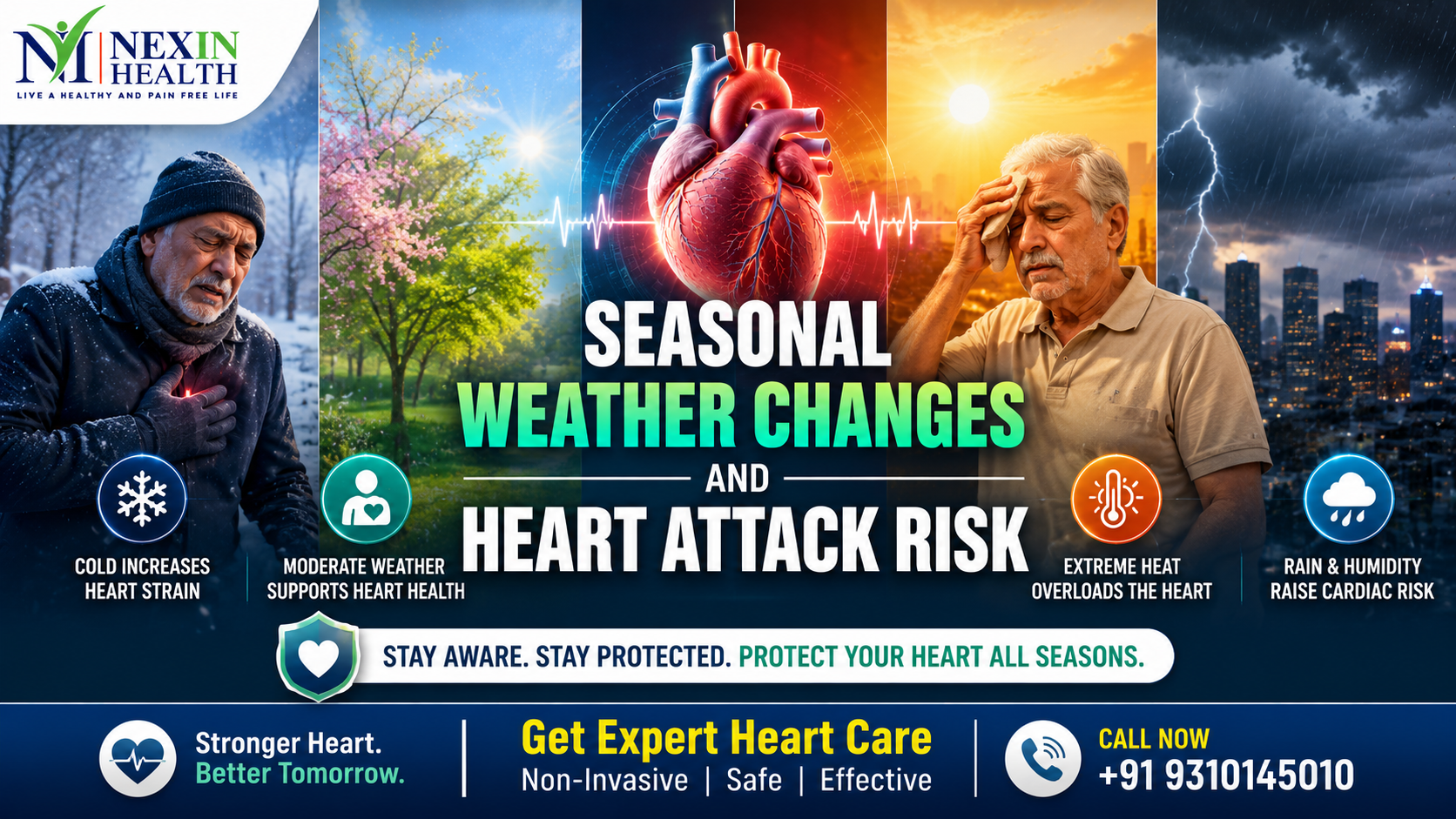



Seasonal weather changes and heart attack risk are connected in ways that go far beyond the common idea of “cold weather is bad for the heart.” Large research projects spanning dozens of countries and millions of patients now confirm that both extreme cold and extreme heat can meaningfully raise the chances of a heart attack, heart failure flare-up, or stroke. As the world’s climate becomes more unpredictable, this connection matters more than ever, especially for people already managing heart disease, diabetes, or high blood pressure.
This is not a fringe theory. It is backed by some of the largest cardiovascular datasets ever assembled, spanning over 30 million deaths across dozens of countries. Understanding what this research actually shows can help patients and families take practical, doctor-approved steps to stay safer through every season.
Cold weather and heart attacks have one of the most consistently documented relationships in cardiovascular research, repeated across decades and continents. When temperatures drop, the body activates its sympathetic nervous system, the same “fight or flight” system that prepares the body for stress.
This activation causes blood vessels to constrict, raising blood pressure and forcing the heart to work harder against increased resistance. At the same time, cold temperatures encourage cholesterol crystals to deposit more readily inside arterial plaques, making those plaques more likely to rupture and trigger a heart attack.
Large studies have quantified this effect with striking consistency. A French study following over 250,000 men for a decade found that every 10°C temperature drop raised coronary event rates by about 13%. A separate Italian study reported nearly identical patterns, while data from Germany’s MONICA/KORA registry found a 10% rise in cardiac risk for every 10°C drop in average temperature.
Cold also affects the blood itself. Hypothermia and prolonged cold exposure are known to increase blood viscosity, meaning the blood becomes thicker and more prone to clotting. Combined with fluid shifts that concentrate clotting factors, this creates a biological environment where even a previously stable plaque can rupture and trigger sudden blockage of a coronary artery. This is one of the clearest reasons doctors consider cold exposure a genuine, measurable trigger rather than just an uncomfortable seasonal inconvenience.
The winter cardiovascular diseases phenomenon is so well established that researchers have given it a specific name: excess winter mortality. This refers to the consistent, measurable rise in deaths — particularly cardiovascular and respiratory deaths — observed every winter across multiple countries, regardless of how mild or harsh that particular winter’s weather actually was.
Several features make this phenomenon unique:
A frequent and very practical question is, what temperature is too cold for heart patients? While there is no single universal cutoff, research offers useful reference points. Heart failure admissions were shown to peak once temperatures fell into the 0°C to -10°C range, suggesting this band represents a particularly high-risk zone for vulnerable patients.
More broadly, the “safe zone” identified across multiple large studies sits between 15°C and 25°C, with cardiovascular risk rising steadily as temperatures move below this range. For patients with existing heart disease, even modest drops — well above freezing — have been shown to measurably raise event rates, meaning caution should begin well before temperatures turn extreme.
Just as cold carries risk, research also answers the question of what temperature is too hot for heart patients. The same large multinational study found that extreme heat, defined as the hottest 1% of days in a given location, was associated with a clearly elevated risk of death from ischemic heart disease, stroke, and heart failure compared to each region’s safest temperature.
Heat affects the body differently than cold. It increases skin blood flow and sweating to cool the body, which can lead to fluid loss, thicker blood, and a hypercoagulable state that raises clotting risk. For patients on diuretics or heart failure medication, heat-related fluid loss can be particularly dangerous, occasionally leading to dangerous drops in blood volume.
The pattern of more heart attacks in winter is one of the most repeated findings in cardiovascular epidemiology, observed in studies from France, Italy, Germany, Sweden, Japan, China, and beyond.
This consistency across very different countries, climates, and healthcare systems is part of why doctors now treat winter as a genuine seasonal risk period for cardiac patients, not just a season of general inconvenience.
Climate change and heart health have become an increasingly urgent area of research as global temperatures rise and weather patterns become more extreme. A large-scale Harvard-affiliated review covering nearly 500 individual studies found clear links between climate-driven events — including extreme temperatures, hurricanes, and tropical storms — and increased cardiovascular illness.
Importantly, the effects were not distributed equally. Older adults, racial and ethnic minorities, and lower-income communities consistently showed the greatest vulnerability, often because of reduced access to climate-controlled housing, healthcare, and consistent medical follow-up.
A 2026 study from China added further nuance, showing that body weight interacts differently with heat versus cold risk. Above 38°C, higher body fat appeared to offer some protective insulation against external heat. But below -10°C, that same body fat could not offset the added cardiovascular strain of cold-induced blood pressure spikes and thicker blood.
Extreme weather and cardiovascular disease research increasingly looks beyond simple daily temperature averages to capture the fuller picture of environmental stress on the heart.
Heart attack prevention during seasonal changes does not require dramatic lifestyle overhauls. It requires consistent, season-aware habits that account for how temperature and weather affect the cardiovascular system.
Many patients and caregivers naturally wonder about the best climate for heart patients, especially when considering relocation, retirement planning, or seasonal travel. Based on the global temperature-mortality research, the lowest cardiovascular risk consistently falls within the 15°C to 25°C range.
This does not mean only a handful of cities qualify. It means that, regardless of where someone lives, minimizing time spent in extreme heat or extreme cold — through climate-controlled environments, appropriate clothing, and seasonal awareness — meaningfully reduces cardiovascular strain, even in naturally hot or cold regions.
The question of the best climate for congestive heart failure deserves special attention, since heart failure patients consistently show the highest excess death burden from both temperature extremes in major studies.
Research indicates that:
For heart failure patients unable to relocate, the practical takeaway is the same: minimizing exposure to both temperature extremes and rapid swings, rather than chasing one “perfect” location, offers the most realistic protection.
Certain groups face a measurably higher risk when it comes to seasonal weather changes and heart attack risk, based on consistent findings across multiple large studies:
Because temperature swings carry real cardiovascular consequences, recognizing early warning signs becomes especially important during seasonal extremes. Symptoms that deserve immediate medical attention include:
These symptoms should never be dismissed as ordinary seasonal discomfort, especially in someone with known heart disease, diabetes, or high blood pressure. Prompt medical evaluation during these windows can make a meaningful difference in outcomes.
| Approach | What It Involves | Best Suited For | Limitation |
| Seasonal lifestyle adjustment | Layering for cold, hydration for heat, avoiding sudden exertion in extreme weather | Most patients, including early-risk individuals | Requires consistent daily awareness |
| Medication adherence and monitoring | Continuing prescribed heart medication, closer blood pressure checks during seasonal transitions | Diagnosed hypertension, heart failure, or coronary artery disease patients | Needs regular doctor follow-up |
| Climate-controlled living environment | Reliable heating and cooling at home to minimize indoor temperature extremes | Elderly patients and those with heart failure | Not always financially accessible for everyone |
| Non-invasive therapies like EECP | External counterpulsation therapy that improves circulation and reduces cardiac strain without surgery | Patients seeking to build cardiac resilience without invasive procedures | Requires multiple sessions over several weeks |
The evidence on seasonal weather changes and heart attack risk is now too large and too consistent to ignore. From decades-old European registries to the latest 2026 multinational data, the pattern holds: both extreme cold and extreme heat place real, measurable strain on the cardiovascular system, with heart failure patients facing the greatest danger from both. The encouraging takeaway is that much of this risk is manageable through awareness, consistent medical care, and sensible seasonal precautions, allowing patients to move through every season with greater confidence.
Research consistently shows that both extreme cold and extreme heat raise the risk of heart attacks and other cardiovascular events, with cold weather generally carrying a larger overall impact.
Cold temperatures trigger blood vessel constriction, raised blood pressure, and increased plaque instability, all of which combine to raise heart attack risk specifically during winter months.
While there is no single universal number, heart failure admissions have been shown to peak between 0°C and -10°C, suggesting heightened caution is needed once temperatures approach this range.
Extreme heat days, generally the hottest 1% of days for a given region, have been linked to a clear rise in cardiovascular deaths, particularly from heart failure and stroke.
Research points to a temperature range of roughly 15°C to 25°C as the safest zone, with risk rising steadily outside this range in either direction.
Heart failure patients benefit most from stable, moderate climates with fewer extreme temperature swings, since both cold and heat extremes carry the highest excess death risk for this group.
Climate change is increasing the frequency of extreme heat, cold spells, and severe storms, all of which have been linked to rising cardiovascular illness, especially among older and lower-income populations.
Cold weather’s effect on the heart is often delayed, with research showing impacts lasting one to three weeks after a cold spell, unlike heat, which tends to act within one to three days.
Yes, recent research has independently linked heavy precipitation events to a measurable rise in cardiovascular risk, separate from temperature effects.
Older adults, people with existing heart disease or heart failure, diabetics, and those with limited access to climate-controlled housing face the highest risk.
Yes, simple steps like dressing appropriately, staying hydrated, monitoring blood pressure, and avoiding sudden strenuous activity in extreme weather have been shown to meaningfully reduce risk.
Yes, research suggests higher body fat may offer some protection in extreme heat but can worsen cardiovascular strain in extreme cold due to blood pressure and blood thickness changes.
Yes, hurricanes and tropical storms have been associated with increased cardiovascular illness, driven by both physical disruption and the psychological stress that follows such events.
Patients should never adjust medication on their own, but should maintain consistent use and consult their doctor if symptoms worsen during extreme heat or cold.
Therapies like EECP improve circulation and may help the heart cope better with the added strain of seasonal extremes, particularly for patients seeking to avoid invasive procedures.
NexIn Health is a trusted name in non-invasive heart and spine care, with over 14 years of experience and more than 30,000 patients consulted across multiple cities. Specializing in advanced, non-invasive treatments like EECP therapy, NexIn Health helps patients build cardiovascular resilience against the seasonal strain that changing weather can place on the heart.
If you or a loved one is managing heart disease, diabetes, or high blood pressure, don’t wait for the next season’s weather extremes. Reach out to NexIn Health today for a consultation.
Call or WhatsApp: +91 9310145010
Website: www.nexinhealth.in
Email: care@nexinhealth.in
Read More: NexIn Health | Healing Hearts Naturally with EECP


Experience

Certified Therapists

Satisfied Patients
Contact us