Signs Of Heart Failure In Women Explained: Symptoms, Causes, Diagnosis, and Treatment



Signs Of Heart Failure In Women Explained: Symptoms, Causes, Diagnosis, and Treatment
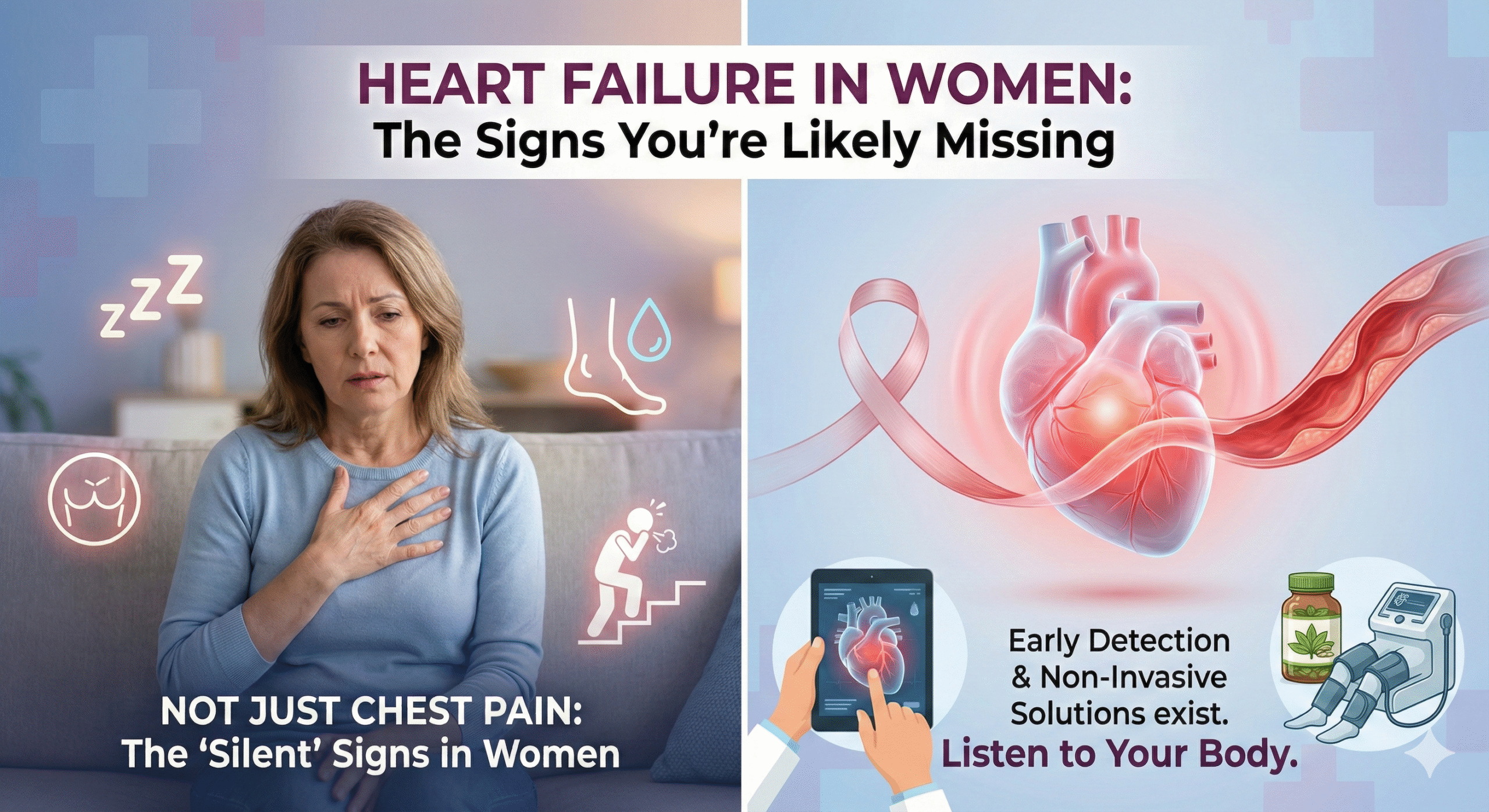
Signs of heart failure in women are often misunderstood. When we think of heart problems, we often picture the dramatic chest clutching seen in movies. However, for many women, especially those managing diabetes or metabolic disorders, the reality is much quieter and easier to miss. Heart failure does not mean the heart has stopped; it simply means it is too weak or stiff to pump blood effectively.
Recognizing the signs of heart failure in women early is the key to preventing serious damage. Because women’s bodies handle heart disease differently than men, their symptoms can be subtle. This guide is written in simple language to help you, or the women in your life, understand these signals and take action.
Before we dive deep, here are some eye-catching and unique facts regarding the signs of heart failure in women that might surprise you:
The “Preserved” Problem: Women are far more likely than men to have a specific type of heart failure where the heart pumps normally but is too stiff to fill with blood (HFpEF).
Diabetes Multiplier: For women, having diabetes raises the risk of heart failure much more than it does for men.
The “Silent” Attack: Many women have “silent” heart attacks without chest pain, leading to heart failure years later without knowing the cause.
Breath vs. Pain: The most common complaint is not pain, but breathlessness during simple tasks like making the bed.
The Menopause Link: The drop in natural hormones after menopause stiffens blood vessels, directly contributing to heart stress.
It is vital to catch early signs of heart failure before they limit your life. Unlike a sudden heart attack, heart failure develops slowly. You might just feel “off” or unusually tired.
One of the most frequent indicators is dyspnea on exertion in females. This is a medical way of saying you get out of breath doing things that used to be easy, like walking to the mailbox or climbing a flight of stairs. If you find yourself stopping to catch your breath while grocery shopping, this is a red flag.
Another key indicator is cardiac-related fatigue in women. This isn’t just being sleepy; it is a heavy, draining tiredness where your limbs feel like lead. This happens because the heart cannot pump enough oxygen-rich blood to your muscles.
Many patients dismiss silent heart failure symptoms as just “getting older” or “being out of shape.” However, if you have metabolic disorders, you need to be sharper.
Watch out for female cardiovascular disease symptoms that seem unrelated to the heart, such as persistent indigestion or fullness in the stomach. This happens when the liver and stomach get congested with fluid.
Another silent sign is confusion or “brain fog.” When the heart is weak, the brain gets less oxygen, leading to memory issues or disorientation. These signs of heart failure in women are often missed by families until other symptoms appear.
When the heart slows down, blood backs up in the veins, causing fluid to leak into tissues. This leads to congestive heart failure in women.
The most visible proof of this is edema and fluid retention signs. You might notice that your shoes feel tight by the evening, or your socks leave deep ring marks on your ankles. In some cases, the swelling travels up to the legs or settles in the abdomen, causing bloating.
If you see rapid weight gain—like gaining 2 kgs in two days—this is likely fluid, not fat. This is one of the major heart failure warning signs that requires a doctor’s visit immediately.
Your sleep habits can reveal a lot about your heart. A strong nocturnal cough heart failure link exists. This happens because when you lie flat, fluid from your legs moves back into your lungs, irritating them and causing a dry, hacking cough.
Even more alarming is paroxysmal nocturnal dyspnea (PND). This is a terrifying sensation where you wake up suddenly, gasping for air, and have to sit up or stand near a window to breathe. This is a classic sign of left-sided heart failure symptoms. If you need to prop yourself up with two or three pillows to sleep comfortably, this is a clear sign your heart is struggling.
Why do these signs of heart failure in women appear? Several factors play a role, especially for those with lifestyle diseases.
High Blood Pressure (Hypertension): This forces the heart to push against stiff arteries, thickening the muscle until it gets weak.
Diabetes and Metabolic Disorders: High blood sugar damages the heart muscle and nerves. This is a leading cause of congestive heart failure in women.
Coronary Artery Disease: Blockages in the heart vessels reduce blood flow.
Microvascular Dysfunction: Women often have microvascular heart disease signs. This means the tiny arteries within the heart are damaged, even if the main arteries are clear. This is often missed on standard angiograms.
There is a specific condition called reduced ejection fraction symptoms, where the heart pumps weakly. However, women are more prone to the opposite problem: HFpEF.
In this condition, the heart pumps out a normal percentage of blood, but the heart muscle is stiff and thick. It cannot relax enough to fill up with blood in the first place. Because the “pumping number” looks normal on tests, signs of heart failure in women with this condition are frequently misdiagnosed as asthma or obesity.
Understanding the numbers helps us take the risk seriously. Statistics of signs of heart failure in women reveal that women account for nearly 50% of heart failure hospitalizations. Furthermore, women are more likely to die from heart failure than men if it is not treated, largely because diagnosis is often delayed.
If you ignore the early clues, you may develop worsening heart failure signs. These indicate the heart is becoming dangerously weak.
Extreme shortness of breath even when sitting still.
A heartbeat that feels irregular or incredibly fast.
Pink, frothy mucus when coughing (a sign of severe fluid in the lungs).
Fainting or severe weakness.
Recognizing these heart failure warning signs and getting emergency help is non-negotiable.
Once a doctor identifies signs of heart failure in women using ECGs, blood tests (like BNP), and Echocardiograms, they usually start a standard medical plan.
Diuretics (Water Pills): To flush out excess fluid and reduce swelling.
ACE Inhibitors: To open blood vessels and lower blood pressure.
Beta-Blockers: To slow the heart rate and reduce stress on the heart.
SGLT2 Inhibitors: Originally for diabetes, these are now miracle drugs for heart failure.
While effective, these medications manage the symptoms but may not always fix the root cause of fatigue.
For women seeking treatment without surgery, EECP Therapy (Enhanced External Counterpulsation) is a powerful option. It specifically helps reduce signs of heart failure in women who are tired of being tired.
How EECP works: You lie on a comfortable bed, and cuffs are wrapped around your legs. These cuffs inflate and deflate in rhythm with your heartbeat. This action pumps blood back to the heart when it rests.
Benefits of EECP:
It acts like a “second heart,” reducing the workload on your own heart.
It creates “natural bypasses” by opening thousands of tiny collateral blood vessels.
It is excellent for treating microvascular heart disease signs.
It significantly reduces cardiac-related fatigue in women.
Alongside medical treatment, nature offers support to manage signs of heart failure in women. (Note: Always consult your doctor before starting herbs).
Arjuna (Terminalia Arjuna): An Ayurvedic bark powder known to strengthen heart muscles and improve pumping capacity.
Coenzyme Q10 (CoQ10): A supplement that helps heart cells generate energy, reducing fatigue.
Hawthorn Berry: Used in homeopathy to improve blood flow and settle palpitations.
Magnesium: Essential for relaxing heart muscles and preventing irregular beats.
Here is how different treatments stack up when managing signs of heart failure in women:
| Treatment Option | How It Works | Best For | Recovery Time |
| Medication | Lowers BP, removes fluid, slows heart rate. | Daily symptom management. | Ongoing process. |
| EECP Therapy | Mechanically pumps blood to grow new vessels. | Improving energy, Angina, Weak Heart. | No downtime (Non-invasive). |
| Bypass Surgery | Reroutes blood around blocked arteries. | Severe blockages in main arteries. | 3 to 6 months. |
| Pacemaker | Uses electricity to correct heart rhythm. | Irregular heartbeats. | 2 to 4 weeks. |
| Herbal/Natural | Supports heart tissue health. | Mild symptoms & prevention. | Varies. |
If you have diabetes or metabolic disorders, lifestyle is your first medicine to control signs of heart failure in women.
Salt Restriction: Salt holds water. Cutting salt helps reduce edema and fluid retention signs.
Fluid Management: You may need to limit how much water you drink to prevent lung congestion.
Gentle Movement: Walking helps the heart without straining it, reducing dyspnea on exertion in females over time.
The biggest benefits of understanding signs of heart failure in women are early intervention and a longer life. If you know that a night cough isn’t just a cold, or that swollen legs aren’t just from standing, you can seek help.
Managing your blood sugar, keeping blood pressure in check, and treating sleep apnea are the best ways to prevent worsening heart failure signs.
If you or a loved one are noticing signs of heart failure in women, you need expert care that looks at the whole person, not just the disease.
NexIn Health is a pioneer in non-invasive heart and spine care. We specialize in treating Heart Disease, Diabetes, and lifestyle disorders without surgery. With 14+ years of experience and having consulted over 30,000 patients, we are experts in Integrated Techniques like EECP. We help you get your energy back safely.
Contact Us:
Phone & WhatsApp: + 91 9310145010
Website: www.nexinhealth.in
Email: care@nxinhealth.in
Que:
What are the very first signs of heart failure in women?
Ans:
The earliest signs are usually extreme tiredness (fatigue) and shortness of breath when doing simple daily tasks like walking or cleaning.
Que:
Why is it called “silent” heart failure?
Ans:
It is called silent because it often lacks chest pain. Symptoms like indigestion, fatigue, or mild swelling are often ignored until the heart gets very weak.
Que:
How does diabetes affect signs of heart failure in women?
Ans:
Diabetes damages blood vessels and heart nerves, making women twice as likely to develop heart failure and masking pain symptoms.
Que:
Is EECP therapy painful?
Ans:
No, EECP is completely painless. It feels like a strong massage on your legs and is a relaxing, non-invasive treatment.
Que:
Can drinking water be bad for heart failure?
Ans:
Yes, if you have heart failure, drinking too much water can cause fluid to build up in your lungs and legs. Doctors often limit fluid intake.
Que:
What is the “nocturnal cough” link?
Ans:
This is a dry cough that happens only when you lie down to sleep. It is caused by fluid shifting from your legs to your lungs.
Que:
Can herbal medicines cure heart failure?
Ans:
Herbs like Arjuna can support heart function and improve symptoms, but they should be used alongside standard medical treatment, not as a replacement.
Que:
What is the difference between heart failure and a heart attack?
Ans:
A heart attack is a sudden blockage of blood flow. Heart failure is a long-term condition where the heart muscle gradually becomes too weak to pump.
Que:
Why do my ankles swell more in the evening?
Ans:
Gravity pulls fluid down during the day. A weak heart cannot pump this fluid back up efficiently, causing evening swelling (edema).
Que:
Is heart failure in women reversible?
Ans:
While it is a chronic condition, treatments like EECP, medication, and lifestyle changes can reverse symptoms and improve heart function significantly.


Experience

Certified Therapists

Satisfied Patients
Contact us