Thunderstorms and Heart Health: Emerging Evidence Behind Storm-Related Cardiovascular Stress
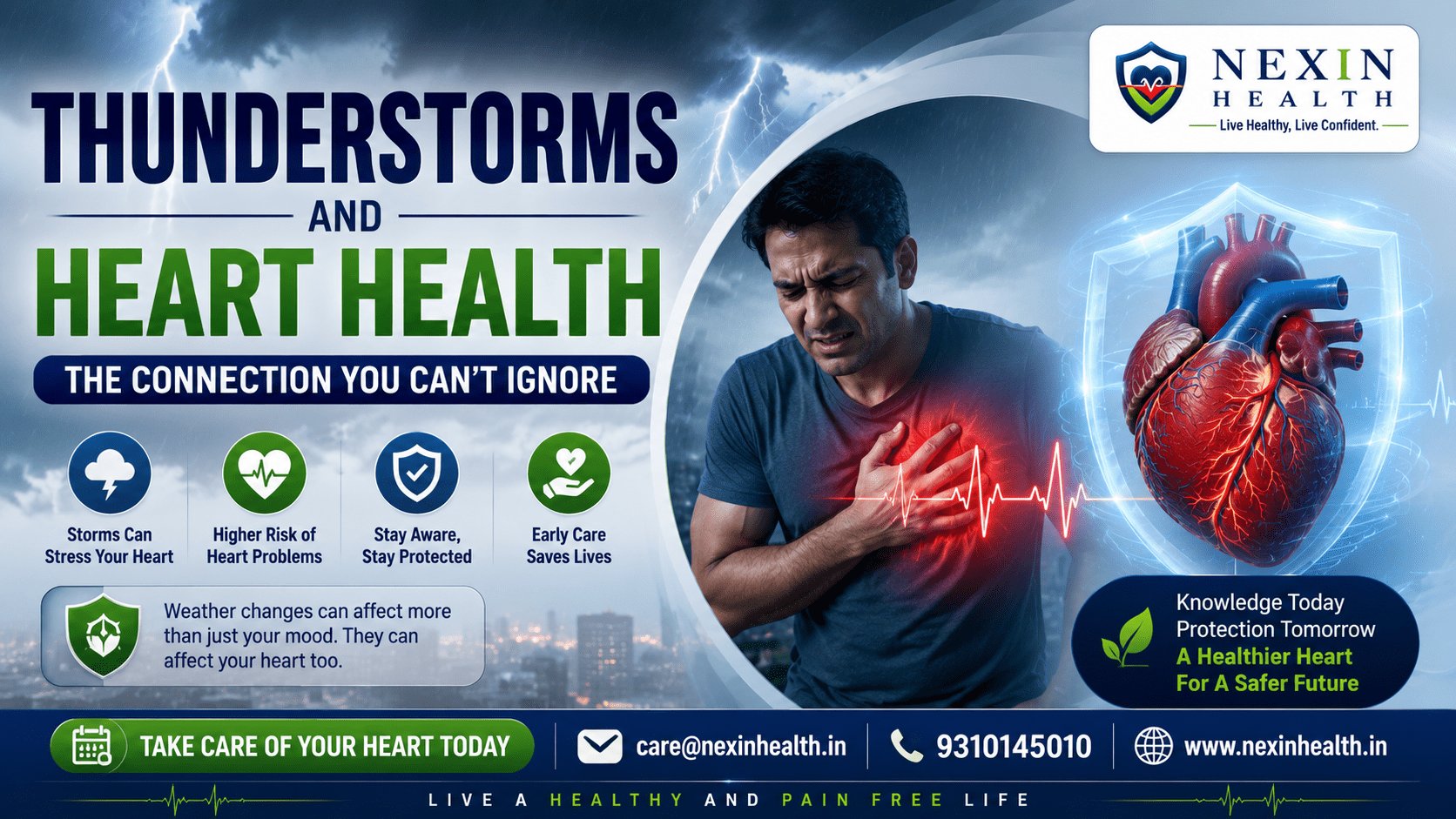



Thunderstorms and heart health are connected in ways most people never think about until they experience it firsthand. While we usually associate storms with falling trees, flooded roads, or power outages, growing research shows that the body’s cardiovascular system can also react strongly to the sudden changes a storm brings. For people already living with heart disease, diabetes, or high blood pressure, this connection deserves real attention.
This is not a vague or unproven idea. Multiple research groups, from Brazil to Australia to multi-country cyclone studies, have documented measurable spikes in heart attacks, arrhythmias, and hospital admissions tied to storm activity. Understanding these patterns can help patients and families take sensible, practical precautions before, during, and after severe weather.
Thunderstorm heart problems arise from several overlapping stresses that occur together during severe weather, rather than from a single isolated cause. Understanding each piece helps explain why thunderstorms and heart health are linked so consistently across very different patient populations and storm types.
None of these mechanisms typically act alone. A single severe thunderstorm can combine a rapid pressure drop, a frightening lightning flash overhead, and a missed evening medication dose, all within the same few hours. This layered nature is part of why researchers studying thunderstorms and heart health increasingly look at combined exposure rather than isolating any single weather variable.
Extreme weather and heart disease have become one of the fastest-growing areas of cardiovascular research, driven partly by a large Harvard-affiliated review of nearly 500 individual studies. This research found consistent links between extreme weather events — including storms, hurricanes, and temperature extremes — and a measurable rise in cardiovascular illness.
Importantly, this risk is not evenly distributed. Older adults, racial and ethnic minorities, and lower-income communities consistently show the greatest vulnerability, largely because of reduced access to stable housing, reliable healthcare, and consistent medical follow-up during and after extreme weather events.
This pattern repeats across very different types of storms, suggesting that the cardiovascular system responds to several overlapping stressors — physical, chemical, and emotional — whenever severe weather disrupts daily life.
Barometric pressure and heart health share a particularly well-documented relationship during thunderstorms. As a storm approaches, the rapid pressure drop can place mechanical stress on weakened or unstable plaques inside coronary arteries, similar to how a sealed container reacts to sudden changes in outside pressure.
Hospital data from multiple countries has shown that the speed of a pressure drop matters more than the total change itself. A pressure decrease occurring over just a few hours, as is common before a thunderstorm, has been linked to a measurably higher rate of heart attacks the following day compared to the same change spread out over several days.
This is one of the clearest, most mechanically understood pathways linking thunderstorms directly to cardiac events, separate from lightning or psychological stress.
Weather-related cardiac stress reaches its most dramatic form during a direct or nearby lightning strike. Lightning can affect the heart through a sudden, massive electrical surge that disrupts its normal rhythm, rather than through the slower, plaque-related mechanisms seen with temperature or pressure changes.
Clinical research on lightning strike survivors has documented several cardiac complications:
A particularly important finding from this research is that most patients showing heart attack-like ECG changes after a lightning strike do not actually have blocked coronary arteries. This means the heart’s electrical system was directly disrupted by the strike itself, not by a clot, which has significant implications for how these patients are treated and monitored afterward.
Atmospheric pressure changes during a developing thunderstorm don’t just signal worsening weather outside — they may also signal rising risk inside the body for vulnerable patients. Multiple hospital-based studies have found that the rate of pressure change, not simply how low it falls, is the strongest predictor of next-day cardiac events.
This matters because thunderstorms often develop and intensify within just a few hours, producing exactly the kind of rapid pressure swing that research has linked to increased cardiac strain. For patients with known coronary artery disease, this is a meaningful reason to take fast-developing storm systems seriously, even if the storm itself seems brief.
The cardiovascular effects of thunderstorms extend beyond lightning strikes and pressure drops alone. Research increasingly points to additional, sometimes overlooked, contributing factors:
Together, these factors create a layered risk profile that goes well beyond the simple idea of “bad weather is stressful,” pointing instead to specific, measurable biological pathways.
Acute cardiac events during storms have been documented across very different types of severe weather, from short-lived thunderstorms to large-scale cyclones, each contributing distinct evidence to this growing field.
This combination of short-term thunderstorm research and longer-term cyclone data paints a fuller picture: storm-related cardiac stress is not limited to the hours during a storm but can extend for weeks or months afterward.
One of the most surprising findings in this field is how long storm-related cardiovascular risk can persist. The major cyclone study found that hospitalizations did not peak immediately after a storm, but rather two months later, with elevated risk continuing for up to six months.
Several factors likely explain this delayed effect:
This research suggests that cardiovascular care after a major storm should not stop once the skies clear, but should continue for months into the recovery period, especially for patients with existing heart disease.
For patients managing diabetes or metabolic syndrome, the relationship between thunderstorms and heart health carries additional layers of complexity. Blood sugar control, medication timing, and cardiovascular stability are all closely linked, and any disruption to one can quickly affect the others during severe weather.
Given these compounding risks, diabetic and metabolic syndrome patients are frequently identified in research as a higher-risk group specifically when it comes to weather-related cardiac stress, making advance planning especially important for this population.
Certain groups consistently show higher vulnerability to thunderstorm and storm-related cardiac risk across multiple independent studies:
Recognizing early warning signs during and after storms can make a meaningful difference in outcomes. Seek prompt medical attention for:
| Approach | What It Involves | Best Suited For | Limitation |
| Storm-season lifestyle precautions | Indoor safety during storms, medication buffer stock, routine maintenance | Most patients, including early-risk individuals | Requires advance planning before storm season |
| Medical monitoring and follow-up | Closer blood pressure and symptom monitoring during and after storms | Diagnosed heart disease, diabetes, or arrhythmia patients | Needs consistent access to healthcare |
| Emergency and disaster-preparedness care | Rapid treatment for lightning injury, acute MI, or arrhythmia during storm events | Patients experiencing acute symptoms during severe weather | Reactive rather than preventive |
| Non-invasive therapies like EECP | External counter pulsation therapy that improves circulation and builds cardiac resilience without surgery | Patients seeking to strengthen heart function ahead of high-risk seasons | Requires multiple sessions over several weeks |
The evidence connecting thunderstorms and heart health is no longer a fringe idea — it spans lightning physiology, geomagnetic research, and some of the largest multi-country cyclone studies ever conducted. What ties this evidence together is a clear message: severe weather places real, measurable strain on the cardiovascular system, sometimes for months after the storm itself has passed. The encouraging part is that much of this risk can be managed through awareness, preparation, and consistent medical care that extends well beyond the storm’s immediate aftermath.
Thunderstorms can affect the heart through rapid barometric pressure changes, lightning-related electrical disruption, geomagnetic activity, and psychological stress, all of which have been linked to increased cardiac events in research studies.
Documented issues include heart attacks linked to pressure drops, lightning-induced arrhythmias and cardiac arrest, and stress-related blood pressure spikes during severe weather.
Lightning can cause ECG changes that closely resemble a heart attack, but research shows most of these patients do not have blocked arteries, meaning the heart’s electrical system was disrupted rather than its blood supply.
Rapid pressure drops, common before thunderstorms, have been linked to increased stress on unstable arterial plaques, raising the risk of a heart attack the following day.
Yes, multiple studies, including hospital data from Brazil, have found increased heart attack hospitalizations and reduced heart rate variability during periods of disturbed geomagnetic activity.
It highlights real, research-backed risks that patients with heart disease, diabetes, or high blood pressure can prepare for, rather than dismissing severe weather as just an inconvenience.
Research on cyclones found that cardiovascular risk peaked two months after a storm and remained elevated for up to six months, far longer than most people would expect.
Working-age men, people with diabetes or existing heart disease, women in the context of geomagnetic storms, and those in lower-income or disaster-prone communities show the highest risk.
They should seek emergency medical care immediately, since chest pain during a storm could reflect a genuine pressure-related or stress-related cardiac event.
Yes, power outages can disrupt medication storage, refrigeration of insulin or other drugs, and access to medical care, all of which can worsen outcomes for cardiac and diabetic patients.
Pressure-related and stress-related effects on the heart can build gradually, and disrupted routines, medication access, and diet after a storm can compound risk over the following days and weeks.
Yes, patients with diabetes or metabolic syndrome have shown greater susceptibility to weather-related cardiovascular events in multiple research studies.
Yes, maintaining medication supply, monitoring blood pressure, and having an emergency plan are practical, doctor-recommended steps during storm-prone periods.
Therapies like EECP improve circulation and may help strengthen cardiac function, potentially helping the heart cope better with the added physical strain of severe weather.
Given that cardiovascular risk can remain elevated for months, patients with heart disease should maintain regular medical follow-up well beyond the immediate storm recovery period.
NexIn Health is a trusted name in non-invasive heart and spine care, with over 14 years of experience and more than 30,000 patients consulted across multiple cities. Specializing in advanced, non-invasive treatments like EECP therapy, NexIn Health helps patients build cardiovascular resilience against the added strain that severe weather and storm seasons can place on the heart.
If you or a loved one is managing heart disease, diabetes, or high blood pressure, don’t wait for the next storm warning. Reach out to NexIn Health today for a consultation.
Call or WhatsApp: +91 9310145010
Website: www.nexinhealth.in
Email: care@nexinhealth.in
Read More: NexIn Health | Healing Hearts Naturally with EECP


Experience

Certified Therapists

Satisfied Patients
Contact us