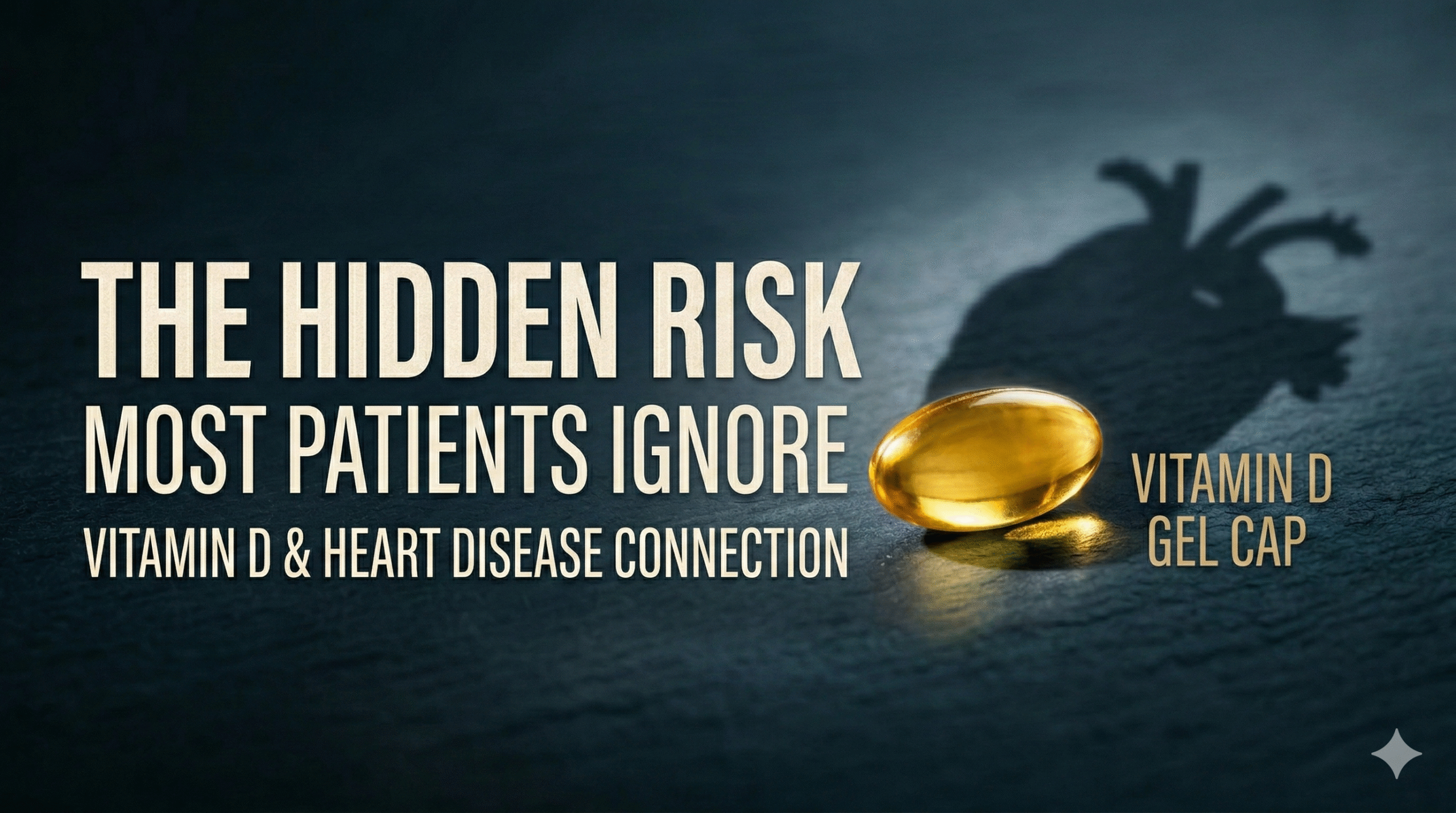
Vitamin D Deficiency and Heart Disease: The Hidden Risk Most Patients Ignore


Vitamin D Deficiency and Heart Disease: The Hidden Risk Most Patients Ignore
Vitamin D is widely known for its role in bone health — but modern research tells a more urgent story. It plays a crucial role in cardiovascular health, and in India, where deficiency is extraordinarily common, many heart patients are unknowingly making their condition worse by ignoring it. At NexIn Health, where we focus on preventive cardiology and non-surgical heart care, we frequently identify vitamin D deficiency in patients with chronic heart disease. Understanding this connection can reduce risk and support long-term heart health.
Vitamin D behaves more like a hormone than a traditional vitamin. Its influence extends across multiple systems involved in cardiovascular wellness. Vitamin D receptors are present in blood vessels, heart muscle, immune cells, and the arterial lining — which explains its wide-ranging impact on inflammation, vascular tone, immune balance, and metabolic health. All of these are key drivers of heart disease.
Key Fact: Unlike most vitamins, vitamin D is synthesized by the body from sunlight and functions more like a steroid hormone. Its receptors appear in nearly every tissue type, including the cardiovascular system.
Research shows strong associations between low vitamin D levels and coronary artery disease, hypertension, heart failure, and increased cardiovascular mortality. Low vitamin D is also linked with higher inflammatory markers, which contribute to plaque instability and arterial damage — two of the most dangerous features of advanced heart disease.
[2×Increased cardiovascular risk associated with severe vitamin D deficiency in multiple large cohort studies]
Vitamin D supports endothelial health — the inner lining of blood vessels that regulates circulation. Deficiency may contribute to endothelial dysfunction, arterial stiffness, and reduced nitric oxide production. While vitamin D alone cannot reverse blockages, maintaining optimal levels supports vascular health and may slow disease progression when combined with lifestyle changes and appropriate medical care.
Despite abundant sunlight, India has one of the highest vitamin D deficiency rates globally. Multiple compounding factors are at play:
70–90% of Indians are estimated to have suboptimal vitamin D levels, despite living in a sun-rich countryUrban indoor lifestyles, air pollution blocking UV-B rays, routine sunscreen use, darker skin pigmentation (which requires longer sun exposure to synthesize adequate vitamin D), and low dietary intake of vitamin D-rich foods all contribute to this public health challenge.
Vitamin D deficiency is often silent. When symptoms do appear, they can be easily dismissed as general tiredness or aging. In heart patients specifically, deficiency may reduce exercise tolerance and slow recovery capacity.
Chronic inflammation is a primary accelerant of heart disease progression. Vitamin D helps regulate immune responses and reduce inflammatory cytokines — the chemical messengers responsible for sustained tissue damage. This is especially relevant for patients with diabetes, obesity, and metabolic syndrome, conditions that create a pro-inflammatory environment already hostile to the heart.
Vitamin D influences the renin–angiotensin system, the hormonal pathway that regulates blood pressure. Low vitamin D levels are associated with hypertension in several population studies. Correcting deficiency may support overall blood pressure management — though it should always complement, not replace, prescribed antihypertensive treatment.
Evidence suggests supplementation is most beneficial in genuinely deficient individuals. Optimizing levels may improve endothelial function, reduce inflammation, and support recovery after cardiac events. However, indiscriminate high-dose supplementation is not recommended and can be harmful. Personalized dosing based on blood levels is essential.
Important: Never self-prescribe high-dose vitamin D. Excessive supplementation can lead to vitamin D toxicity, causing hypercalcemia (dangerously high blood calcium). Always work with your doctor to determine the right dose based on your 25(OH)D test results.
The standard blood test is serum 25-hydroxyvitamin D [25(OH)D]. Here’s how results are generally interpreted:
| 25(OH)D Level | Status | Clinical Guidance |
|---|---|---|
| < 12 ng/mL | Deficient | Immediate supplementation required |
| 12–19 ng/mL | Insufficient | Supplementation and lifestyle changes advised |
| 20–30 ng/mL | Adequate | Sufficient for general health; some cardiologists aim higher |
| 40–60 ng/mL | Optimal (cardiac) | Target range some specialists prefer for high-risk patients |
| > 100 ng/mL | Potentially toxic | Risk of hypercalcemia; avoid unsupervised high-dose supplementation |
Moderate, unprotected sun exposure (10–20 minutes on arms and face, ideally before 11 am or after 3 pm) can meaningfully raise levels. Those with darker skin may need longer exposure.
Fatty fish (salmon, mackerel, sardines), egg yolks, and fortified foods like milk, orange juice, and breakfast cereals can contribute to daily intake, though diet alone rarely corrects deficiency.
Vitamin D3 (cholecalciferol) supplements are widely available and effective when dosing is personalized. Regular testing every 3–6 months helps track progress and prevent toxicity.
Consider asking your doctor for a 25(OH)D blood test if you have any of the following:
Vitamin D deficiency is often overlooked, yet it can quietly impact inflammation, vascular health, and long-term cardiac risk. Identifying and correcting hidden factors like micronutrient deficiencies is an important part of truly preventive heart care.
At NexIn Health, we focus on a root-cause approach to cardiovascular wellness — combining advanced diagnostics, lifestyle optimization, and non-surgical heart therapies when needed.
If you are living with:
Heart disease or angina
Diabetes or hypertension
Chronic fatigue or inflammation
Family history of cardiac illness
a comprehensive preventive evaluation can help you understand your real risk and take proactive steps toward better heart health.
🌐 Website: https://www.nexinhealth.in/
📱 Phone: +91 9310145010
📧 Email: care@nexinhealth.in
Q: Can vitamin D deficiency cause heart disease?
Research shows strong associations between low vitamin D levels and coronary artery disease, hypertension, and heart failure. Low levels are also linked with higher inflammatory markers that contribute to plaque instability and arterial damage. Whether the relationship is causal or associative remains under study, but correcting deficiency is consistently considered beneficial for cardiovascular risk reduction.
Q: What are the early signs of vitamin D deficiency?
Deficiency is often silent. When symptoms appear, they include persistent fatigue, muscle weakness, bone or joint pain, frequent infections, and low mood. In heart patients, reduced exercise tolerance is a common clue. A blood test is the only definitive way to confirm deficiency.
Q: What is the ideal vitamin D level for heart patients?
Most experts consider a serum 25(OH)D level of 20–30 ng/mL adequate for general health. Some cardiologists recommend aiming for 40–60 ng/mL in high-risk cardiac patients. Testing guides appropriate targeted supplementation — there is no one-size-fits-all target.
Q: Why is vitamin D deficiency so common in India despite high sunlight?
Several factors counteract India’s abundant sunlight: urban indoor lifestyles, air pollution blocking UV-B, widespread sunscreen use, darker skin pigmentation (which requires longer exposure for synthesis), and low dietary intake of vitamin D-rich foods. Studies suggest 70–90% of Indians have suboptimal levels.
Q: Does vitamin D supplementation help heart patients?
Evidence supports supplementation specifically in deficient individuals — it may improve endothelial function, reduce inflammation, and support cardiac recovery. Indiscriminate high-dose supplementation without testing is not recommended. Always consult a doctor for personalized dosing.


Experience

Certified Therapists

Satisfied Patients
Contact us