Why Angina Pain Gets Worse in Cold Weather: #1 Survival Guide



Angina Pain Gets Worse in Cold Weather. You or someone you care about probably knows this is true if you have heart disease. That tightness in your chest that you know so well may happen more often as winter approaches or the temperature drops suddenly. It’s not just a feeling; there is a biological reason why your heart has a harder time in the cold.
This risk is even higher for people with diabetes or metabolic disorders. When it’s cold outside, your heart has to work harder, which is like a stress test. The first step to staying safe is to know why Angina Pain Gets Worse in cold Weather. This blog will talk about the science behind EECP and other modern therapies, as well as the risks and the best ways to protect yourself with both.
Before we dive deep, here are some eye-opening facts about Angina Pain Gets Worse in Weather conditions:
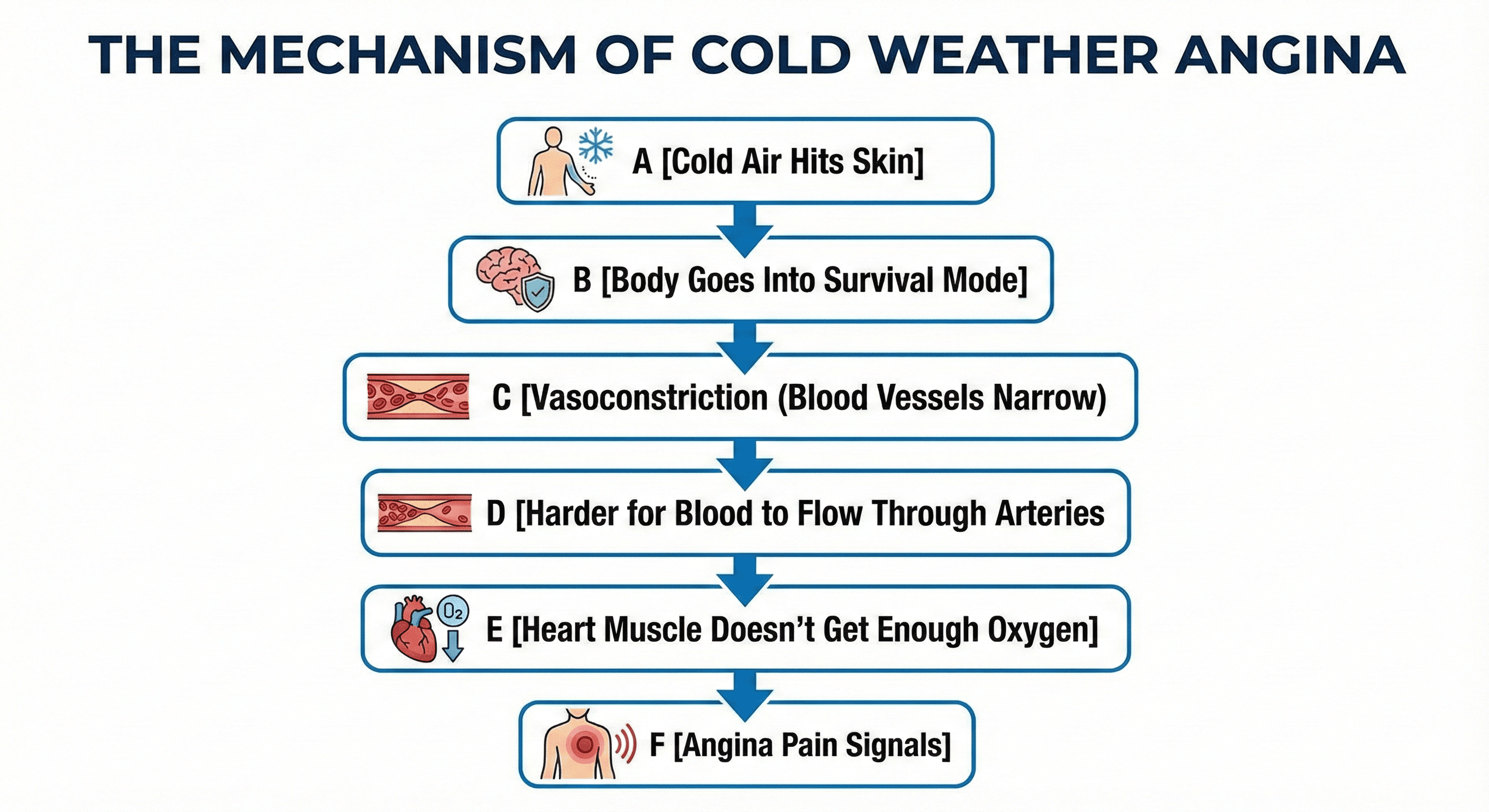
To figure out why Angina Pain Gets Worse in Cold Weather, we need to look at our blood vessels. When cold air hits your skin, your body goes into survival mode to keep the heat in. It does this by making the blood vessels smaller. This is known as “vasoconstriction.”
Blood has a harder time flowing through your arteries when they get narrower. If you already have blockages from heart disease, this narrowing makes it even harder for oxygen to get through. When the heart muscle doesn’t get enough oxygen, it sends out pain signals called angina.
Also, cold weather and heart pain are connected because your heart has to work harder and faster to keep your body warm. The extra work and the smaller arteries make the perfect storm for chest pain.
Flowchart: The Mechanism of Cold Weather Angina
The Danger of Silent Symptoms It is also important to remember that not everyone feels the classic “chest crushing” pain. In freezing temperatures, the body’s pain receptors can sometimes be dulled, or the symptoms may manifest differently, such as extreme fatigue, nausea, or dizziness. This is often called “Silent Ischemia.” It is crucial to pay attention to these subtle signs because the underlying strain on the heart is just as severe, even if the Angina Pain Gets Worse in Cold Weather without the typical warning signs
If you have diabetes and heart problems, it’s important to know why “Angina Pain Gets Worse in Cold Weather.” Diabetes can hurt the nerves that control the heart, which is called autonomic neuropathy. This means that your body might not be able to quickly adapt to changes in temperature.
High blood sugar levels can also hurt the inside of blood vessels. Adding angina flare-ups during weather changes to already damaged blood vessels raises the risk of a serious event. During the winter, people with metabolic disorders need to be extra careful to keep their chest warm and check their blood sugar levels often.
The temperature isn’t the only thing that matters. Have you ever felt pain in your joints before a storm? It also hurts your heart. There is a strong link between barometric pressure and chest pain.
The weight of the air pressing down on us is called barometric pressure. The pressure goes down when a storm or cold front is coming. This drop lets body tissues stretch a little, which could put pressure on blood vessels and nerves. A lot of patients say they have weather-related angina symptoms when the sky gets cloudy and heavy, even before the temperature drops a lot.
Breathing in cold air can hurt your lungs, which is different from heart pain. But chest pain that gets worse in the winter and is related to the heart usually feels specific.
Symptom Checklist
Pressure or Squeezing: A feeling like a heavy weight is on your chest.
Radiating Pain: Pain that moves to the jaw, neck, left arm, or back.
Shortness of Breath: Difficulty breathing even with mild walking.
Cold Sweats: Sweating even though the weather is freezing.
If you feel angina pain in very hot or very cold weather, stop what you’re doing right away, move to a warm place, and rest.
For a lot of people, certain habits and activities explain why “Angina Pain Gets Worse in Cold Weather.” You can stay away from these “winter angina triggers” if you know what they are.
| Trigger | Why It Is Dangerous |
| 1. Shovelling Snow | This is one of the most dangerous things heart patients can do. It includes lifting heavy things, holding your breath, and being in cold air. |
| 2. Walking Against the Wind | Strong, cold winds quickly take heat away from your body, which puts a lot of strain on your heart. |
| 3. Big Meals | We tend to eat more filling and rich foods in the winter. Digestion needs blood flow, which takes it away from the heart and can cause angina. |
| 4. Sudden Changes in Temperature | Your arteries can be shocked if you walk from a hot room to freezing air. |
The Impact of Winter Stress and Mood Finally, do not overlook the emotional toll of the season. Winter often brings shorter days, less sunlight, and the stress of holidays, which can lead to “Winter Blues” or Seasonal Affective Disorder (SAD). Emotional stress releases cortisol and adrenaline, hormones that raise blood pressure and heart rate. This biological stress response is a major reason why Angina Pain Gets Worse in Cold Weather, making mental peace just as important as physical warmth.
Research supports the patient’s experience. Global statistics back up the idea that Angina Pain Gets Worse in Cold Weather.
A study in the British Medical Journal found that a 1°C drop in daily temperature is linked to a 2% rise in the risk of heart attack.
From January to February, most people who go to the hospital for chest pain caused by a cold.
People with metabolic syndrome are 50% more likely to have heart problems caused by the weather.
Many people with cold-induced angina want to find natural ways to deal with it. You should never stop taking your prescribed medicine without talking to your doctor first. However, some natural and herbal remedies can help keep your heart healthy in the winter.
Remedy Chart
| Category | Remedy Name | Benefit |
| Ayurvedic Help | Arjuna Bark (Terminalia Arjuna) | This natural heart tonic helps make the heart muscles stronger and blood flow better. |
| Ayurvedic Help | Garlic | Eating raw garlic can help lower cholesterol and blood thickness, which can help with angina in cold weather. |
| Homeopathic Choices | Cactus Grandiflorus | This is a common treatment for chest pain that feels like an iron band is around the chest. |
| Homeopathic Choices | Crataegus (Hawthorn Berry) | This berry is known to help with circulation and lower heart disease symptoms in cold weather. |
Important: Always talk to your doctor before starting any herbal or homeopathic treatment.
When Lifestyle Changes Aren’t Enough While natural remedies and lifestyle adjustments are excellent for prevention, they may not be enough for patients with severe blockages or chronic heart failure. If you find that you are still experiencing shortness of breath or chest tightness despite taking these precautions, it may be time to look beyond standard medication. For those whose Angina Pain Gets Worse in Cold Weather regardless of diet and rest, modern non-invasive medical therapies can offer a new level of relief.
You might want to try Enhanced External Counterpulsation (EECP) therapy if your angina pain gets worse in cold weather even though you are taking medicine.
EECP is a non-invasive treatment that is sometimes called a “Natural Bypass.” To gently pump blood back to the heart between heartbeats, it uses inflatable cuffs on the legs. This action opens up new routes for blood to flow around blocked arteries (collaterals).
EECP can be a game-changer for people who have chest pain due to cold. It naturally increases the amount of oxygen that gets to the heart muscle, which makes chest pain less common and less severe during cold spells.
Here is a comparison to help you see how different treatments work when Angina Pain Gets Worse in Cold Weather.
| Feature | Medication | EECP Therapy | Angioplasty/Stent | Bypass Surgery | Natural/Herbal |
| Primary Goal | Control symptoms & thin blood | Increase natural blood flow & build new vessels | Open blocked artery mechanically | Reroute blood flow surgically | Support heart function holistically |
| Invasiveness | Non-Invasive | Non-Invasive | Minimally Invasive | Invasive (Major Surgery) | Non-Invasive |
| Hospital Stay | None | None (Outpatient) | 1-2 Days | 5-7 Days | None |
| Side Effects | Dizziness, Fatigue | Minimal / No Side effects | Bleeding, Re-blockage | Infection, Long recovery | Minimal (if guided) |
| Best For | Daily management | Chronic Angina, Weak Heart | Single/Double severe blocks | Multiple complex blocks | Prevention & Support |
You need to take action to avoid angina pain in extreme temperatures. Here are some important tips:
Dress in Layers: A thick coat isn’t as good at trapping heat as a few thin ones.
Cover Your Mouth: A scarf over your mouth and nose warms the air before it gets to your lungs.
Check your blood pressure. It tends to go up in the winter. Look at it every day.
Stay Hydrated: We don’t feel as thirsty in the winter, but not drinking enough water makes the blood thicker.
Taking Your Medicine: Never miss a dose, especially blood thinners and blood pressure meds.
Knowing that Angina Pain Gets Worse in Cold Weather is the most important thing you can do to stay safe this winter. You can keep your heart healthy by learning about vasoconstriction, keeping an eye on the links between barometric pressure and chest pain, and using treatments like EECP and natural remedies.
The goal is to keep the blood flowing freely, whether you use traditional medicine, manage your winter angina triggers, or use non-invasive therapies. Don’t let the weather control your health.
NexIn Health is a top-notch healthcare provider that focuses on Non-Invasive Integrated Techniques for treating the heart and spine. Our expert team has successfully consulted and treated over 30,000 patients in the last 14+ years. We work to heal the underlying causes of diabetes, heart disease, and lifestyle diseases without surgery.
| Contact Method | Details |
| Phone / WhatsApp | +91 9310145010 |
| Website | www.nexinhealth.in |
| care@nxinhealth.in |
Que: Why does angina pain get worse in the cold?
Ans: When the weather is cold, blood vessels narrow (vasoconstriction), which raises blood pressure and makes the heart work harder, which causes pain.
Que: Can breathing in cold air right away cause angina?
Ans: Yes, breathing in very cold air can make blood vessels in the lungs and heart close up, which can cause chest pain.
Que: Is it bad for people with heart problems to walk in the cold?
Ans: It’s fine to walk, but walking quickly against a cold wind can be dangerous. Walking inside or covering your nose and mouth with a scarf is better.
Que: How does the barometric pressure affect people with angina?
Ans: A drop in pressure (which happens often before storms) can make tissues swell and change blood flow, which can make some patients feel more pressure in their chest.
Que: What is the best natural way to treat angina caused by a cold?
Ans: The best thing to do is to keep the body warm. Also, herbs like Arjuna and Garlic can help blood flow, but you should always talk to a doctor first.
Que: Is EECP therapy safe for older people with angina?
Ans: Yes, EECP is a safe, non-invasive outpatient treatment that improves blood flow without the risks that come with surgery.
Que: Can being dehydrated in the winter cause heart pain?
Ans: Yes, dehydration makes the blood thicker and harder to pump, which can make angina symptoms worse.
Que: When is it most dangerous for angina to happen in the winter?
Ans: The body is colder and cortisol levels are higher in the early morning, which makes the heart rate and blood pressure go up.
Que: Does drinking alcohol help keep your heart warm in the winter?
Ans: No. Alcohol may make you feel warm, but it actually opens up blood vessels near the skin, which makes you lose body heat quickly.
Question: When should I call a doctor if my chest hurts in the winter?
Ans: If you have chest pain that lasts longer than 5–10 minutes, doesn’t go away with rest or medicine, or is accompanied by sweating and nausea, get help right away.


Experience

Certified Therapists

Satisfied Patients
Contact us