Why Cholesterol Levels Increase in Winter ? The Surprising Truth



A Complete Guide for Heart Patients:
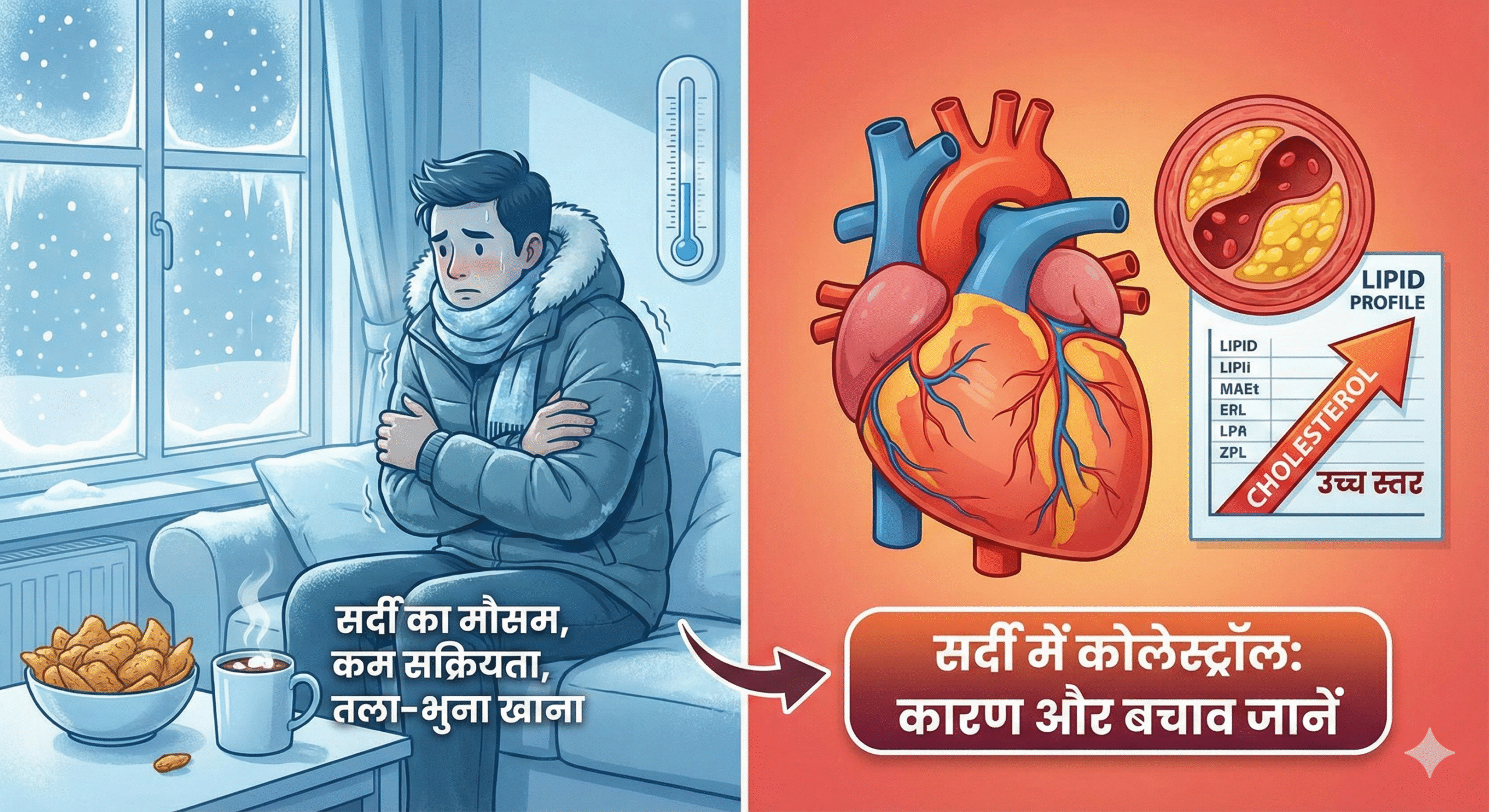
Many people with heart problems are surprised to learn that cholesterol levels go up in the winter. When the weather gets colder, your body naturally changes, which can affect your cholesterol levels. Knowing why this happens can help you keep your heart safe in the winter.
| Did you know? |
| • Your cholesterol can go up by 8 to 10 mg/dL in the winter, even if you don’t change your diet. |
| • Heart attacks go up by 30% in the winter, partly because cholesterol levels go up. |
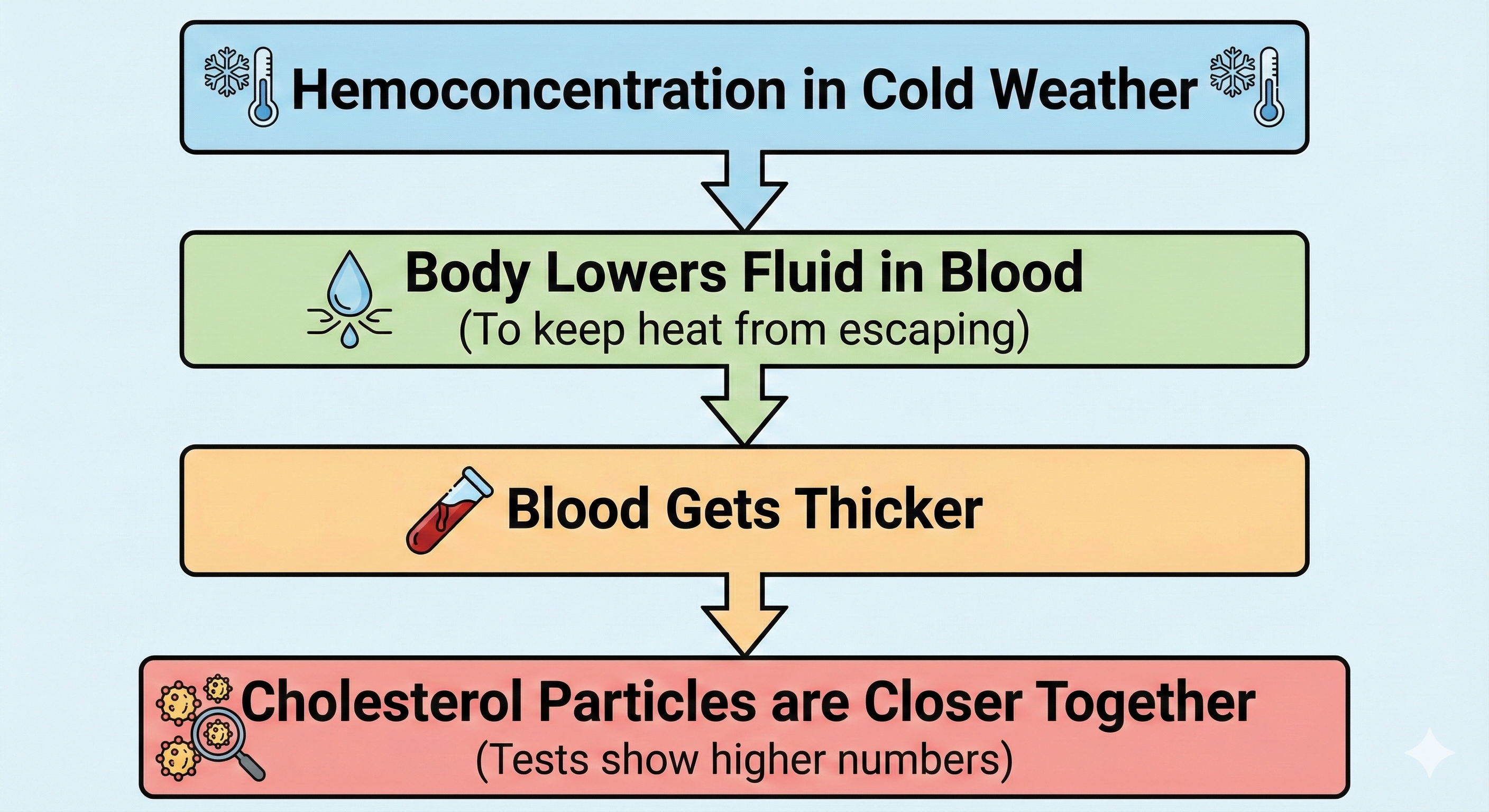
| • Cold weather makes blood thicker, which raises cholesterol levels. |
| • Vitamin D levels drop by 50%, which has a direct effect on how cholesterol is broken down. |
| • People eat 200 to 300 more calories a day in the winter, usually from fatty comfort foods. |
| • Physical activity goes down by 40%—which causes weight gain and higher LDL |
| • There are two to three times as many heart problems in the winter, especially in people who already have heart disease. |
Your body has to deal with new problems when winter comes. Cold weather makes your body react in a number of ways that can raise your cholesterol levels above normal.
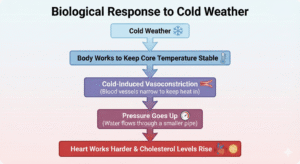
When it’s cold outside, your body works hard to keep its core temperature stable. This natural process has many effects on your heart and blood.
Biological Response Flowchart:
Additionally, regarding blood consistency:
Research indicates that cholesterol levels naturally vary with the seasons. The readings are highest in the winter and lowest in the summer. This seasonal change in lipid profile affects a lot of people, but it’s especially bad for people with heart disease.
A study from Harvard found that LDL cholesterol (bad cholesterol) goes up by 3–4% on average during the winter. This small rise can put someone who already has high cholesterol in a dangerous place.
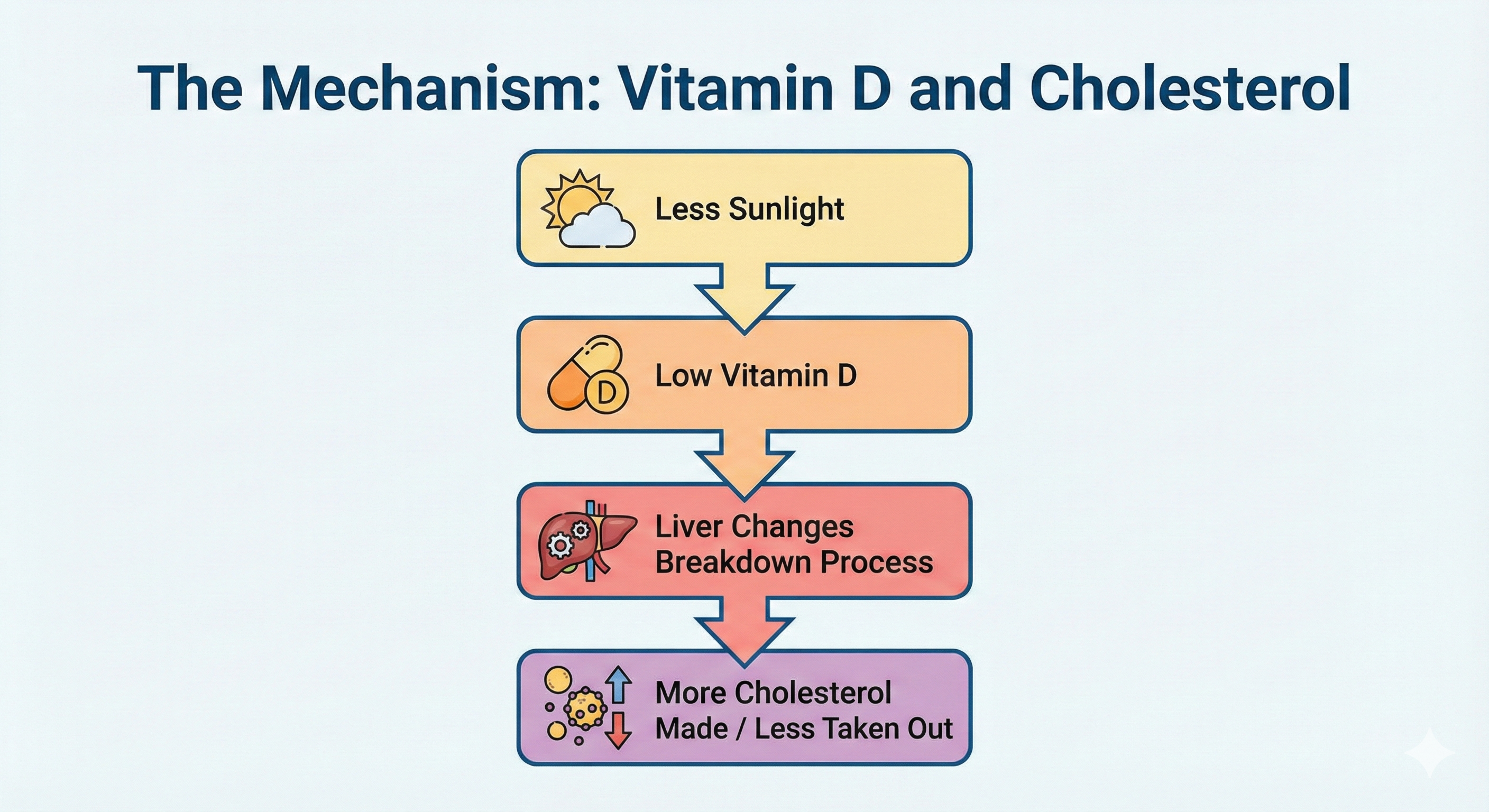
In the winter, there is a lot less sunlight. Your body makes vitamin D from sunlight, so when the sun goes down, your vitamin D levels go down too. Recent clinical trials show that there is a strong link between vitamin D deficiency and high cholesterol.
The Mechanism:
This double problem can make things worse for people who already have heart problems.
It’s true that you crave things in the winter. When it’s cold outside, people naturally want to eat warm, heavy foods. These “high-calorie winter comfort foods” often have saturated and trans fats in them that raise LDL cholesterol directly.
Common Winter Foods that Raise Cholesterol:
| Food Type | Examples |
| Rich Liquids | Creamy soups and gravies that are rich |
| Fried Foods | Pakoras and fried snacks |
| Breads | Parathas full of butter |
| Sweets | Desserts made with full-fat dairy |
| Meats | Sausages and other processed meats |
People stay inside when it’s cold. People stop going for morning walks, do less outdoor exercise, and stop doing physical activity altogether. These risks of a sedentary lifestyle in winter are a big reason why cholesterol levels go up.
Your body burns fewer calories and makes less HDL (good cholesterol) when you move less. HDL helps get rid of bad cholesterol in your arteries. Your heart is less protected when you move less.
There are a lot of holidays and festivals in the winter. Food for special occasions is often full of ghee, butter, sugar, and refined flour. This pattern of high cholesterol in the winter happens every year for many patients.
LDL rise winter is very dangerous for people who already have heart disease. Your arteries may already have plaque in them.
Impact of Higher Cholesterol in Winter:
Make plaque less stable
Increase the risk of heart attack by 20–30%
Make angina symptoms worse
Raise the chance of having a stroke
Make it more likely for blood clots to form
Cold weather cholesterol changes aren’t just numbers on a page. They mean real danger to the heart and blood vessels, especially for people with diabetes whose blood vessels are already weak.
Research from different studies shows important patterns.
| Metric | Winter Change | Reason/Notes |
| Total Cholesterol | Rises 3.9–10 mg/dL on average | General seasonal increase |
| LDL Cholesterol | Goes up by 3 to 8 mg/dL | “Bad cholesterol” spike |
| HDL Cholesterol | Goes down 1–2 mg/dL | When activity goes down |
| Triglycerides | Go up 5–15 mg/dL | Because of changes in diet |
| Heart Attack Rates | 30–35% higher | From December to February |
A European study of 30,000 patients found that people with diabetes had even bigger spikes in cholesterol in the winter, with LDL levels rising by up to 15 mg/dL.
Choosing healthy foods is the first step to keeping your heart healthy. A healthy winter diet for your heart can help lower cholesterol levels that go up in the winter.
| Add These to Your Daily Routine | Recipes for a Healthy Winter |
|
• Oats and barley (beta-glucan fiber)
• Almonds and walnuts (omega-3 fatty acids)
• Chia seeds and flaxseeds
• Beans like rajma and chana
• Vegetables with green leaves
• Turmeric and garlic
• Apples and other citrus fruits |
• Soup with vegetables and whole grains
• Fish grilled with vegetables that have been steamed
• Dal with very little oil
• Roasted chickpeas to snack on
• Herbal teas instead of sugary drinks |
To manage your cholesterol naturally in the winter, you need to make changes to your lifestyle that protect your heart and work with your body’s needs.
| Time of Day | Routine Activities |
| Routine in the Morning |
• Get up at the same time every day
• Drink lemon water that is warm
• Do yoga or other indoor exercises.
• Have a breakfast high in fiber |
| All Day |
• If the weather is bad, walk inside.
• Use stairs instead of elevators
• Get up and move every hour
• Drink warm fluids to stay hydrated. |
| Evening Activities |
• Dinner should be light before 8 PM
• Don’t eat snacks late at night
• Do some deep breathing
• Sleep for seven to eight hours |
| Remedy | Description & Dosage |
| Arjuna Bark | People have been using this bark extract in Ayurveda for hundreds of years. Studies show that it may lower LDL cholesterol and help keep heart muscle strong. Take 500mg twice a day with warm water. |
| Guggul (Commiphora mukul) | This resin is used in traditional medicine to control lipid levels. It might help raise HDL and lower LDL. Most people take 25mg of the extract three times a day. |
| Triphala | This mix of three fruits helps with digestion and metabolism. Better digestion means that cholesterol can be processed better. Before bed, take one teaspoon with warm water. |
| Remedy | Description |
| Crataegus | People often suggest it for helping the heart and keeping cholesterol levels in check. Works best when you make changes to your lifestyle. |
| Cholesterinum | A homeopathic remedy for high cholesterol. Talk to a qualified homeopath about the right dose. |
Important: Always tell your cardiologist before you start any alternative treatment. These are not replacements for regular medicine; they work best as supplements.
If your cholesterol levels go up a lot in the winter, your doctor may change your medications. This is normal and necessary for heart patients.
Some common medicines are:
Statins (the most common type)
Ezetimibe (lessens absorption)
PCSK9 inhibitors (for people who are at high risk)
Fibrates (for triglycerides mostly)
Talk to your cardiologist before stopping or changing any medications. Cholesterol levels rise in the winter, so it’s even more important to stick to your treatment.
Enhanced External Counterpulsation (EECP) Therapy gives heart patients who have angina and poor circulation hope. This treatment doesn’t hurt and can help with managing cholesterol.
EECP uses inflatable cuffs on your legs that squeeze in time with your heartbeat. This makes more blood flow to your heart, which helps:
Make new blood vessels (natural bypasses)
Ease the pain of angina
Improve exercise capacity
Improve the function of the heart as a whole
EECP helps people with heart problems that happen in the winter without surgery. There are 35 one-hour sessions of treatment over the course of 7 weeks.
People with diabetes often have damage to many of their blood vessels. EECP is helpful because it:
Making blood flow better throughout the body
Making the heart work less
Helping to better control blood sugar
Lessening the number of times chest pain happens
| Type of Treatment | How Well It Works | How Long It Takes to Work | Side Effects | Cost | Best For |
| Statin Drugs | High (30–50% LDL reduction) | 4–6 weeks | Muscle pain, liver effects | Moderate | Most patients with high LDL |
| Changes in Lifestyle | Moderate (10–15% reduction) | 8–12 weeks | None | Low | Early-stage cholesterol problems |
| EECP Therapy | Moderate (improves circulation) | 7–12 weeks | Minimal | Moderate-High | Angina + high cholesterol |
| Ayurvedic Herbs | Mild to Moderate (5–10% reduction) | 12–16 weeks | Rare, mild | Low to Moderate | Used with main treatment |
| Diet Change | Moderate (10-20% reduction) | 6-8 weeks | None | Low | All patients |
| Exercise Program | Moderate (8–15% improvement) | 4–8 weeks | None (if done safely) | Low | Stable heart patients |
| Combination Therapy | Very High (40–60% reduction) | 6–12 weeks | Varies | Moderate–High | High-risk patients |
The most dangerous time for heart problems is in the winter. Knowing this helps you take steps to avoid problems.
| Don’t Ignore These | Risks That Are Only Present in Winter |
|
• Pressure or pain in the chest
• Tiredness that is out of the ordinary
• Trouble breathing
• Pain in the neck, arms, or jaw
• Heartbeat that isn’t regular
• Too much sweating |
• Shoveling snow (sudden physical activity)
• Being exposed to very cold weather
• Cold walks after big meals
• Didn’t take medications because of the holidays |
| Age Group | Impact and Advice |
| People in Their 20s and 30s | Cholesterol levels go up in the winter, even in healthy young people. For people whose family has a history of heart disease, keeping an eye on things in the winter is very important. |
| Middle Age (40 to 60 years) | This age group is the most at risk. In the winter, cholesterol levels go up, which, along with other risk factors like diabetes and high blood pressure, makes things very dangerous. |
| Older Adults (60 and Up) | Older people need to be extra careful. Their blood vessels are less flexible, which makes cholesterol spikes in the winter more dangerous. It is best to see your doctor every four to six weeks. |
Keeping active in the winter is good for your heart and helps control cholesterol. But people with heart problems need to work out safely.
| Suggested Things to Do | What to Stay Away From |
|
• Walking in malls or inside for 30 minutes every day
• Gentle yoga and stretching
• Riding a bike in place
• Training with light weights
• Breathing exercises (pranayama) |
• Sudden, intense exercise
• Running outside in very cold weather
• Lifting heavy things without warming up
• Working out right after meals |
Always warm up for 5 to 10 minutes.
Put on layers that you can take off.
Drink water even if you don’t feel thirsty.
If your chest hurts, stop.
Work out at the same time every day
Never work out when it’s really cold outside.
Regular testing helps find problems early. During the winter months, heart patients should keep a closer eye on their health.
When to Get Tested:
If taking stable medication: Every three months
If you were just diagnosed, every 4 to 6 weeks
If you change your medications, wait six weeks after the change.
If you have symptoms: Right away
| Metric | Range | Status |
| Cholesterol Level | Less than 200 mg/dL | Good |
| 200–239 mg/dL | Getting close to high | |
| 240 mg/dL or more | High | |
| LDL (Bad Cholesterol) | Less than 100 mg/dL | Best for people with heart problems |
| 100–129 mg/dL | Almost perfect | |
| 130 mg/dL or higher | Too high for people with heart problems | |
| HDL (Good Cholesterol) | More than 60 mg/dL | Safe |
| 40 to 60 mg/dL | okay | |
| Less than 40 mg/dL | Risk factor |
Winter brings its own stressors, like less sunlight, holiday stress, and feeling alone. Stress hormones have a direct effect on how much cholesterol your body makes.
Ways to Relax:
Deep breathing for 10 minutes twice a day
Prayer or meditation
Listening to music that is calm
Being with people you care about
Doing hobbies inside
Improving Sleep:
Don’t let your bedroom get too hot, but keep it warm.
Keep a regular sleep schedule
Don’t look at screens for an hour before bed
Keep a gratitude journal
You need expert help to control your cholesterol, especially in the winter. Professional care makes sure you get treatment that is tailored to your specific health needs.
Using more than one treatment method together gives the best results:
Regular management of medications
Programs for changing your lifestyle
Therapies that don’t hurt, like EECP
Counseling about nutrition
Exercise plans that are right for your level of fitness
Regular checks and changes
NexIn Health is an expert in treating the heart and spine in a complete way using non-invasive, integrated methods. We know what heart patients go through in the winter because we’ve seen more than 30,000 patients and have been in the business for more than 14 years.
We use a mix of:
More advanced tests for diagnosis
EECP therapy to help with angina
Plans for diet and exercise that are made just for you
Regular check-ups and adjusting medications
Expert help with changes in the seasons
Get in touch with NexIn Health right away:
Phone/WhatsApp: +91 9310145010
Website: www.nexinhealth.in
Email: care@nexinhealth.in
Don’t let the rise in cholesterol levels in the winter put your heart health at risk. Our team of experts is here to help you stay safe and healthy all year long.
Que: Why does my cholesterol go up in the winter even though I eat the same foods?Ans: Your body naturally makes changes when the weather gets cold. Vitamin D levels drop, blood gets thicker, and metabolism slows down. Even if you eat the same foods every day, these changes still happen. Also, less sunlight changes how your liver breaks down cholesterol. Heart patients often see their blood sugar levels go up by 5 to 10 mg/dL just because of the time of year.
Que: Should I take more cholesterol medicine in the winter?Ans: Don’t ever change your medications on your own. But a lot of cardiologists do change the doses for winter if cholesterol levels go up a lot. In early winter, make an appointment for a checkup so your doctor can keep an eye on your levels and change your treatment if necessary. This proactive approach stops dangerous spikes from happening.
Que: Can taking vitamin D supplements help keep cholesterol levels down in the winter?Ans: Yes, studies show that taking vitamin D can help. During the winter months, most people with heart problems should get 1000 to 2000 IU of vitamin D every day. Vitamin D makes it easier for your liver to break down cholesterol. Always check your vitamin D levels first, and only take supplements with your doctor’s permission.
Que: Is it safe for people with heart problems to work out outside in the winter?Ans: Working out outside in very cold weather can put a lot of stress on your heart. If the temperature drops below 0°C or the wind chill is very strong, work out inside instead. When it’s cold outside, blood vessels get smaller, which raises blood pressure and the amount of work the heart has to do. If you do go outside, make sure to cover your face and warm up first.
Que: How quickly can I lower my cholesterol if it goes up in the winter?Ans: You can see changes in 4 to 6 weeks if you change your medications and your way of life. But it takes 2 to 3 months for big changes to happen. Put your safety first: don’t eat heavy meals, stay active indoors, and take your medications on time. There are no quick fixes, but steady work does.
Que: Can my cholesterol levels go up in the winter and still be normal in the summer?Ans: Yes, this is a real worry. Even short-term rises in cholesterol can make plaque in arteries less stable. If someone already has heart disease, a 10 mg/dL rise in LDL during the winter could cause a heart attack. This is why it’s so important to keep an eye on things and stop them from happening in the winter.
Que: What foods should people with heart problems not eat at all in the winter?Ans: Stay away from fried foods, full-fat dairy, processed meats, baked goods with trans fats, and foods that are high in saturated fat. Samosas, pakoras, butter chicken, and rich desserts that people love in the winter all raise LDL cholesterol. Instead, eat heart-healthy foods like baked snacks, lean proteins, and desserts made with fruit.
Que: Does EECP therapy help keep cholesterol levels in check?Ans: EECP mostly helps blood flow and lowers angina, but it also helps with cholesterol management in an indirect way. Better circulation means that nutrients get to where they need to go and waste gets out of the body. Some research indicates that EECP may enhance lipid profiles by improving endothelial function. It works best when used with diet, exercise, and drugs.
Que: How does having diabetes make cholesterol problems worse in the winter?Ans: Diabetes makes cholesterol problems worse in the winter. High blood sugar weakens the walls of blood vessels, which makes them more likely to collect cholesterol. In the winter, people with diabetes often see their cholesterol levels rise by 15 to 20 mg/dL. To keep cholesterol in check, it’s important to keep blood sugar levels stable during the winter.
Que: Is it safe to take herbal medicines with my cholesterol medications?Ans: Some herbs can change how medications work. For instance, if you take blood thinners, Guggul could make you more likely to bleed. Always tell your heart doctor about any herbs you take. In general, herbs work best when they are used in addition to other treatments, not instead of them. Your doctor can tell you what combinations are safe for you.
It’s normal for cholesterol levels to go up in the winter, but it’s something you can deal with. Knowing why it happens gives you the power to protect yourself. During the winter, people with heart problems need to pay extra attention to their diet, exercise, medications, and regular checkups.
It doesn’t have to be dangerous for your heart in the cold months. You can keep your heart healthy all year long if you take care of it, make changes to your lifestyle, and get advice from experts. Keep in mind that small things you do every day can add up to big protection.
Stay warm, stay busy, and stay in touch with your healthcare team. Your heart needs the best care, especially during the tough winter months.
Do Something Today: Make an appointment for your winter cholesterol check and talk to heart specialists who know about the risks of heart disease in the winter. Call NexIn Health for complete, non-invasive heart care that keeps you safe all year long.


Experience

Certified Therapists

Satisfied Patients
Contact us