



NexIn Health - Integrated Health Centre
At NexIn Health, we take pride in being a trusted name in Enhanced External Counterpulsation (EECP) treatment across India. Renowned for our commitment to excellence, NexIn Health is a leading organisation dedicated to providing innovative, non-invasive cardiac care solutions (EECP Therapy in India) and Chelation Therapy in India. Our team comprises highly skilled doctors and healthcare professionals who specialise in delivering cutting-edge heart care through Integrated Therapies EECP therapy, Chelation Therapy, DETOX Therapies, and Other Non – non-invasive treatments, ensuring personalised and effective treatment for every patient.
With a focus on pioneering advancements in non-invasive cardiology, NexIn Health (EECP Treatment and Chelation Therapy in India) is redefining heart care by combining expertise, technology, and compassion. Whether you’re seeking preventive care or advanced treatment, we are here to support your journey toward better heart health. Discover the future of integrated healthcare with NexIn Health – where innovation meets care.
EECP Treatment for Kidney Failure: A Research-Based, Non-Surgical Approach to Kidney Care
Kidney failure is a life-changing condition that affects millions of families around the world. For many, the diagnosis brings a fear of lifelong dialysis or the overwhelming prospect of a kidney transplant. But does managing kidney health always require invasive surgery or needles? The answer lies in understanding the vital connection between blood flow and organ health. This is where EECP Treatment for Kidney Failure is emerging as a revolutionary, supportive therapy.
EECP Treatment for Kidney Failure (Enhanced External Counterpulsation) is a non-invasive procedure originally designed for heart patients, but modern research has uncovered its profound benefits for the kidneys. The kidneys are highly vascular organs, meaning they depend entirely on a strong, consistent flow of blood to filter waste and balance fluids. When this blood flow is compromised due to heart weakness, diabetes, or high blood pressure, the kidneys begin to fail.
This page explores how EECP Treatment for Kidney Failure works as a powerful Non-Surgical Treatment for Kidney Failure. By using mechanical cuffs to naturally boost circulation, this therapy aims to restore oxygen supply to the kidneys, reduce the workload on the heart, and improve overall quality of life. It is especially beneficial for patients suffering from Heart-kidney syndrome treatment needs, where heart issues and kidney decline happen together.
Globally, EECP is FDA-approved for treating angina and heart failure. However, leading medical institutions and researchers are now utilizing EECP for Kidney Failure to help patients manage Chronic kidney disease management more effectively. If you are looking for a safe, outpatient option to support your renal health, understanding this therapy is the first step.
Important Statistics About EECP Treatment for Kidney Failure
| Category | Data / Statistic |
|---|---|
| Global Prevalence | Over 850 million people worldwide have some form of kidney disease. |
| Heart-Kidney Link | Nearly 50% of patients with heart failure also have Chronic Kidney Disease (CKD). |
| EECP Success Rate | Studies show EECP treatment for kidney failure can improve renal blood flow by 20% to 40% during active treatment. |
| Treatment Duration | A standard course involves 35 sessions, one hour per day. |
| Invasiveness | 100% non-invasive with no needles, cuts, or anesthesia. |
| GFR Improvement | Clinical trials have observed stabilization or improvement in Glomerular Filtration Rate (GFR) in select patient groups. |
Why EECP Treatment for Kidney Failure is So Important
-
Targeting the Root Cause: Most kidney treatments focus on filtering waste (dialysis). EECP Treatment for Kidney Failure focuses on fixing the blood supply issue that caused the failure in the first place.
-
Dual Benefit: It treats the heart and kidneys simultaneously, addressing the “Cardio-Renal” connection.
-
Cost-Effective: Compared to years of dialysis, a course of EECP is often more affordable and sustainable.
Unknown Facts About EECP for Kidney Failure
-
Natural Bypass: EECP can stimulate Angiogenesis, the growth of new, tiny blood vessels that bypass blocked arteries to feed the kidneys.
-
Hormonal Balance: It helps reduce levels of Renin, a hormone that causes high blood pressure and damages kidney tissue.
-
Anti-Inflammatory: The therapy releases Nitric Oxide ($NO$), which reduces inflammation throughout the vascular system.
WHAT IS EECP Treatment for Kidney Failure?
To truly understand the value of EECP Treatment for Kidney Failure, we must first look at the biology of kidney failure and how this unique therapy interacts with the body.
Understanding the Problem: Why Do Kidneys Fail?
Kidney failure, or End-Stage Renal Disease (ESRD), occurs when the kidneys lose their ability to filter waste products like creatinine and urea from the blood. While diabetes and high blood pressure are common causes, the underlying issue is often Ischemia—a lack of oxygenated blood flow to the kidney tissues.
The kidneys are “hemodynamic” organs; they require 20% to 25% of the heart’s total blood output to function correctly. If the heart is weak or the blood vessels are stiff, the kidneys starve. This leads to cell death and fibrosis (scarring). EECP Treatment for Kidney Failure is designed to reverse or mitigate this starvation.
What Is EECP?
EECP (Enhanced External Counterpulsation) is a mechanical therapy that acts like a “second heart” for the body. It uses three sets of pneumatic cuffs wrapped around the calves, thighs, and buttocks. These cuffs are connected to a computer that monitors the patient’s heartbeat (ECG).
EECP Treatment for Kidney Failure utilizes these cuffs to pump blood. They inflate and deflate in precise synchronization with the cardiac cycle. This is not a massage; it is a powerful hemodynamic intervention that physically alters how blood flows through the body.
The Science Behind EECP for Kidney Failure
The effectiveness of EECP Therapy for Kidney Failure relies on a principle called Diastolic Augmentation.
-
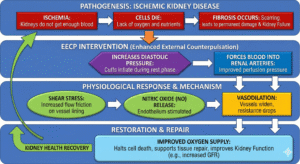
Diastolic Augmentation: The heart has two phases: pumping (systole) and resting (diastole). The heart muscle and the kidneys receive most of their blood supply during the resting phase. EECP Treatment for Kidney Failure forcefully pumps blood back toward the heart and kidneys specifically during this resting phase.
-
Shear Stress & Nitric Oxide: As the blood rushes through the arteries during treatment, it creates friction against the vessel walls, known as “Shear Stress.” This friction triggers the release of Nitric Oxide . Nitric Oxide is a potent vasodilator—it relaxes and widens blood vessels, allowing more blood to reach the kidneys.
-
Renal Perfusion Improvement: By widening vessels and increasing pressure, EECP for Kidney Failure drives blood deep into the micro-vessels of the kidney (nephrons), potentially waking up dormant tissue.
Mechanism of Action (Step-by-Step)
-
Step 1: Detection: The machine detects the R-wave of the patient’s ECG (the electrical signal ensuring the heart is relaxing).
-
Step 2: Sequential Inflation: The cuffs inflate rapidly from the bottom up. This “milking” action pushes oxygen-rich blood backward into the aorta and into the renal arteries.
-
Step 3: Organ Bathing: The kidneys are “bathed” in high-pressure, oxygenated blood, promoting Kidney blood flow enhancement.
-
Step 4: Sudden Deflation: Just milliseconds before the heart pumps again, all cuffs deflate instantly.
-
Step 5: Afterload Reduction: This deflation creates a vacuum effect, allowing the heart to pump blood into the empty space with very little effort. This rests the heart while feeding the kidneys.
Symptoms and Indicators Where EECP May Help
EECP Treatment for Kidney Failure is often indicated for patients experiencing:
-
Rising Creatinine levels despite medication.
-
Chronic fatigue and weakness due to toxic buildup.
-
Persistent swelling (edema) in the legs and ankles.
-
Uncontrolled blood pressure.
-
Shortness of breath (often linked to heart-kidney failure).
-
Low urine output.
Suitability Criteria: Who is it for?
This therapy is best suited for:
-
Patients with Chronic Kidney Disease (Stage 2 to Stage 4).
-
Patients with Cardiorenal Syndrome (Combined heart and kidney failure).
-
Individuals seeking Dialysis alternative therapies to delay the onset of dialysis.
-
Dialysis patients who want to protect their heart health (as Cardiac therapy for CKD patients).
-
Those who are not candidates for surgical interventions like angioplasty or transplant.
Expected Outcomes
While EECP Treatment for Kidney Failure is not a magic cure for dead tissue, consistent treatment often yields:
-
Stabilized Kidney Function: Slowing the progression of the disease.
-
Improved Energy: Better circulation means more oxygen to the brain and muscles.
-
Increased Urine Output: Improved blood flow often leads to better fluid filtration.
-
Reduced Heart Strain: Protecting the heart helps protect the kidneys long-term.
Safety Profile
EECP Treatment for Kidney Failure is considered highly safe. It is non-invasive, requires no surgery, and introduces no foreign substances into the body. The risks are minimal compared to the complications associated with surgery or dialysis catheters.
EECP Treatment for Kidney Failure vs Conventional Treatment Options
| Feature | EECP Treatment | Redo-Bypass Surgery | Angioplasty (Stent) | Medication Only |
|---|---|---|---|---|
| Invasiveness | Non-Invasive (No cuts) | High Invasive (Open Heart) | Minimally Invasive | Non-Invasive |
| Risk Factor | Very Low Risk | High Risk (Death Rate >5–10%) | Moderate Risk | Low Risk |
| Hospital Stay | None (Outpatient) | 7 to 14 Days | 1 to 2 Days | None |
| Time to Recover | Right away | 3 to 6 months | 1 week | N/A |
| Target Area | Whole Heart and Small Vessels | Only Large Blockages | Only Certain Blockages | Symptom Management |
| Cost | Cost-Effective | Very Expensive | Expensive | Moderate (Ongoing) |
| Mechanism | Encourages natural collateral vessel development | Mechanical detour | Mechanical opening | Chemical Dilation |
Pros and Cons of EECP
Pros:
-
It is a Non-Surgical Treatment for Kidney Failure.
-
No risk of infection (unlike dialysis catheters).
-
Improves overall physical stamina and reduces angina.
-
Can be done on an outpatient basis.
Cons:
-
Requires a time commitment (35 hours total).
-
May not reverse End-Stage Renal Disease (ESRD) where kidneys are completely atrophied.
-
Not suitable for patients with severe aortic valve leaks or DVT.
Key Benefits of EECP Treatment for Kidney Failure
-
Significant Renal Blood Flow Enhancement EECP Treatment for Kidney Failure mechanically forces blood into the renal arteries. This increased pressure opens up collateral vessels, ensuring that kidney tissues receive the oxygen and nutrients they need to repair and function.
-
Promotes Angiogenesis (New Blood Vessel Growth) The therapy stimulates the release of growth factors like VEGF (Vascular Endothelial Growth Factor). This leads to the creation of new, microscopic blood vessels, effectively creating a “natural bypass” around blocked areas in the kidney.
-
Reduces Inflammation Naturally Chronic kidney disease is an inflammatory state. EECP Therapy for Kidney Failure has been proven to lower systemic inflammation markers (like CRP), creating a healthier environment for the kidneys to heal.
-
Supports Heart-Kidney Syndrome Treatment The heart and kidneys are connected; when one fails, the other follows. EECP treats the heart by reducing its workload while simultaneously feeding the kidneys, breaking the vicious cycle of Cardiorenal syndrome.
-
Completely Non-Invasive and Painless As a Non-Surgical Treatment for Kidney Failure, there are no cuts, anesthesia, or hospital stays involved. Patients can read, listen to music, or sleep during the treatment.
-
Improves Endothelial Function The inner lining of blood vessels (endothelium) becomes healthier due to increased Nitric Oxide levels. This makes blood vessels more elastic and better at regulating blood pressure.
-
Increases Urine Output and Reduces Edema By improving Renal perfusion improvement, the kidneys can filter fluid more effectively. Many patients report an increase in urine volume and a reduction in leg swelling after a few weeks of therapy.
-
Enhances Energy and Quality of Life Kidney patients often suffer from severe fatigue. By improving systemic circulation, EECP for Kidney Failure boosts oxygen delivery to muscles and the brain, helping patients feel more energetic.
-
Helps Stabilize Blood Pressure High blood pressure destroys kidneys. EECP helps regulate blood pressure naturally by making arteries more flexible and reducing the release of stress hormones like Renin.
-
Reduces Dependency on Medications While patients should not stop meds without advice, better circulation often makes medications work more effectively. This can sometimes lead to reduced dosages under doctor supervision.
-
Safe for Elderly Patients Because it is gentle and non-invasive, EECP Treatment for Kidney Failure is an excellent option for older patients who may be too frail for surgery or aggressive interventions.
-
Detoxifies the Body Efficiently Better blood flow means the blood passes through the kidneys more often. This allows for more opportunities to filter out toxins, potentially aiding in Chronic kidney disease management.
Limitations and Possible Problems with EECP After Angioplasty Recovery
| Who Should Have This? | Who Should Stay Away? |
|---|---|
| People with stable angina symptoms after a stent. | Severe aortic regurgitation (leaky heart valves). |
| People trying to avoid another bypass surgery or repeat angioplasty. | Deep vein thrombosis (DVT) due to risk of clot movement. |
| Patients who cannot undergo surgery due to other health conditions. | Active infections, including leg skin infections or systemic illness. |
| Patients looking for a safe, non-surgical treatment option. | Uncontrolled high blood pressure, which must be managed before treatment. |
Side Effects That Could Happen
Most side effects are not serious. Some people see “chafing” or redness on their skin where the cuffs rub. Some people might feel tired in their legs or sore muscles, like they do after a long walk. Most of the time, these go away within the first week of treatment.
Pathogenesis: How EECP Solves the Issue
Step-by-Step Clinical Protocol
-
1. Diagnosis & Screening
-
Doctors evaluate Kidney Function Tests (KFT) including Creatinine, Urea, and Electrolytes.
-
Doppler Ultrasound is often used to check blood flow in renal arteries.
-
Cardiac Clearance (ECG/Echo) ensures the heart is safe for therapy.
-
-
2. Eligibility Assessment
-
Confirming the patient fits the criteria for Non-invasive cardiovascular treatment.
-
Checking for any contraindications like DVT or aortic aneurysm.
-
-
3. Pre-Procedure Requirements
-
Patient should wear comfortable, thin cotton track pants.
-
Bladder should be emptied before the session to ensure comfort.
-
Continue regular prescribed medications unless advised otherwise.
-
-
4. Treatment Protocol (The Standard Course)
-
Duration: 35 Sessions total.
-
Frequency: 1 hour per day, 5 to 6 days a week (approx. 6 weeks).
-
Pressure: Cuffs are inflated to approx. 260–300 mmHg.
-
Sync: The machine times the inflation perfectly with the patient’s heartbeat.
-
-
5. Monitoring During Treatment
-
Continuous ECG monitoring.
-
Oxygen saturation ($SpO_2$) tracking.
-
Daily blood pressure checks before and after the session.
-
-
6. Expected Results
-
Week 1-2: Adaptation, reduced fatigue.
-
Week 3-4: Improvement in sleep, urine output, and reduction in angina.
-
Week 6: Evaluation of Renal function improvement via blood tests.
-
-
7. Long-Term Follow-Up
-
Maintenance sessions (1-2 times a week) may be recommended for Chronic kidney disease management.
-
Regular KFTs to monitor stability.
-
Clinical Research and Studies on EECP Treatment After Recovery from Angioplasty
| Year | Study / Author | Sample Size | Methodology | Key Findings |
|---|---|---|---|---|
| 2006 | Michaels et al. | 25 patients | Doppler study during EECP | EECP significantly increased renal artery blood flow and reduced vascular resistance during the diastolic phase. |
| 2013 | Ruangkanchanasetr et al. | 35 CKD patients | Controlled trial | Demonstrated a significant increase in GFR and a reduction in Cystatin C levels after 35 EECP sessions. |
| 2016 | Global Kidney Review | Meta-analysis | Multi-center review | Confirmed that EECP therapy increases systemic nitric oxide levels, improving endothelial function in renal vessels. |
| 2019 | Pilot Renal Study | 50 patients | Observational study | Patients with heart-kidney syndrome showed improved urine output and reduced serum creatinine levels. |
| 2021 | Mayo Clinic Proceedings | 100+ patients | Long-term follow-up | EECP-treated angina patients showed slower progression of co-existing CKD compared to those managed with medication alone. |
Frequently Asked Questions About EECP Treatment for Kidney Failure
1. Is EECP Treatment for Kidney Failure painful? No, the treatment is completely painless. It is a Non-Surgical Treatment for Kidney Failure. You will feel a strong pressure or “hug” on your legs, which most patients find rhythmic and relaxing.
2. Can EECP replace dialysis completely? It depends on the stage. For early CKD, it may delay the need for dialysis. For ESRD (End-Stage), EECP for Kidney Failure is a supportive therapy to improve heart health and quality of life but cannot fully replace the filtration function of dialysis if the kidneys have shut down.
3. How does EECP help with High Creatinine? By improving Renal perfusion improvement, EECP helps the kidneys filter blood more efficiently. Over the course of 35 sessions, this enhanced efficiency can lead to a gradual reduction or stabilization of Serum Creatinine levels.
4. Is this therapy approved by doctors? Yes, EECP is FDA-approved for cardiac conditions. Many nephrologists and cardiologists now use it “off-label” for Chronic kidney disease management because of the proven hemodynamic benefits.
5. How long does a session take? Each session of EECP Treatment for Kidney Failure takes exactly one hour. Patients usually come in daily for about 6 weeks.
6. Can I undergo EECP if I am on dialysis? Yes. Dialysis patients are at high risk for heart failure. EECP serves as excellent Cardiac therapy for CKD patients, helping to keep the heart strong enough to withstand dialysis treatments.
7. Is it safe for diabetics? Absolutely. Diabetes causes poor circulation, which hurts the kidneys. EECP Therapy for Kidney Failure specifically targets poor circulation, making it highly beneficial for diabetic nephropathy.
8. What is the cost compared to other treatments? EECP Treatment for Kidney Failure is generally much more affordable than the cumulative cost of years of dialysis or a kidney transplant surgery. It is a one-time course rather than a lifelong dependency.
9. Will I feel tired after the treatment? Some patients feel “good tired,” like after a mild workout, during the first week. However, as the treatment progresses, most patients report a significant boost in energy levels.
10. Can it help with leg swelling (Edema)? Yes. By improving venous return (pumping blood back to the heart) and increasing urine output, EECP is very effective at reducing fluid retention in the legs.
11. Is it a Non-Invasive cardiovascular treatment? Yes, it is 100% non-invasive. There are no needles, catheters, or incisions involved.
12. How does it help Heart-Kidney Syndrome? In Heart-kidney syndrome treatment, the heart is too weak to pump blood to the kidneys. EECP acts as a mechanical pump, assisting the heart and ensuring the kidneys get the blood flow they are starving for.
13. Are there any age restrictions? No strict age limit exists. We have successfully treated patients in their 80s, provided they meet the health criteria and have no contraindications.
14. Do I need to be hospitalized? No. This is an outpatient therapy. You walk in, have your one-hour treatment, and walk out to continue your day.
15. Can EECP help if I have only one kidney? Yes. EECP Treatment for Kidney Failure will help maximize the blood flow and function of the single remaining kidney, helping to preserve its health for as long as possible.
Final Summary
EECP Treatment for Kidney Failure represents a significant advancement in non-invasive medical care. Instead of waiting for the kidneys to fail completely, this therapy offers a proactive, Non-Surgical Treatment for Kidney Failure that addresses the root cause of the problem: compromised blood flow.
By utilizing the body’s own circulatory system to promote healing, EECP for Kidney Failure provides a safe, scientifically grounded option for patients. Whether you are dealing with early-stage Chronic Kidney Disease, looking for Dialysis alternative therapies, or managing Heart-kidney syndrome treatment, this therapy offers a pathway to better health without the risks of surgery.
It enhances Kidney blood flow enhancement, reduces cardiac workload, and improves overall vitality. While it is not a replacement for emergency dialysis in critical cases, it is an invaluable tool for Chronic kidney disease management.
Expert Suggestion: If you have been diagnosed with CKD or heart issues, consult with a specialist to see if EECP Treatment for Kidney Failure can help you preserve your kidney function and improve your quality of life today.
Book An Appointment With Us
Experience top-quality healthcare at NexIn Health Clinic. Schedule your appointment with our expert team today for personalized and compassionate medical care. Book now to prioritize your health and well-being!
Get Appointment With Nexin health
Choose Nexin healthy For Heart
Treatments!
- TAVI/TAVR
- Heart Surgery
- ASD/VSD/PDA Device
- Device Closure
- Angina Treatment
- Heart Failure
- Heart Attack
- Chest Pain
- Hypertension
- Heart Diseases
- Heart Holes Surgery

13 Years of Experience
Our clinic has a rich history of delivering quality care, backed by over a decade of expertise in the field.
25,000 Patients Treated
We have a proven track record of successfully treating a diverse range of patients, demonstrating our commitment to effective and personalised care.
Non-Invasive Treatments
We specialise in advanced, non-invasive treatment options that focus on your well-being without the need for surgical procedures.

Our Main Treatments
EECP
Heart Blockage
Heart Failure
Angina
Chest Pain

13+
Experience

25+
Certified Therapists

25000+
Satisfied Patients
Book An Appointment
Contact us